Contact Kelly McNamara for information on products, services or locations.
Global buyers are rethinking Screen Door Parts as climate control, ventilation, and home maintenance become closely connected. The global insect-screen market continues to expand, according to market studies from Grand View Research and Fortune Business Insights. However, published figures differ by research method and product definition. That uncertainty deserves attention.
A screen door is more than mesh in a frame. Rollers, hinges, handles, latches, spline, tracks, and replacement corners determine daily performance. A weak roller can make a wide aluminum door drag across its track. Poor spline tension can leave small gaps where insects enter. These details matter in coastal homes, rental properties, hotels, and high-traffic commercial buildings.
Building-science expert Joseph Lstiburek often says, “The building enclosure is a system.” His principle applies here. Screen Door Parts must work together, not merely match a catalog photograph. Global purchasers should examine material grade, corrosion resistance, dimensional tolerance, packaging protection, installation instructions, and replacement availability. Stainless steel may suit humid regions better than untreated steel. UV-stable mesh can matter in exposed balconies.
This guide compares leading part categories for 2026 purchasing decisions. It considers practical field experience, supplier consistency, and documented product performance. Some rankings remain debatable. Product quality can change between batches. Certification language can also confuse buyers. Therefore, readers should verify test reports, technical sheets, and samples before placing large orders. The best choice is rarely the cheapest box. It is the part that fits correctly, survives its environment, and remains serviceable years later.
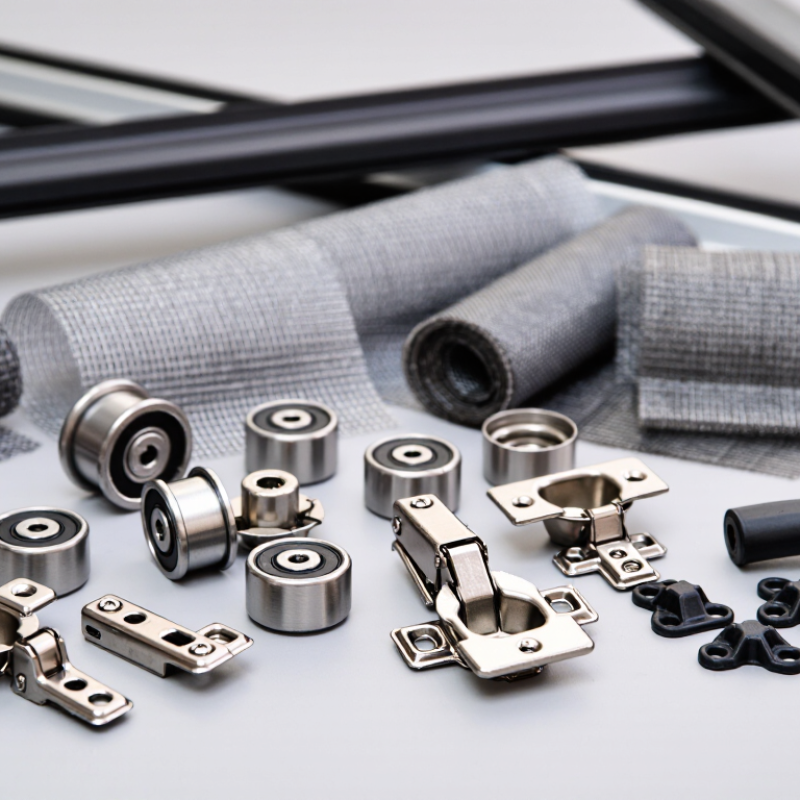
Screen door parts are the working pieces that keep an entry screen stable, usable, and secure. They include mesh, frames, spline, hinges, handles, latches, rollers, closers, and replacement corners. Each part has a specific job. The mesh blocks insects while allowing air and daylight through. The frame supports its shape. Small hardware controls movement and alignment.
These parts matter because a weak component can affect the whole door. A loose spline may let the mesh sag after seasonal temperature changes. Poor hinges can cause rubbing against the frame. A worn closer may allow the door to slam in strong wind. During product inspections, measuring the opening, frame depth, screw spacing, and hinge position prevents many compatibility problems.
Material choice also deserves careful attention. Stainless steel or coated metal often suits humid coastal areas, while reinforced plastic can reduce weight and cost. Fiberglass mesh is flexible, but metal mesh may resist pets and repeated contact better. However, stronger is not always better. An overly heavy door can stress hinges and closers.
Global buyers should request clear dimensions, material descriptions, installation instructions, and sample images before ordering. Packaging should protect fine mesh and small fittings from bending or loss. I would not rely on appearance alone; two similar handles may use different mounting holes. A careful supplier should explain these limits honestly, even when the answer is inconvenient.

2026 Top Screen Door Parts for Global Buyers?
Which Screen Door Parts Are Essential for Different Door Types?
Selecting screen door parts starts with the door’s movement, frame material, and local climate. For hinged doors, buyers usually need adjustable hinges, a latch, pull handles, corner clips, and a replaceable mesh panel. Sliding doors require roller assemblies, track guides, bumpers, and anti-lift blocks. Small errors matter. A roller that sits two millimetres too low can make the panel scrape the track.
Retractable systems need cassette housings, tension springs, magnetic closures, and reliable end guides. These parts should match the mesh weight and opening width. Heavy-duty security doors need reinforced corners, tamper-resistant fasteners, and a stronger lock body. In coastal areas, stainless steel or properly treated aluminum parts deserve priority because salt exposure quickly weakens ordinary hardware. Wood frames may also need wider screws and flexible seals.
The U.S. Department of Energy reports that windows can account for 25–30% of residential heating and cooling energy use. A poorly sealed screen-door frame may increase drafts, although it is not a substitute for insulated glazing. The 2024 Global Status Report for Buildings and Construction states that buildings consume about 32% of global energy. This makes durable, repairable components more relevant for international projects. Buyers should still verify dimensions, corrosion testing, mesh openness, and spare-part availability. One overlooked issue is packaging. Bent tracks often arrive before installation begins.
Global buyers need more than low unit prices when choosing durable screen door parts. Climate, installation quality, and replacement access matter. The UNEP and GlobalABC 2023 Global Status Report says buildings used 34% of global energy in 2022. It also links buildings to 37% of energy-related carbon emissions. Well-fitted screens can support natural ventilation, but only when rollers, seals, and mesh remain aligned. Specify corrosion-resistant fasteners for coastal markets. Choose UV-stable mesh for high-sun regions. In humid areas, inspect stainless-steel grades, drainage paths, and contact between different metals. Small details decide whether a door slides quietly or jams within months.
Durability should be verified through evidence, not adjectives. Request material certificates, dimensional drawings, cycle-test results, and replacement samples. ASTM B117 salt-spray testing can compare finishes, but it cannot predict every outdoor lifetime. Treat it as one signal, not proof. NACE’s IMPACT study estimated global corrosion costs at 2.5 trillion dollars annually, equal to about 3.4% of global GDP. That figure makes cheap plated screws look less attractive. Select rollers, tracks, corner keys, spline, latches, and handles as one system. Confirm tolerance ranges before volume orders. Assemble samples with local installers, then repeat opening cycles after dust, rain, and heat exposure. I would not approve drawings alone. Real sites are less polite. Packaging may protect parts in transit but ignore warehouse humidity. Ask for spare ratios and clear installation instructions. Reliable suppliers explain failure limits, not only best-case performance.
| Part Category | Common Materials | Typical Dimensions or Specifications | Durability Factors | Best Use by Climate or Market | Global Buyer Inspection Points |
|---|---|---|---|---|---|
| Screen Mesh | Fiberglass, aluminum, polyester, stainless steel | Common insect mesh: 18 × 16 or 20 × 20 openings per inch; wire diameter commonly about 0.20–0.30 mm | Coating adhesion, tear resistance, UV stability, dimensional consistency and clean cut edges | Fiberglass for general residential use; aluminum or stainless steel for coastal and high-abrasion environments; polyester for impact resistance | Confirm opening size, roll width, mesh count, wire diameter, color, tensile performance and resistance to corrosion or ultraviolet exposure |
| Screen Spline | EPDM rubber, flexible PVC, thermoplastic elastomer | Common diameters approximately 3.0–5.5 mm; size must match the frame groove and mesh thickness | Elastic recovery, resistance to cracking, compression set, temperature stability and resistance to cleaning chemicals | EPDM is suitable for outdoor use and temperature variation; flexible PVC is economical for standard indoor or sheltered applications | Measure the actual groove width and depth; test retention after installation; check hardness, color stability and compatibility with the mesh |
| Door Frame Profile | Extruded aluminum, galvanized steel, reinforced PVC | Typical profile wall thickness about 0.8–1.5 mm for aluminum; common frame depths approximately 10–35 mm | Profile straightness, corner strength, coating thickness, resistance to denting and protection against galvanic corrosion | Powder-coated aluminum for most markets; stainless or treated steel where heavy use, salt air or vandal resistance is important | Verify alloy or steel grade, profile tolerance, surface finish, corner compatibility, cut length and packaging protection |
| Roller Assembly | Acetal or nylon wheel, stainless steel or zinc-plated axle, aluminum or reinforced polymer housing | Wheel diameters commonly 19–32 mm; adjustable spring-loaded housings are widely used for sliding screen doors | Bearing or bushing quality, wheel hardness, axle alignment, spring fatigue resistance and smooth rolling under load | Stainless hardware for humid or coastal regions; polymer wheels reduce noise and are suitable for standard residential applications | Match wheel diameter, housing shape, adjustment range, door weight capacity and track profile; conduct cycle testing before approval |
| Door Track | Anodized aluminum, stainless steel, galvanized steel | Track width and height depend on the roller; common residential replacement tracks are about 10–25 mm wide | Wear resistance, straightness, drainage design, surface hardness and resistance to dirt accumulation | Anodized aluminum for lightweight systems; stainless steel for high moisture, salt exposure or heavy traffic | Check rail alignment, mounting method, cut-length tolerance, load rating, corrosion protection and compatibility with existing rollers |
| Corner Keys | Glass-filled nylon, reinforced polymer, die-cast aluminum | Designed for specific frame channels; common insert depths are approximately 8–20 mm | Impact resistance, dimensional stability, screw retention and resistance to heat-related deformation | Reinforced polymer for general use; metal keys for heavy frames, high traffic and higher mechanical loads | Confirm frame channel dimensions, corner angle, insert depth, fastener position and resistance to assembly cracking |
| Handle Set | Aluminum, stainless steel, zinc alloy, reinforced polymer | Common fixing-center distances approximately 50–100 mm; pull depth and backplate size vary by door profile | Fastener strength, corrosion resistance, grip rigidity, coating adhesion and resistance to repeated pulling | Stainless steel or anodized aluminum for humid and coastal markets; polymer handles for lightweight doors | Check fixing centers, screw thread, mounting clearance, hand orientation, surface finish and compatibility with frame thickness |
| Latch and Lock | Stainless steel, zinc alloy, engineering polymer | Common latch bodies are approximately 40–90 mm long; hole spacing and strike position vary by system | Latch-cycle performance, spring return, corrosion resistance, secure engagement and resistance to misalignment | Stainless components for wet, coastal or high-use environments; polymer components for standard low-load applications | Verify door handing, latch projection, strike alignment, fixing dimensions, key or thumb-turn operation and cycle-test results |
| Brush Seal and Weatherstrip | Polypropylene or nylon pile, EPDM, flexible PVC | Pile heights commonly 4–12 mm; adhesive or carrier-based profiles are selected according to the gap and channel | Pile recovery, UV resistance, low-temperature flexibility, compression recovery and adhesion strength | Dense brush seals for dust and insects; EPDM or flexible PVC for moisture, wind and temperature variation | Measure the actual clearance, confirm seal height and density, test sliding resistance and check performance after heat and humidity exposure |
| Fasteners and Accessories | Stainless steel, galvanized steel, plated steel, nylon | Common screw sizes are approximately 3.5–5.0 mm in diameter; length depends on profile and mounting substrate | Thread strength, corrosion protection, head quality, installation torque and resistance to loosening | Stainless steel for outdoor, humid and coastal locations; coated steel for sheltered, cost-sensitive applications | Confirm metric or imperial thread, screw length, coating or steel grade, torque requirements, corrosion test evidence and packing method |
Reliable screen door parts begin with accurate measurements, suitable materials, and verifiable testing. Buyers should check frame dimensions, mesh opening size, hinge spacing, and latch compatibility before placing an order. A few millimeters can cause difficult installation. Aluminum or treated steel should resist corrosion in the intended climate. Coastal buyers need stronger protection against salt exposure. Humid regions also require durable finishes and rust-resistant fasteners.
Safety deserves equal attention. Mesh should provide ventilation while limiting insect entry. Edges must be smooth, and moving parts should operate without excessive force. Check whether the parts meet applicable local building, product safety, and fire-related requirements. Ask suppliers for material specifications, test reports, inspection records, and batch traceability. Product claims without supporting documents are weak evidence. In my experience, buyers often focus on appearance and overlook replacement availability. That mistake can increase long-term maintenance costs.
Tips: Confirm the actual opening size, not only the advertised model size. Request a sample when tolerances are unclear. Test the latch repeatedly. Check packaging strength for international transport. Compare technical data, not just prices. A perfect specification does not exist. Climate, door frequency, installation skill, and budget always change the right choice.
In 2026, global buyers need more than low prices for screen door parts. Reliable sourcing starts with clear specifications, verified measurements, and consistent supplier communication. Measure the frame, roller track, corner profile, latch opening, and mesh thickness before requesting quotations. A small drawing can prevent costly misunderstandings.
Ask suppliers about material grades, corrosion resistance, production tolerances, packaging, and inspection procedures. Request samples before placing a large order. Check whether rollers move smoothly and whether corner joints fit without force. Compare total cost, not only unit price. Shipping damage, replacement rates, and delayed documents can change the final calculation. Small details matter.
I once accepted a cheaper hardware set without testing its spring tension. The latch weakened after repeated use. That mistake still influences my buying checklist.
Maintenance should begin when the parts arrive. Store metal components in a dry area, away from standing water and dusty construction zones. During installation, remove grit from the track and avoid overtightening screws. Clean rollers and tracks regularly with a soft brush. Inspect mesh edges, fasteners, seals, and latch alignment every few months.
Replace bent rollers early, because uneven movement can damage the frame. Keep spare screws and compatible corner pieces on site. One detail deserves reflection: universal parts are convenient, but they rarely fit every door perfectly. Field measurements and small trial orders remain safer than confident assumptions.