2026 Top Steel Industries for Global Buyers

Global steel buying in 2026 will demand more than a low headline price. Buyers will compare production scale, delivery reliability, energy sources, certification, and regional risk. The World Steel Association reported global crude steel output at approximately 1.9 billion tonnes in 2024. That volume shows the market’s strength, but it also hides major differences between national steel industries. China remains dominant, while India, Japan, the United States, South Korea, and European producers serve distinct industrial needs.

The OECD’s latest steel outlook highlights persistent excess capacity and changing demand patterns. The International Energy Agency also identifies iron and steel as major industrial emissions sources. These findings make carbon intensity increasingly important for procurement teams. A coil’s price matters. So do its emissions data, mill certificate, port route, and backup supplier. Edwin Basson, Director General of the World Steel Association, has stated, “Steel is essential to modern life and is a critical enabler of a sustainable future.” His observation frames this guide’s purpose: to connect commercial performance with long-term industrial responsibility.

The ranking will examine leading steel industries through practical buyer questions. Can a producer meet tight tolerances? Can it deliver consistently during market disruption? Can its sustainability claims be independently verified? Not every answer is clear. Data quality still varies between mills and regions. That weakness deserves attention. Global buyers should treat this overview as a decision framework, not a perfect verdict. The strongest 2026 suppliers will combine capacity, technical expertise, transparent reporting, and dependable customer support.
2026 Top Steel Industries for Global Buyers

2026 Global Steel Industry Landscape and Market Structure

The 2026 global steel industry is not one market. It is a network of regional systems shaped by ore access, energy prices, logistics, and construction cycles.

Flat steel remains tied to vehicles, appliances, and machinery. Long products follow housing, bridges, and public works. Semi-finished steel moves between regions when local rolling capacity is insufficient. The structure is uneven. A low-cost producer may still lose competitiveness when freight, duties, or delivery risk rises.

Global buyers are comparing total landed cost, not only the mill quotation. In practical sourcing work, I would check production origin, furnace route, monthly capacity, port distance, and payment terms. Mill certificates and heat numbers should match the shipment. Independent inspection is useful for critical grades. Delivery schedules deserve equal attention; a cheap coil arriving six weeks late can stop a fabrication line. Data can mislead. Published capacity does not always equal available export volume.

Market power is also shifting through technology and policy. Electric furnaces can respond quickly when scrap is available, while ore-based routes remain important for consistent, high-volume output. Carbon reporting is becoming a purchasing filter, especially for infrastructure contracts. Buyers should compare emissions boundaries carefully, because figures may exclude electricity or upstream materials. Regional trade measures can change sourcing economics within months. A resilient strategy may combine nearby supply with qualified overseas options, but that approach costs more to manage. Some buyers still underweight this administrative work, and that remains a costly weakness.

Leading Steel-Producing Regions and Industrial Hubs

Leading steel-producing regions are defined by more than furnace capacity. They depend on reliable power, ore or scrap supplies, skilled workers, and transport links. China remains the largest steelmaking center, with major industrial clusters connected to ports, railways, and dense manufacturing networks. India is expanding production around mineral-rich states and coastal corridors, where new capacity can serve construction and engineering demand. Scale matters. So does access.

Japan and South Korea combine established coastal steel hubs with advanced processing and export infrastructure. Their facilities often sit near deep-water ports, making imported raw materials easier to handle. In Europe, Germany’s Ruhr region remains closely tied to engineering and automotive supply chains, while other production centers are adapting to higher energy costs and lower-emission processes. The transition is uneven. Some plans may take longer than expected.

For global buyers, a regional label alone says little about delivery reliability or product fit. Ask where the steel is made, how it reaches the port, and whether local mills can provide the required grade and dimensions consistently. A site visit can reveal practical details: coil storage, loading equipment, and rail access. Yet hub rankings can miss smaller mills that serve specialized needs. That is worth checking.

2026 Top Steel Industries for Global Buyers

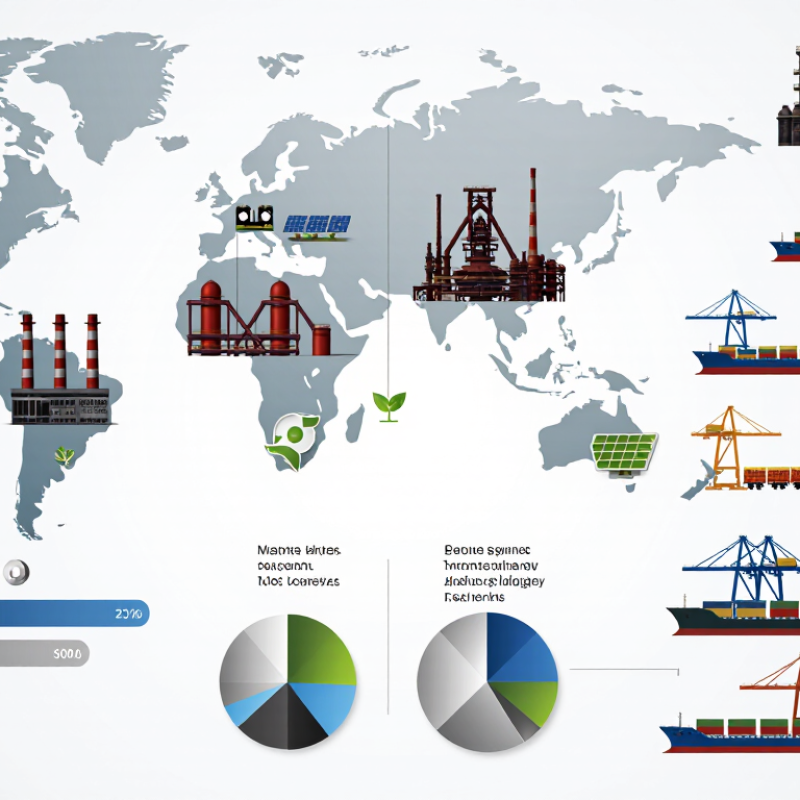
Leading steel-producing regions and industrial hubs, ranked by crude steel production in 2023. Regional output provides a practical baseline for evaluating global sourcing capacity in 2026.

Source: World Steel Association, 2023 crude steel production by region. Figures are shown in million tonnes and exclude company or brand-level data.

Major Steel Product Categories for International Buyers

2026 Top Steel Industries for Global Buyers

Major Steel Product Categories for International Buyers

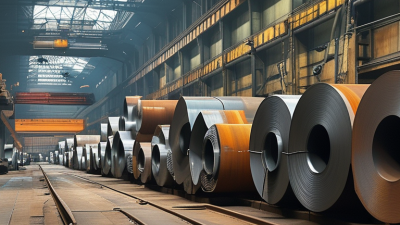
Global buyers usually begin with flat steel products. Hot-rolled coil suits construction frames, storage tanks, and heavy equipment. Cold-rolled sheet offers cleaner surfaces and tighter dimensions. Galvanized sheet adds zinc protection for roofing, ducts, and outdoor panels. I have found that surface quality often matters more than a small price difference.

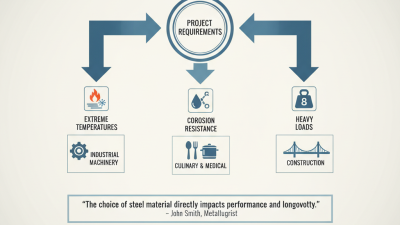
Long steel products serve different project needs. Rebar strengthens concrete foundations, bridges, and industrial floors. Wire rod supports fasteners, mesh, and drawn-wire production. Structural sections, including beams and channels, help create warehouse frames and platforms. Steel pipes cover water lines, energy projects, and mechanical systems. Stainless and alloy grades fit applications requiring corrosion resistance or higher heat performance. However, “premium” grade claims need test evidence, not attractive wording.

Tips: Match the product to its final use, then confirm grade, dimensions, tolerance, coating weight, and heat number. Request mill certificates, independent inspection, and clear packing photos. Check moisture protection inside containers. A few buyers skip this step, and rust appears before unloading. Verify applicable standards and import documents with a qualified local professional. Mistakes happen. Careful records reduce them.

Key Criteria for Comparing Steel Suppliers and Manufacturers

2026 Top Steel Industries for Global Buyers

Comparing steel suppliers in 2026 requires more than checking annual output. Global crude steel production reached about 1.89 billion tonnes in 2023, according to World Steel Association data. That scale creates choice, but also hides differences in consistency, delivery risk, and process control. Buyers should verify heat-to-heat chemistry, dimensional tolerances, testing methods, and complaint response times. Ask for recent mill certificates, not only capability brochures. Small details matter.

Cost is another difficult comparison. OECD analysis indicates global steelmaking capacity may expand by more than 150 million tonnes by 2026. Extra capacity could increase price pressure, but it may also signal oversupply and weaker producer finances. Evaluate total landed cost, including freight, duties, inspection, inventory, and rejected material. The cheapest offer is often not the cheapest outcome. Procurement teams should review production uptime, backup facilities, raw-material exposure, and delivery performance over at least twelve months.

Carbon data increasingly affects purchasing decisions. The International Energy Agency estimates steelmaking produces roughly 2.6 gigatonnes of direct CO2 emissions annually. Compare emissions by tonne of crude steel, energy sources, scrap usage, and calculation boundaries. Request independently verified environmental product declarations where available. Certification helps, but it is not perfect. Audit scope can still miss subcontracted processing or outdated electricity factors. A practical scorecard should weight quality, resilience, traceability, emissions, and price separately, then record the evidence behind every score.

Trade, Sustainability, and Technology Trends Shaping Steel in 2026

Trade, Sustainability, and Technology

2026 Top Steel Industries for Global Buyers

Trade, Sustainability, and Technology Trends Shaping Steel in 2026

Global steel buyers are entering a more cautious market. The World Steel Association reported about 1.88 billion tonnes of crude steel production in 2024. Demand remains uneven across construction, machinery, and transport. Regional supply gaps may create better purchasing opportunities, but shipping costs can change quickly.

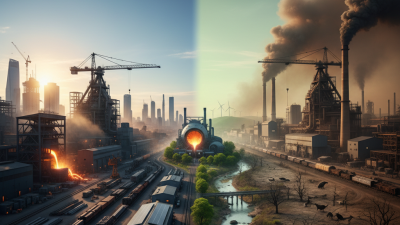
Carbon performance now influences supplier selection. The International Energy Agency estimates that steel produces roughly 8% of global energy-related emissions. Buyers increasingly request emissions data, recycled content, and renewable electricity records. Low-emission production using hydrogen, electric furnaces, and carbon capture is expanding. Yet these technologies remain expensive and unevenly available.

Trade rules add another layer of risk. The OECD Steel Outlook warns that global excess capacity could continue pressuring prices and investment. Import documentation may soon require clearer carbon information. Digital certificates can improve traceability from furnace to warehouse. They are not perfect. Data gaps still weaken comparisons between suppliers and regions.

A practical 2026 purchasing review should examine three details: verified emissions, delivery reliability, and technology readiness. Price alone is becoming a poor guide. Some forecasts may miss regional shocks. That uncertainty deserves careful planning.