2026 Best Quartz Sink Types for Global Buyers
Choosing the right quartz sink in 2026 requires more than comparing colors and prices. Global buyers must examine composition, construction, installation style, and supplier reliability. A sink may look like polished stone, yet its performance depends on resin quality, mineral content, and manufacturing control. Small differences can affect scratch resistance, heat tolerance, drainage, and long-term appearance.
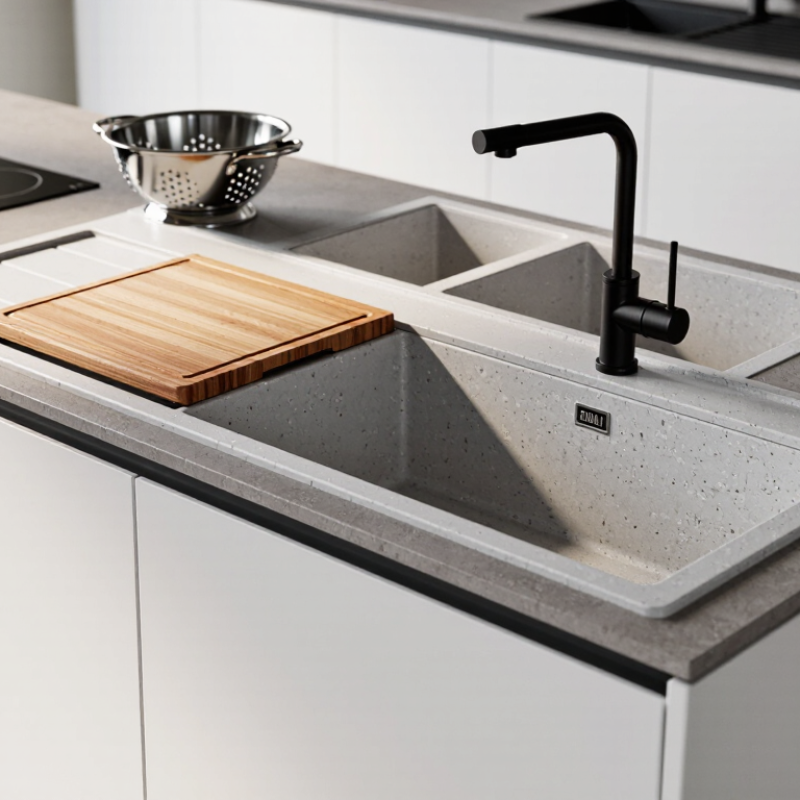
This guide introduces the main quartz sink types for residential, hospitality, and commercial projects. It considers single-bowl, double-bowl, workstation, undermount, top-mount, and integrated designs. Each type serves a different working habit. A deep single bowl suits large cookware, while a divided model supports washing and rinsing. Workstation sinks add practical accessories, such as sliding boards and colanders. Useful details matter.
Global purchasing also requires careful verification. Buyers should request technical data, material specifications, test reports, warranty terms, and installation instructions. Supplier photos are helpful, but they are not enough. Ask for samples. Check the underside, drain opening, edge finish, and surface consistency under direct light. Standards and certification needs may vary by destination, so local requirements should be reviewed before ordering.
Not every attractive sink is a dependable one. That is worth remembering. Some product descriptions remain vague, and “quartz” can describe different material formulas. Buyers should compare measurable evidence instead of relying on marketing language. This article offers a practical framework for evaluating quality, design, maintenance, and total purchasing risk. It may not answer every regional question, but it can make the next decision more informed.
Quartz Sink Basics and Key Features for Global Buyers
Quartz sinks are usually engineered from quartz minerals, resin, and color pigments. They are not solid stone. This distinction matters. In kitchens, the dense composite resists everyday scratches, stains, and moderate heat. A matte surface can hide water spots better than a glossy one. I have found that deep bowls make washing large cookware easier, but they also demand stronger cabinet support. Buyers should check the technical sheet, not rely on photographs. Mineral ratios differ between factories, so weight, texture, and heat tolerance can change.
Common types include single-bowl, double-bowl, top-mount, and undermount designs. Single bowls suit wide pans. Double bowls support separate washing and rinsing. An undermount edge creates a clean counter line, yet installation must be precise. Poor sealing can allow moisture into the cabinet. Top-mount models are often simpler to replace, especially in renovation projects. Measure cabinet width, drain position, bowl depth, and countertop thickness before ordering. Small measurement errors can become expensive.
For global buyers, confirm compliance documents, packaging strength, and installation instructions in the destination language. Ask for test methods behind claims about impact, stain, and heat resistance. “Heat resistant” does not mean placing a hot pan directly on the surface. Use a rack or pad. Abrasive powders may dull the finish over time. Dark colors can show mineral deposits in hard-water areas. That detail is easy to miss. Product samples help, but they cannot fully predict batch variation, lighting, or local water conditions. Reliable suppliers explain these limits clearly.
2026 Best Quartz Sink Types for Global Buyers - Quartz Sink Basics and Key Features for Global Buyers
| Quartz Sink Type | Basic Construction | Typical Installation | Key Features | Main Advantages | Points to Check Before Purchase | Best Use |
|---|---|---|---|---|---|---|
| Single-Bowl Quartz Composite Sink | A molded sink made from mineral filler, commonly quartz or granite-derived aggregate, combined with a resin binder and pigments. | Top-mount, undermount, or flush-mount, depending on the model. | One continuous basin; generous usable space; fewer internal corners; usually available in matte colors. | Suitable for washing large cookware; visually simple; easy to coordinate with many countertop materials. | Confirm cabinet width, bowl depth, drain position, cutout dimensions, and the manufacturer’s care instructions. | General kitchens, utility rooms, and projects prioritizing maximum bowl capacity. |
| Double-Bowl Quartz Composite Sink | Two molded basins separated by a central divider, with the same mineral-and-resin composite structure used in other quartz sinks. | Top-mount, undermount, or low-profile mount, subject to the product design. | Separate washing and rinsing zones; equal or unequal bowl configurations; optional accessory ledges on selected designs. | Supports multitasking and can help separate food preparation from dishwashing. | The divider may limit space for oversized pans; check the minimum base cabinet size and total cutout length. | Busy households and kitchens where two-basin workflow is preferred. |
| Low-Divide Quartz Sink | A double-bowl composite sink with a center divider positioned lower than the rim of the basins. | Most often installed as an undermount or top-mount sink. | Provides two separate areas while allowing water and large items to move more easily across the lowered divider. | Offers a compromise between single-bowl flexibility and double-bowl organization. | Measure the divider height and check whether large cookware can lie flat across both bowls. | Kitchens needing separation without a high center barrier. |
| Top-Mount Quartz Sink | A quartz composite basin with a finished rim that rests on top of the countertop. | Installed from above into a prepared countertop opening. | Visible rim; generally straightforward replacement installation; compatible with many countertop types when correctly supported. | Often simplifies installation and can cover minor variations around the cutout. | Check rim width, countertop thickness, sealing requirements, and whether the faucet is mounted on the sink or countertop. | Renovation projects and replacement installations with existing countertop openings. |
| Undermount Quartz Sink | A composite basin attached beneath the countertop, leaving the countertop edge visible around the opening. | Installed below solid-surface countertops such as stone or engineered-surface slabs, subject to fabricator approval. | Clean countertop-to-basin transition; no exposed sink rim above the work surface. | Makes it easier to sweep crumbs and water directly into the bowl; creates a streamlined appearance. | Requires accurate fabrication, adequate support, compatible countertop material, and careful sealing at the joint. | Modern kitchens and installations emphasizing easy countertop cleaning. |
| Flush-Mount or Integrated-Look Quartz Sink | A sink designed to sit nearly level with the countertop or to visually blend with a compatible solid-surface worktop. | Requires precise countertop fabrication and installation. | Minimal transition at the sink edge; emphasizes a continuous work surface. | Low visual profile and convenient surface cleaning around the sink. | Verify compatibility between the sink material, countertop material, fabrication method, and repair requirements. | Premium residential and hospitality interiors requiring a continuous design. |
| Workstation Quartz Sink | A quartz composite sink with molded or supported ledges that hold accessories across the basin. | Usually top-mount or undermount, depending on the ledge design and countertop details. | May accommodate a colander, drying rack, cutting board, or sliding prep accessories made for the sink system. | Extends preparation space and can reduce movement between the sink and countertop. | Confirm accessory dimensions, load limits, replacement availability, and whether accessories are included. | Compact kitchens and buyers seeking multifunctional preparation space. |
| Reversible Quartz Sink | A sink with a symmetrical or adaptable layout that allows the drainboard, bowl arrangement, or faucet position to be oriented in more than one direction. | Usually top-mount; some models may support other mounting methods. | Flexible left-hand or right-hand configuration; useful where plumbing and worktop layouts vary by market. | Improves planning flexibility for international kitchens and replacement projects. | Check the actual reversible feature, drain location, faucet-hole layout, cabinet clearance, and installation instructions. | Global renovation projects with different kitchen orientations and plumbing arrangements. |