7 Best Profile Wrapping Machines for 2026
Profile wrapping is a precise finishing process, not just a way to cover long components. A well-set Profile Wrapping Machine feeds profiles through rollers while controlled pressure bonds decorative film or veneer to the surface. In a busy shop, that can mean cleaner edges on cabinet trim, consistent finishes across door frames, and fewer visible defects. But the right machine depends on the material, coating, profile shape, and daily output. One line does not suit every factory.
Demand in related markets helps explain why finish quality matters. Grand View Research estimates that the global furniture market reached $677.09 billion in 2024 and projects continued growth through 2030. This is furniture-market data, not a forecast for profile wrapping equipment. Still, it points to a large market where manufacturers compete on appearance, repeatability, and production efficiency. Small surface flaws can become costly when they appear across a whole batch.
The machines in this guide are compared by practical factors: maximum profile width, feed speed, adhesive compatibility, changeover time, operator access, and service support. Ask vendors to demonstrate your actual profile, not a convenient sample. Check whether the finish holds around corners and whether film tracks evenly at production speed. The fit is not automatic. A high-speed machine may create bottlenecks elsewhere, while an affordable model may need more manual adjustment. These trade-offs deserve a closer look.
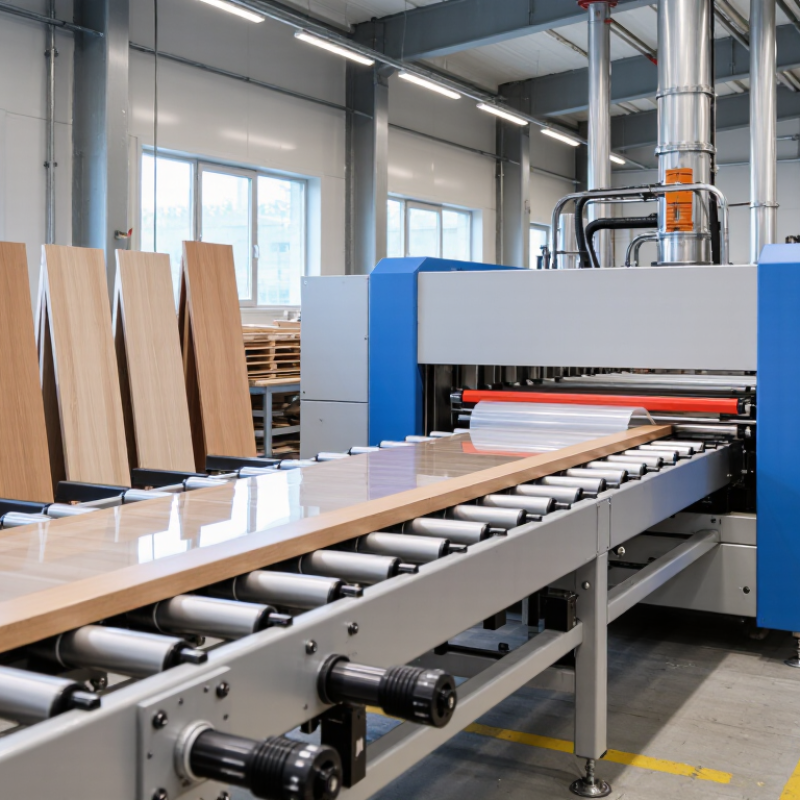
Profile Wrapping Machines: Types and Core Components
Profile wrapping machines are built to cover long, narrow parts with decorative film, veneer, or laminate. Roller-based machines suit straight profiles such as trim, rails, and window components. They guide the material through powered rollers while adhesive bonds the covering to the surface. For mouldings with grooves or curved edges, contour-wrapping systems use adjustable pressure elements to follow the shape. Some lines handle different profile widths with quick setup changes; others are designed for steady production of one part type. The right choice depends on the profile, covering material, adhesive, and desired output.
A typical machine includes an infeed table, profile guides, an adhesive applicator, a film unwind stand, pressure rollers, and a control panel. The applicator may spread adhesive directly onto the profile or onto the covering material. Heated rollers can help activate certain adhesives, but temperature settings must match the material. Small changes matter. Misaligned film can wrinkle at an edge, while uneven pressure may leave weak bonds. Operators should check feed speed, roller condition, and glue coverage during setup, not only after defects appear.
Some machines add automatic cutting, edge folding, or multiple wrapping stations. These features can reduce handling, though they also add setup and maintenance needs. A practical trial with the actual profile and covering often reveals issues that a specification sheet cannot. It is worth allowing time for adjustments. Even a capable machine may need careful tuning when the profile shape or material changes.
Key Criteria for Comparing Profile Wrapping Machines
When comparing profile wrapping machines, start with the profiles you actually run. Measure their width, height, shape, and length, then check the machine’s adjustment range. A unit that handles flat trim may struggle with a narrow, curved profile. Fit matters. Confirm which films, foils, or veneers the machine can feed and bond, and ask for a sample run using your own materials.
Look beyond the advertised line speed. Check how quickly operators can change rolls, adjust pressure, and set glue application between jobs. Ask whether feed rollers support delicate surfaces without leaving marks. Controls should be easy to understand, and routine cleaning should not require awkward access. A faster line is not always better; inconsistent feeding can create more waste than a modest speed setting. It is worth comparing maintenance needs and energy use, too, although those figures can be difficult to judge without a production trial.
Tips: Request a demonstration with a real profile and wrapping material. Watch for wrinkles at corners, uneven adhesive coverage, and slippage during feeding. Record setup time and rejected pieces, not just peak speed. Small details count. If the supplier cannot reproduce your typical job, treat the result as a useful test, not a guarantee.
7 Best Profile Wrapping Machines for 2026: Key Comparison Criteria
Suggested buyer-evaluation weighting for comparing profile wrapping machines. These percentages are a decision-making framework, not measured results or manufacturer specifications.
Prioritize compatibility with the profiles and wrapping materials you use, then assess output, changeover, automation, serviceability, and total cost. Adjust the weighting to match your production requirements.
7 Best Profile Wrapping Machines for 2026
7 Best Profile Wrapping Machines for 2026
The best profile wrapping machine depends on the material, adhesive, and daily production volume. In 2026, buyers can compare seven practical configurations: manual-feed, semi-automatic, fully automatic, single-side, double-side, narrow-profile, and multi-profile systems. Each suits a different workshop. A compact manual-feed machine may work well for short runs, while an automatic line can reduce handling on long batches. Faster is not always better.
Single-side and double-side machines wrap one or two faces in a pass. Multi-profile systems handle varied shapes, but require careful setup and compatible tooling. Narrow-profile models suit trims and small sections; larger systems accommodate broad panels.
Adhesive choice matters, too. Hot-melt systems can support quick changes, while PUR setups need suitable temperature control and cleaning routines. Check roller pressure, film tension, feed speed, and adjustment access. Small setup errors show up as bubbles, lifted edges, or uneven corners.
Ask suppliers for a trial using your actual profile and film. Measure finished edges, changeover time, and scrap—not just the machine’s rated speed. Inspect guarding, service access, and operator training materials before deciding. A neat sample run is useful, but it may not reflect a full shift. Even a well-matched machine can need adjustments as materials change.
Performance, Materials, and Production-Scale Comparison
A fair comparison of seven profile wrapping machines should look beyond advertised line speed. In production, steady feeding often matters more than a brief peak rate. Watch how the rollers hold a narrow trim, and whether pressure stays even around corners. Speed looks impressive. A clean, repeatable finish matters more. Check which materials each machine supports, such as PVC film, paper, veneer, or laminate. Compatibility can depend on adhesive, profile shape, and surface preparation, so request a sample run using your own stock.
Production scale changes the decision. A compact line may suit frequent small batches, while a higher-output system needs reliable feeding, quick adjustments, and accessible maintenance points. Ask operators how long a material change takes, not just how fast the machine runs. Inspect glue temperature control and dust management during a real shift. I would still question any ranking based on speed alone; changeovers and rejected profiles can erase its advantage. Compare usable output, material waste, and finish quality over several hours before choosing a machine.
Safety, Maintenance, and Operating Requirements
Profile wrapping machines combine powered rollers, cutting blades, pneumatic pressure, and moving film. Guard nip points and cutting zones, and keep emergency stops reachable from normal operating positions. OSHA estimates that effective lockout/tagout practices prevent 120 fatalities and 50,000 injuries each year. That figure is a strong reason to isolate electrical and pneumatic energy before clearing jams or servicing rollers. Small faults matter.
Daily checks should include damaged guards, loose fasteners, air leaks, and film scraps near sensors. Record unusual vibration or uneven wrapping; small changes can signal worn bearings or misaligned rollers. Follow the machine’s maintenance schedule, and verify that stored pressure is released before hands enter guarded areas. OSHA’s machine-guarding standard, 29 CFR 1910.212, requires protection from hazards such as rotating parts and points of operation. A checklist helps, though rushed shifts can still leave gaps.
Training should cover safe threading, startup, shutdown, and jam recovery, not just routine production. The U.S. Bureau of Labor Statistics recorded 5,283 fatal work injuries across all industries in 2023. This broad figure is not specific to wrapping equipment, but it underscores why operators need clear procedures and working safeguards. Keep maintenance logs near the machine, use the correct tools, and stop operation when a guard or interlock fails. It may slow a shift. It can prevent a worse delay.