China Best Metal Technology Suppliers for Global Buyers

China has become a major source of metal technology for manufacturers seeking scale, customization, and competitive production costs. Its supplier base covers steel processing, precision machining, metal forming, surface treatment, industrial automation, and additive manufacturing. The World Steel Association reported global crude steel production of approximately 1.88 billion tonnes in 2023. China produced more than half of that volume. This capacity creates opportunities, but it does not guarantee consistent quality.

The Wohlers Report 2024 valued the global additive manufacturing industry at about $20 billion in 2023. It also recorded continued growth across metal printing, software, materials, and services. Terry Wohlers, a widely recognized additive manufacturing analyst, has said, “Additive manufacturing is not a single technology; it is a family of technologies.” Buyers should remember that distinction. A supplier specializing in laser powder-bed fusion may not excel at forging or five-axis machining.

A reliable evaluation needs more than attractive product photos. Request material certificates, dimensional inspection records, process-control plans, and sample parts. Check whether the supplier follows relevant ISO or ASTM standards. Visit the factory when project value justifies the expense. Look closely at calibration labels, powder storage, heat-treatment logs, and packaging protection.

No ranking is perfect. Supplier capabilities change quickly, and online information can become outdated. Even a certified factory may struggle with communication or production transparency. This guide examines China’s leading metal technology suppliers through measurable capability, engineering experience, export readiness, and quality evidence. The goal is practical comparison, not exaggerated certainty.
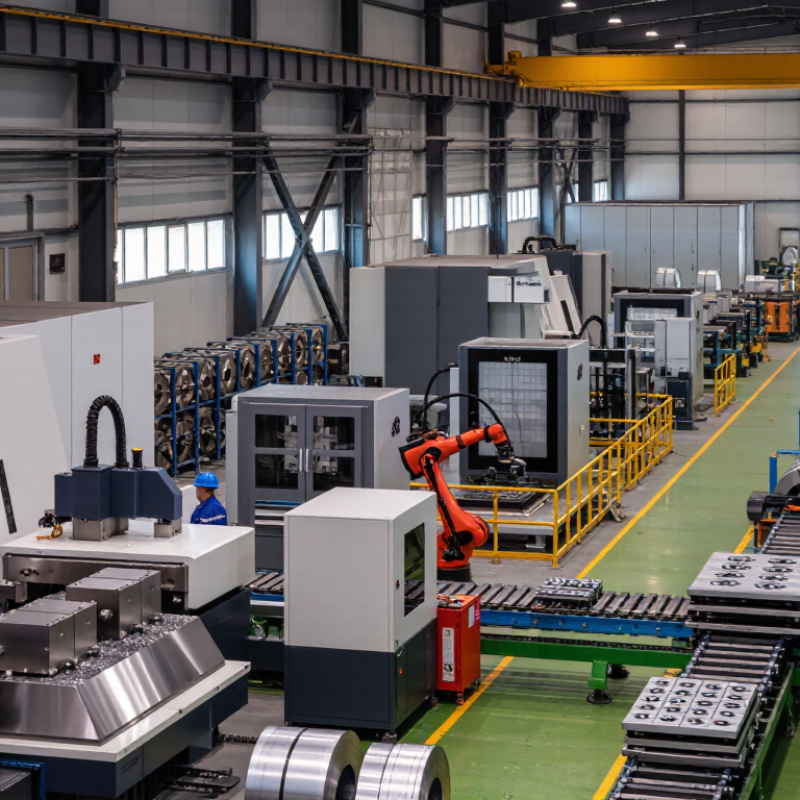
China Best Metal Technology Suppliers for Global Buyers

Understanding China’s Metal Technology Supplier Landscape

China’s metal technology supplier landscape is broad, layered, and uneven. UNIDO’s 2024 International Yearbook of Industrial Statistics reports that China contributes roughly 31% of global manufacturing value added. The World Steel Association recorded about 1.005 billion tonnes of Chinese crude steel production in 2024. That scale supports extensive expertise in casting, forging, machining, welding, heat treatment, and surface finishing.

Global buyers should evaluate process depth, not only production capacity. A capable supplier can explain furnace controls, alloy certificates, dimensional inspection, and coating thickness results. Ask for traceable batch records and recent third-party audit findings. Request a small pilot order before approving volume production. Measure bore diameter, flatness, hardness, and packaging condition against written tolerances. Small details matter.

However, the landscape is not perfectly transparent. A polished factory tour cannot prove stable production. A spreadsheet can hide weak process control. Buyers may also confuse low prices with technical efficiency. That is risky. Supplier qualification should include sample testing, calibration records, corrective-action history, and realistic lead-time checks. Chinese suppliers often combine strong equipment with uneven documentation. This is where careful buyers gain an advantage. Independent laboratory testing remains useful, especially for pressure-bearing or safety-critical components. Experienced sourcing teams should also verify export paperwork, material traceability, and communication during a simulated production problem. Supplier capability is real, but it still needs evidence.

China’s Metal Technology Supplier Landscape

China’s large share of global steel, primary aluminum, and refined copper production indicates a deep manufacturing ecosystem for metal-processing equipment, automation, tooling, and related technologies.

China’s estimated share of global production in 2023: crude steel 54.0%, primary aluminum 58.6%, and refined copper approximately 49.0%. Sources: World Steel Association, International Aluminium Institute, and international copper production statistics.

Key Metal Products and Manufacturing Capabilities

China Best Metal Technology Suppliers for Global Buyers

Key Metal Products and Manufacturing Capabilities

Global buyers often source stainless steel, aluminum, carbon steel, copper, and specialty alloys from Chinese manufacturers. Common products include precision brackets, machined shafts, sheet metal enclosures, welded frames, tubes, fasteners, and custom castings. Each material serves a different purpose. Stainless steel resists corrosion, while aluminum reduces equipment weight.

Reliable factories usually combine CNC machining, laser cutting, stamping, bending, casting, forging, and robotic welding. A detailed drawing should define tolerances, surface finish, thread standards, and inspection points. Skilled engineers can review these details before production begins. That prevents expensive rework.

Quality evidence matters. Buyers should request material certificates, dimensional inspection reports, sample approvals, and batch traceability. Some suppliers also provide coating thickness checks and salt-spray testing. Small details reveal manufacturing discipline.

Real projects are rarely perfect. Drawings may miss a corner radius or specify unclear tolerances. Good communication can correct these weaknesses, but delays still happen. I would not judge a supplier by photographs alone. A factory tour, sample order, and process audit offer stronger evidence.

Supplier capability must match product risk. A simple bracket needs different controls from a pressure-resistant component. Production capacity, tooling ownership, packaging methods, and export experience also deserve careful review. Even a polished quotation can hide practical gaps. Accuracy improves when buyers share complete technical files and realistic delivery requirements.

Standards, Certifications, and Quality Control Practices

China Best Metal Technology Suppliers for Global Buyers: Standards, Certifications, and Quality Control Practices

Reliable metal suppliers connect production methods with recognized international standards. Buyers should review ISO 9001 systems, material certificates, and project-specific requirements before placing orders. Certifications matter only when their scope matches the factory’s actual products and processes. Check the certificate number, validity period, issuing body, and covered production site.

Experienced suppliers control quality at several points. Incoming materials may receive chemical composition checks and grade verification. During machining or fabrication, inspectors measure dimensions with calibrated gauges or coordinate measuring machines. Hardness, tensile strength, surface roughness, and coating thickness can also require documented testing. Final inspections should compare samples against approved drawings, tolerances, and packaging instructions. Traceability is essential. Heat numbers, batch codes, inspection reports, and photographs help connect each part to its production history.

Small details reveal practical discipline.

A serious supplier can explain who approved the sample, how nonconforming parts were isolated, and when corrective actions were completed. Buyers should request audit records, test reports, calibration certificates, and retention periods for quality documents.

Still, no control system is perfect. A strong report may hide process drift, while limited sampling can miss irregular defects. Independent inspections and periodic factory visits provide useful protection, especially for first orders.

Suppliers should also welcome reasonable technical questions instead of presenting certificates as complete proof. Consistent evidence is more trustworthy than polished claims.

How Global Buyers Evaluate and Select Suppliers

Global buyers assessing Chinese metal technology suppliers look beyond price, polished websites, and factory photographs. The real test begins with evidence. Ask for material certificates, dimensional reports, process records, and recent production samples. Verify whether certificates match the supplied alloy, heat number, and delivery batch. A capable supplier explains tolerances clearly. Vague answers deserve attention.

Visit the facility when possible, or request a live video inspection. Watch how raw materials enter, move, and receive identification. Check machining areas, calibration labels, storage conditions, and final inspection stations. Experienced buyers also compare sample parts with drawings under actual measurement tools. A supplier should discuss capacity honestly, including peak-season limits. Promises without production data are weak evidence. Ask for references from comparable industries, not generic testimonials.

Communication reveals operational maturity. Test response time with a detailed inquiry containing alloy grade, surface finish, tolerance, packaging, and delivery terms. Strong teams confirm assumptions before quoting. They also report defects instead of hiding them. No process is perfect. One missed tolerance can expose a deeper control problem, but it can also show whether corrective action is real. Review root-cause reports, replacement policies, inspection responsibility, and spare-part support. Cost matters, yet stable quality and transparent risk handling often protect the full project budget.

China Best Metal Technology Suppliers for Global Buyers - How Global Buyers Evaluate and Select Suppliers

Practical evaluation framework for machining, sheet metal fabrication, casting, forging, finishing, and related metal technologies

Evaluation Dimension What Global Buyers Verify Indicative Buyer Benchmark Recommended Evidence Suggested Weight
Quality Management Whether production, inspection, corrective action, and document-control processes are formally managed. Current ISO 9001 certification for the relevant manufacturing site; clearly defined quality procedures. Valid certificate, certification scope, audit history, quality manual, and corrective-action records. 12%
Dimensional Capability Ability to repeatedly manufacture parts within drawing tolerances and process limits. For critical dimensions controlled by SPC, a process capability target of Cpk ≥ 1.33 is commonly used when process conditions support the calculation. Capability studies, control charts, first-article inspection reports, and sample measurement data. 14%
Technology and Process Fit Compatibility of equipment and processes with the required material, geometry, volume, and surface finish. Documented capability for the required process, such as CNC machining, laser cutting, stamping, casting, forging, welding, or finishing. Equipment list, working envelopes, process flow, sample parts, and technical capability statement. 12%
Material Traceability Whether raw material can be traced from the supplier certificate through production and final shipment. Heat, lot, or batch traceability for all safety-critical and specification-controlled materials. Mill test certificates, heat numbers, incoming inspection records, and traveler or batch records. 10%
Inspection System Accuracy, calibration, and suitability of inspection equipment and measurement methods. Calibrated instruments with traceable records; measurement-system analysis performed for critical characteristics where appropriate. Calibration certificates, inspection plans, gauge records, CMM reports, and measurement-system studies. 10%
Delivery Reliability Ability to meet confirmed production and shipping dates consistently. An internal on-time delivery target of at least 95% is a useful supplier-screening benchmark; actual requirements should be contract-specific. Historical delivery records, production planning procedure, capacity plan, and escalation process. 12%
Lead Time and Flexibility Speed of quotation, prototyping, engineering changes, and production ramp-up. Typical planning ranges may be 1–3 weeks for simple prototypes and 2–6 weeks for repeat production, depending on material, finish, tooling, and volume. Quotation response time, sample schedule, production schedule, and documented change-control process. 8%
Cost Transparency Whether the quoted price clearly reflects material, processing, tooling, finishing, packaging, and logistics. Quotation should identify currency, validity period, tooling charges, packaging, payment terms, delivery terms, and major cost assumptions. Itemized quotation, cost-breakdown assumptions, revision history, and commercial terms. 8%
Regulatory and Product Compliance Whether materials and processes meet destination-market, industry, and customer-specific requirements. Compliance with applicable requirements such as RoHS, REACH, restricted-substance rules, conflict-minerals disclosures, or sector-specific regulations. Declarations of conformity, material declarations, laboratory reports, and compliance-control procedures. 8%
Export and Logistics Capability Ability to prepare accurate commercial, customs, packaging, and shipping documentation. Clear Incoterms® rule, correct HS classification support, export packaging specification, and complete shipping documents. Sample commercial invoice, packing list, certificate-of-origin process, packaging standard, and logistics workflow. 6%
Communication and Engineering Support Quality of technical communication, drawing review, design-for-manufacturing feedback, and issue resolution. Written technical responses within one business day for routine questions and documented approval of drawing or specification changes. Named technical contact, review checklist, engineering-change records, and nonconformance response samples. 6%
After-Sales and Risk Control Ability to manage complaints, replacement parts, warranty issues, business continuity, and supply-chain risks. Formal complaint response, root-cause analysis, corrective action, backup sources for critical materials, and documented continuity planning. Nonconformance reports, corrective-action examples, warranty terms, contingency plan, and supplier-risk assessment. 4%
Total Suggested Evaluation Weight 100%
Note: The benchmarks above are practical supplier-screening references rather than universal industry requirements. Buyers should adjust the weighting and acceptance criteria according to part criticality, industry regulations, annual volume, material, tolerance, and destination market.

Shipping, Contracts, Pricing, and Supplier Cooperation

China remains a major source of metal processing equipment, fabricated components, and industrial materials. World Steel Association data shows China produced about 1.005 billion tonnes of crude steel in 2024. That scale supports broad capacity, but capacity alone does not guarantee reliable cooperation.

Shipping terms need precise control. UNCTAD’s Review of Maritime Transport 2024 reported major declines in Suez and Panama Canal traffic during disruption periods. Buyers should confirm the route, booking responsibility, insurance, and detention charges before production starts. A moisture barrier, edge protection, and visible heat numbers can prevent costly disputes. Small details matter.

Pricing should separate material, machining, testing, packing, and freight. The World Bank’s Commodity Markets Outlook has repeatedly highlighted volatility in base-metal prices. A fixed quote may therefore include a short validity period or an adjustment formula. Contracts should define tolerances, inspection timing, payment stages, late-delivery remedies, and document requirements. Independent inspection is useful, but it cannot replace clear specifications. A cheap offer can be expensive later.

Strong suppliers share production photos, mill certificates, and revised schedules without being chased. Weekly calls help, though written records remain essential. Cooperation is not always smooth. Forecasts change, and both sides sometimes underestimate packaging or approval time. Honest correction is better than forced confidence. Evaluate response speed, traceability, and corrective action—not only the first quotation.