How to Choose the Right Spinning Filter for Global Sourcing?

Choosing the right Spinning Filter for global sourcing requires more than comparing prices. The filter must match the process, material, throughput, and operating conditions. A small mismatch can create pressure spikes, uneven production, or frequent replacement. Those problems become expensive when the supplier is thousands of miles away.

In practical sourcing work, buyers should verify filtration accuracy, flow capacity, pressure tolerance, and material compatibility. For polymer or textile applications, even a minor change in viscosity can affect performance. Ask for test reports, dimensional drawings, batch records, and clear maintenance instructions. Supplier audits also matter. Factory cleanliness, quality controls, packaging methods, and response times reveal more than a polished product page.

Look beyond the lowest quotation.

A reliable supplier should explain how the Spinning Filter performs under real operating conditions. Request samples when possible, then test them with the intended material and equipment. Confirm lead times, replacement availability, warranty terms, and export documentation before placing a large order. Incoterms and packaging details deserve attention too, especially for delicate filter elements.

No universal filter works for every spinning line. That assumption causes avoidable mistakes. Some technical data may remain incomplete during early discussions, so record every unanswered question. My own preference is to compare suppliers through evidence, not confident promises. Still, even a careful evaluation can miss a variable on the factory floor. This guide examines the key selection criteria, supplier checks, and risk controls that support a more dependable global sourcing decision.
How to Choose the Right Spinning Filter for Global Sourcing?

What Is a Spinning Filter and How Does It Work?

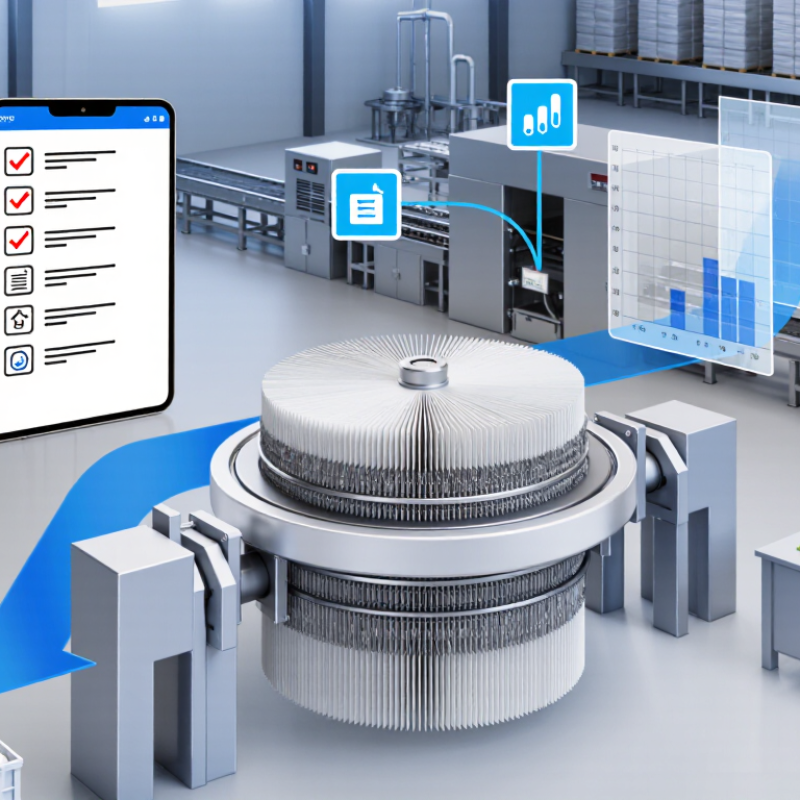
A spinning filter is a precision barrier inside a synthetic-fiber melt-spinning line. It removes unmelted polymer, gels, metal fragments, and other particles before the melt reaches the spinneret. The filter usually contains layered screens or sintered media. Molten polymer enters under pressure, passes through controlled openings, and leaves cleaner and more uniform. This protects tiny spinneret holes and helps maintain stable filament thickness.

The scale is significant. Textile Exchange’s Materials Market Report 2024 recorded about 124 million tonnes of global fiber production in 2023. The Fiber Year 2024 also reported that man-made fibers represented roughly two-thirds of total output. These figures show why filter performance matters across international sourcing projects. Even a small pressure increase can reduce throughput, raise energy use, or create frequent filter changes. Watch the pressure.

When selecting a filter, compare mesh rating, effective filtration area, polymer temperature, flow rate, and expected contamination. A finer filter is not automatically better. It may improve cleanliness but create faster pressure buildup. For recycled feedstock, a larger filter area or staged filtration may be more practical. Check material compatibility and filtration stability through documented trials, not only supplier claims. ISO 2942 can support filter-integrity verification, while production records should track pressure, output, defects, and replacement intervals. In my experience, the best specification is rarely the most impressive one. It is the one that remains stable during real production. That assumption still needs testing.

Define Your Filtration Requirements and Operating Conditions

How to Choose the Right Spinning Filter for Global Sourcing?

A reliable spinning filter begins with a clear filtration requirement. Define the fluid, target particle size, flow rate, and acceptable pressure loss. A filter handling clean water will not perform like one processing viscous resin. These differences matter.

Record the operating conditions carefully. Note temperature changes, working pressure, peak flow, and daily running hours. Check whether the fluid contains fibers, gels, crystals, or abrasive particles. Material compatibility is equally important. The filter housing, screen, seals, and connections must tolerate the process fluid without swelling or corrosion. Keep records.

In practical sourcing projects, operators often focus on mesh size first. That can be a costly mistake. A fine screen may improve particle removal but increase cleaning frequency and pressure drop. A coarse screen may protect flow but allow unwanted contaminants through. I have seen specifications fail because the stated flow rate ignored fluid viscosity at startup. That detail was small, but the production delay was not.

Ask suppliers for test data under conditions close to your process. Request pressure-drop curves, filtration ratings, material certificates, and cleaning instructions. Confirm connection dimensions and replacement-part availability before approving a design. If the application changes seasonally, test the filter at both temperature extremes. A short pilot run can reveal problems that a datasheet cannot. Still, pilot results need careful interpretation. One trial may not represent months of continuous operation.

How to Choose the Right Spinning Filter for Global Sourcing? - Define Your Filtration Requirements and Operating Conditions
Polymer / Application Typical Melt Temperature Typical Melt Pressure Recommended Absolute Filtration Range Typical Throughput Range Contamination Risk Suitable Filter Construction Key Sourcing Verification Points
PET filament and staple fiber 275–310 °C 80–220 bar 10–25 µm 20–250 kg/h per spinning position Gels, unmelted polymer, black specks, degraded polymer and metal particles High-temperature stainless-steel layered screen pack or sintered metal element; corrosion-resistant housing Confirm screen rating at operating temperature, pressure-drop curve, maximum allowable differential pressure, seal material and compatibility with PET processing temperatures.
Recycled PET (rPET) fiber 275–315 °C 100–280 bar 10–30 µm 20–200 kg/h per spinning position Label adhesive, paper, pigments, polyolefin fragments, gels and variable-size solid contaminants High-dirt-holding multilayer screen pack, candle-type element or continuous backflush filter for high contamination loads Request dirt-holding capacity, cleaning or replacement interval, melt-residence-time data, bypass protection and test results using representative recycled feedstock.
PA6 and PA66 filament 245–295 °C 70–200 bar 10–25 µm 15–180 kg/h per spinning position Unmelted polymer, gels, carbonized material, catalyst residues and metal particles Fine stainless-steel mesh or sintered metal element with low dead volume and chemically stable seals Check resistance to hydrolysis-related degradation, allowable residence time, seal compatibility, thermal cycling performance and pressure-drop stability.
Polypropylene (PP) spunbond or meltblown fiber 200–270 °C 40–160 bar 15–40 µm 50–500 kg/h per line Unmelted resin, inorganic filler, pigment agglomerates, degraded polymer and foreign particles High-area pleated element, layered screen pack or automatic self-cleaning filter for continuous production Verify compatibility with filled or pigmented PP, filtration-area calculation, pressure-drop at target flow, screen-change method and polymer holdup volume.
Fine-denier POY, FDY or DTY yarn 250–315 °C, depending on polymer 100–250 bar 5–15 µm 10–100 kg/h per spinning position Very small gels, unmelted particles, black specks and contaminants that can cause filament breaks High-precision multilayer screen pack or fine sintered metal element with uniform flow distribution Require validated absolute filtration data, tight pore-size distribution, low pulsation, consistent pressure control and documented cleanliness of all melt-contact surfaces.
Industrial yarn and high-tenacity fiber 250–320 °C, depending on polymer 100–300 bar 10–25 µm 30–300 kg/h per spinning position Gels, inorganic particles, degraded polymer, metal fragments and process-scale contamination Robust high-pressure candle filter, sintered metal element or continuous screen changer with high mechanical strength Confirm burst pressure, fatigue life, maximum operating pressure, element support structure, pressure-transducer ports and safe screen replacement procedure.
Bio-based or recycled polymer blends 220–310 °C, depending on blend composition 60–250 bar 10–30 µm 15–200 kg/h per spinning position Phase-separated particles, gels, moisture-related degradation products, additives and foreign polymer fragments Modular multilayer filter with replaceable media and optional continuous filtration capability Evaluate blend-specific chemical compatibility, moisture sensitivity, pressure fluctuation, additive retention, cleanability and material traceability.
General-purpose filament production 230–310 °C 60–220 bar 15–30 µm 20–250 kg/h per spinning position Normal levels of gels, unmelted polymer and occasional foreign particles Replaceable stainless-steel screen pack or standard candle element sized for stable pressure drop Compare initial pressure drop, filtration efficiency, filter-area-to-flow ratio, replacement cost, delivery lead time and availability of spare elements.
Selection note: The ranges above are typical engineering reference values rather than fixed design limits. Final filter selection should be validated against the actual polymer grade, additive package, melt viscosity, throughput, line pressure, residence time, contamination load and permitted pressure drop.

Compare Spinning Filter Types, Materials, and Performance

Choosing a spinning filter starts with the polymer, not the catalogue price. Candle filters provide high dirt-holding capacity for continuous melt spinning. Disc or leaf filters suit applications needing controlled flow across a wide surface. Sintered metal elements offer strong mechanical stability and repeated cleaning. Materials matter too. Stainless steel handles heat and pressure well, while finer powder grades can improve particle retention. A lower micron rating is not automatically better. It may increase pressure rise and reduce output. Textile Exchange’s Materials Market Report 2024 estimates global fibre production reached 124 million tonnes in 2023. That scale makes filtration consistency a production issue, not a minor accessory choice.

Compare suppliers using measurable performance data. Request initial pressure drop, terminal pressure, rated throughput, filtration efficiency, and test conditions. Ask whether the figures come from polymer melt, oil, or water tests. The media are not interchangeable. For high-viscosity polymer, a filter that performs well in water may fail quickly. I have seen sourcing teams focus on nominal microns and overlook screen area. That mistake can create unstable spinning, broken filaments, and frequent changeovers. The International Textile Machinery Federation reported about 8.4 million short-staple spindles shipped in 2023, showing how small efficiency losses can spread across large operations. Check weld quality, sealing surfaces, traceability, and cleaning records. Then test samples under your actual polymer, temperature, and line speed. Supplier data helps. It is not the whole answer.

How to Choose the Right Spinning Filter for Global Sourcing?

Comparison of common polymer melt spinning filter types by representative nominal filtration range.

Sand Pack
Cost-effective for standard polyester and polyamide applications. Typical filtration is approximately 10–40 μm, with relatively high pressure buildup as contamination increases.
Disc Stack
Stainless-steel discs provide repeatable filtration and straightforward cleaning. A typical range is approximately 15–50 μm, depending on disc geometry and stack configuration.
Candle Pack
High filtration area and fine particle retention make candle packs suitable for demanding continuous spinning lines. Typical ratings are approximately 5–25 μm.
Leaf or Screen Pack
Simple construction and low initial cost suit less demanding duties. Typical filtration is approximately 20–80 μm, with performance strongly affected by screen mesh and support layers.

The plotted values show representative midpoint ratings derived from commonly specified industrial ranges. Actual performance depends on polymer viscosity, throughput, temperature, contamination load, filter area, and stainless-steel or nickel-alloy construction.

Evaluate Global Suppliers, Quality Standards, and Certifications

Choosing a spinning filter for global sourcing requires more than comparing prices. The supplier must understand flow rate, pressure, particle size, and the filter’s working temperature. Ask for recent test reports, material specifications, and production records. A clear technical drawing can reveal more than a polished sales presentation.

I prefer suppliers who explain their inspection process in practical detail. Check whether incoming materials are tested before assembly. Review sampling methods, calibration records, and batch traceability. Certifications should match the factory, product scope, and current validity period. A certificate alone proves little. Contact the issuing body when verification is possible. Also compare the supplier’s quality system with recognized international standards, such as ISO-based manufacturing controls.

Small details matter. Ask to inspect sample housings, seals, and rotating components under normal operating conditions. Measure leakage, vibration, and filtration performance. Request samples from different production batches, not only one carefully selected unit. Factory audits can expose weak storage practices or rushed final inspections. I have learned that supplier documents are useful, but direct evidence is stronger. No checklist is perfect. Some test results may look acceptable while field performance remains inconsistent. Leave room for re-testing, corrective actions, and independent inspection before shipment. A reliable partnership grows through honest questions, complete records, and quality requirements that both sides can actually maintain.

Review Pricing, Logistics, Installation, and After-Sales Support

A spinning filter should be selected by process fit, not by the lowest quotation. Check polymer type, melt temperature, pressure range, filtration area, and expected contaminant load. In plant audits, buyers often compare only unit prices. That is a costly shortcut. Ask for tested flow data and pressure-drop curves under similar operating conditions.

Pricing must include screens, seals, control units, spare parts, packaging, freight, duties, and commissioning. UNCTAD reports that over 80% of global merchandise trade by volume moves by sea. Therefore, a low equipment price can lose its advantage through long transit times, port handling, or inadequate export packing. Request a landed-cost estimate with delivery terms and a written replacement-parts schedule. Small details matter.

Installation planning is equally practical. Confirm foundation loads, pipe connections, electrical standards, lifting access, and operator training before shipment. The World Bank’s 2023 Logistics Performance Index shows major differences between countries in customs, infrastructure, and delivery reliability. Build schedule tolerance into the project. After-sales support should include remote diagnostics, response times, service documentation, and technician availability. A promised response “soon” is not measurable. Require service-level commitments, although this can still fail when local expertise is thin. A pilot test or reference installation may reveal more than polished brochures.