Contact Kelly McNamara for information on products, services or locations.
Green Ball Tennis is a developmental format designed to help young players move toward full-court tennis. It uses a lower-compression green ball, which travels more slowly than a standard yellow ball. This gives beginners extra time to read the bounce, prepare the racket, and choose a safer shot. The change may look small. It can transform a child’s experience.
Coaches commonly use Green Ball Tennis for players developing rally control, movement, and basic match awareness. The format often supports play on a full-size court, while making the ball easier to manage. A child can watch the ball rise, adjust their feet, and recover before the next shot arrives. These repeated actions build practical habits, not just theoretical knowledge. They also make practice feel more like real tennis. That matters.
Its popularity comes from a simple balance between challenge and confidence. Players can attempt longer rallies without feeling rushed by every ball. Parents may also notice clearer progress, especially when children begin serving, returning, and scoring independently. Yet the format is not magic. Some players still need smaller courts, slower drills, or more time before competing. Coaches must observe skill, age, confidence, and coordination rather than follow one fixed timetable. Even the green ball can feel too fast on a windy day. That detail is easy to overlook.
When used thoughtfully, Green Ball Tennis creates a smoother bridge between beginner activities and advanced competition. It encourages active decision-making while keeping errors manageable. More importantly, it lets young athletes experience meaningful points early. That experience can shape motivation, resilience, and long-term enjoyment of the sport.
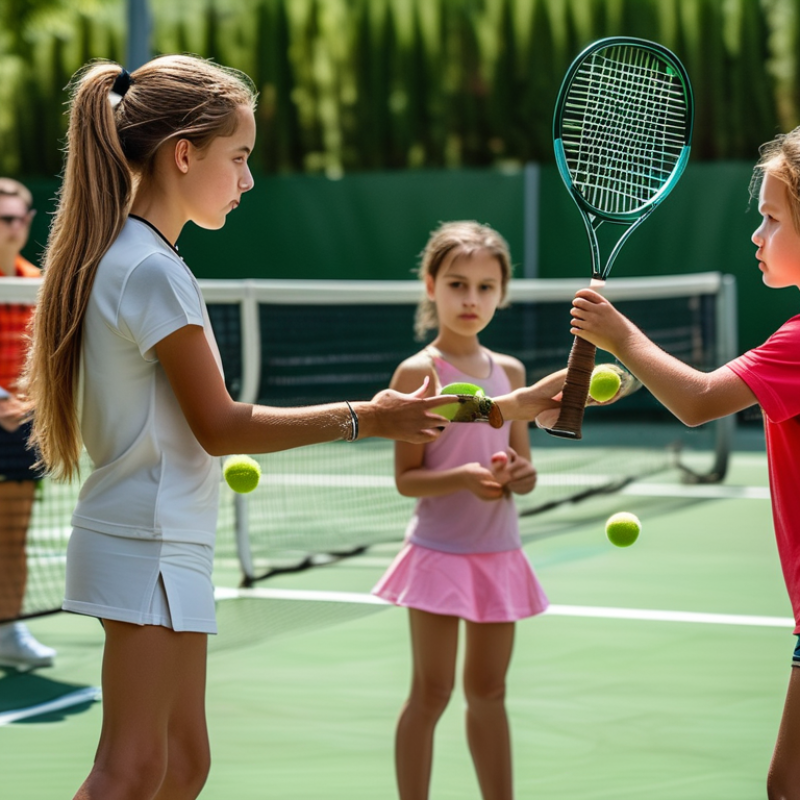
What Is Green Ball Tennis and Why Is It Popular?
What Is Green Ball Tennis?
Green ball tennis is a youth format played on a full-size court with a slower, lower-compression ball. According to International Tennis Federation standards, the green ball moves about 25% slower than a traditional yellow ball. This gives young players more time to prepare, move, and choose a shot.
It feels more manageable.
A coach may see the difference within minutes. Players can rally longer, recover after wide balls, and serve without forcing maximum power. The slower bounce also helps them recognize height, spin, and court position. These details build practical skills, not just early confidence.
The ITF’s 2024 Global Tennis Report recorded more than 106 million tennis players worldwide. That figure reflects tennis’s broad appeal, while junior participation depends heavily on accessible learning environments. Green ball tennis supports that need through familiar scoring, real court dimensions, and adaptable drills. Research from the ITF’s player-development framework also places green-ball play in the progression toward full-speed competition.
It is not perfect.
Some beginners still struggle with court coverage, especially during long rallies. Coaches may also overuse simplified drills, which can delay decision-making. A better session mixes short games, target practice, and open-point play. Players then learn when to attack, defend, or simply return one more ball.

What Is Green Ball Tennis and Why Is It Popular?
Green ball tennis uses a softer, slower ball for junior players developing toward full-court tennis. Its reduced pace gives children more time to prepare, move, and choose a shot. This matters because junior development is not only about hitting hard. It is about reading the ball, recovering after each stroke, and building confidence through real rallies.
In coaching sessions, green ball tennis helps players practise serves, returns, cross-court patterns, and controlled attacks. The ball usually produces a more manageable bounce, so children can contact it closer to waist height. They can also sustain longer exchanges without feeling rushed. These repetitions support sound technique and better decision-making. However, it is not a perfect bridge. Some players become too comfortable and avoid challenging shots. Coaches must gradually increase speed, movement, and tactical pressure.
Tips: Keep rallies purposeful. Ask players to recover to a balanced position after every shot. Use targets near the service line to develop accuracy before power. Encourage them to call the score and explain their shot choice. Short games work well. Change the rules carefully, though. If every activity rewards winning, players may stop experimenting. A missed drop shot can still show useful progress. Coaches should watch posture, spacing, and effort, not just the final result. Parents can support development by praising brave decisions and steady improvement, even when the scoreboard looks disappointing.
Green ball tennis is a junior development stage played on a full-size court with a ball that travels approximately 25% slower than a standard yellow ball. The reduced speed gives young players more time to move, prepare, and develop consistent strokes while learning match tactics.
The progression from red to orange, green, and yellow balls gradually increases ball speed. Green ball tennis is popular because it combines realistic full-court play with a manageable pace, helping junior players build rally tolerance, directional control, movement skills, and confidence before transitioning fully to the standard yellow ball.
What Is Green Ball Tennis and Why Is It Popular?
Green ball tennis uses a Stage 1 ball that moves about 25% slower than a standard yellow ball, according to International Tennis Federation guidance. The reduced speed gives players more time to read the bounce, prepare the racket, and recover between shots. It still uses a full-size court, measuring 78 feet by 36 feet for singles and doubles. Players normally use a 25–27-inch racket, comfortable shoes, and a slightly lower-compression green ball. The ITF Global Tennis Report 2024 recorded about 106 million tennis players worldwide, showing the sport’s expanding reach. Green ball sessions help more beginners enter that growth.
The basic rules remain familiar. Players serve diagonally, allow one bounce, and use conventional scoring. A serve that misses the correct service box counts as a fault. In many coaching sessions, the server starts behind the baseline and alternates sides after each point. Players should call lines honestly and pause when another ball enters the court. The ball feels slower, but rallies can still become surprisingly quick. That difference is easy to underestimate.
Tips: Keep the first serve controlled. Aim high over the net, not directly at the corners. Marking a clear baseline helps younger players judge distance. Coaches often adjust drills after watching real movement; a perfect plan can still fail on a windy court. USTA participation research also links beginner-friendly formats with stronger early engagement, although local results vary. Expect some awkward misses. They are useful feedback.
| Data Dimension | Typical Green Ball Tennis Data | Practical Meaning |
|---|---|---|
| Official Development Stage | Stage 1 green ball | Green ball tennis is the final ball stage in the progressive pathway commonly used before players move to a standard yellow tennis ball. |
| Ball Speed | Approximately 25% slower than a standard yellow ball | The reduced speed gives developing players more time to prepare, move into position, and choose an appropriate shot. |
| Ball Construction | Pressure-reduced tennis ball | The ball has lower internal pressure than a standard ball, producing a lower and more manageable bounce while preserving a familiar tennis-ball feel. |
| Recommended Player Level | Developing junior players and beginners transitioning toward full-court tennis | The ball is suitable for players who have progressed beyond red and orange ball activities but are still building consistency, movement, and tactical awareness. |
| Singles Court Length | 78 ft (23.77 m) | Green ball tennis is generally played on a full-size tennis court, so players learn the distances and movement patterns used in regular tennis. |
| Singles Court Width | 27 ft (8.23 m) | The singles court provides the standard playing area for one player on each side of the net. |
| Doubles Court Width | 36 ft (10.97 m) | For doubles, the additional side alleys are included, creating the standard full-width tennis court. |
| Net Height | 3 ft (0.914 m) at the center; 3 ft 6 in (1.07 m) at the posts | The standard tennis net height is used, helping players develop realistic serving, rallying, and net-play skills. |
| Racket Size | Typically about 25–27 in (63.5–68.6 cm), selected according to the player’s height and strength | A lighter, correctly sized racket improves control and makes it easier for younger players to create a smooth swing. |
| Scoring System | Usually standard tennis scoring: love, 15, 30, 40, and game | Players can learn the same scoring language used in regular tennis while adapting match length to their age and ability. |
| Match Format | Flexible; short sets, timed matches, or first-to-a-target score are common | Coaches and organizers can shorten matches to increase participation, reduce waiting time, and keep rallies active. |
| Serve Rules | Players normally serve diagonally into the opposite service box | Both underarm and overarm serves may be used in beginner sessions, depending on the player’s stage and the activity format. |
| Two-Serve Format | Two attempts are generally allowed in standard scoring formats | This familiar rule helps players develop a reliable first serve and understand the consequences of a fault. |
| Ball-in-Play Rule | A ball is in unless it lands outside the court lines | Players practice calling lines, tracking the ball, and making decisions under realistic full-court conditions. |
| Learning Benefit | More time, lower bounce, and improved rally control | The slower ball helps players sustain longer rallies and focus on direction, height, depth, recovery, and court positioning. |
| Why It Is Popular | It combines realistic tennis with a more accessible pace | Players can use a full-size court and standard-style rules without facing the speed and bounce of a regular yellow ball too early. |
| Transition to Yellow Ball | Introduced when the player can rally, serve, move, and score consistently | The transition should be based on skill and confidence rather than age alone, because players develop at different rates. |
Green ball tennis is popular among young players because it makes the court feel achievable. The ball travels about 25% slower than a standard yellow ball, according to the International Tennis Federation’s player-development framework. That small change gives children more time to read the bounce, move their feet, and choose a shot. A nine-year-old can rally across a shorter court instead of chasing endless fast balls. Success becomes visible.
The International Tennis Federation’s 2023 Global Tennis Report recorded approximately 106 million tennis players worldwide. Its findings also highlight tennis’s growing appeal across younger age groups and developing markets. Green ball sessions support that growth because they create more rallies and fewer frustrating misses. Coaches often see children talking, competing, and adjusting tactics within one lesson. Still, slower equipment is not a magic solution. Some players need more movement practice, while others need confidence before technique. Data on green ball participation remains limited, so personal coaching experience still matters.
Tips: Use a smaller court and begin with cooperative rallies. Ask players to call “bounce” before hitting. Set a target of five controlled shots, not a perfect winner. Keep sessions short, active, and varied. A foam marker can show where feet should recover after each shot. Coaches should check whether the ball feels manageable; green is helpful, but it is not automatically right for every child.
Green ball tennis is designed for players who need a gentler transition toward full-court tennis. The International Tennis Federation classifies it as approximately 25% slower than a standard yellow ball. This lower speed gives beginners more time to read the bounce, prepare the racket, and recover after each shot. It suits children, adult beginners, older players, and anyone returning after a long break. It also helps players who feel rushed on a full-size court.
The ITF Global Tennis Report 2021 estimated 87 million tennis players worldwide. That figure shows broad interest, but participation does not always mean confidence. Green ball sessions can reduce early frustration through shorter rallies and manageable court dimensions. A new player can begin with a 45-minute session, a green ball, and a smaller court. Start with forehands and backhands near the service line. Then add gentle serves and movement patterns. Keep the first target simple: five controlled exchanges.
A qualified coach should check grip, spacing, and swing balance before increasing pace. Coaches can also use a simple progress record, noting rally length, contact height, and recovery position. These details make improvement visible. Some players may progress faster with yellow balls. Others need more time than expected. That is normal. A common mistake is chasing power too early. Control should come first, although this advice can feel slow and imperfect. Practice twice weekly, use comfortable footwear, and stop when technique becomes careless.