How to Choose Soundproof Aluminum Folding Doors?
Choosing Soundproof aluminum folding doors requires more than comparing frame colors and advertised decibel ratings. These doors must balance acoustic control, daylight, ventilation, thermal performance, and everyday movement. A beautiful system can still disappoint if sound leaks through weak seals or uneven floor tracks.
Soundproof aluminum folding doors usually depend on several connected parts. Laminated acoustic glass can reduce voices, traffic noise, and music transmission. Continuous gaskets help close small gaps around each panel. Strong aluminum frames support alignment, while properly designed hinges and rollers maintain smooth operation. The surrounding wall matters too. Even an excellent door cannot solve noise passing through thin partitions, ceilings, or unsealed joints.
Real project experience shows that installation quality often decides the final result. Measure the opening carefully, especially at the head and sill. Check whether the floor is level before selecting the folding configuration. Ask suppliers for tested acoustic data, glass specifications, air leakage information, warranty terms, and maintenance guidance. Marketing claims can sound impressive, but laboratory performance may differ from results inside a busy home or office. This difference deserves attention.
Small details matter.
A reliable selection process also considers panel weight, opening frequency, drainage, hardware durability, and cleaning access. Local climate should influence gasket and finish choices. Professional advice is valuable when rooms face roads, restaurants, schools, or shared corridors. Still, no recommendation is perfect without understanding the building itself. Careful comparison, documented testing, and realistic expectations create a stronger basis for choosing doors that remain comfortable, quiet, and practical over time.
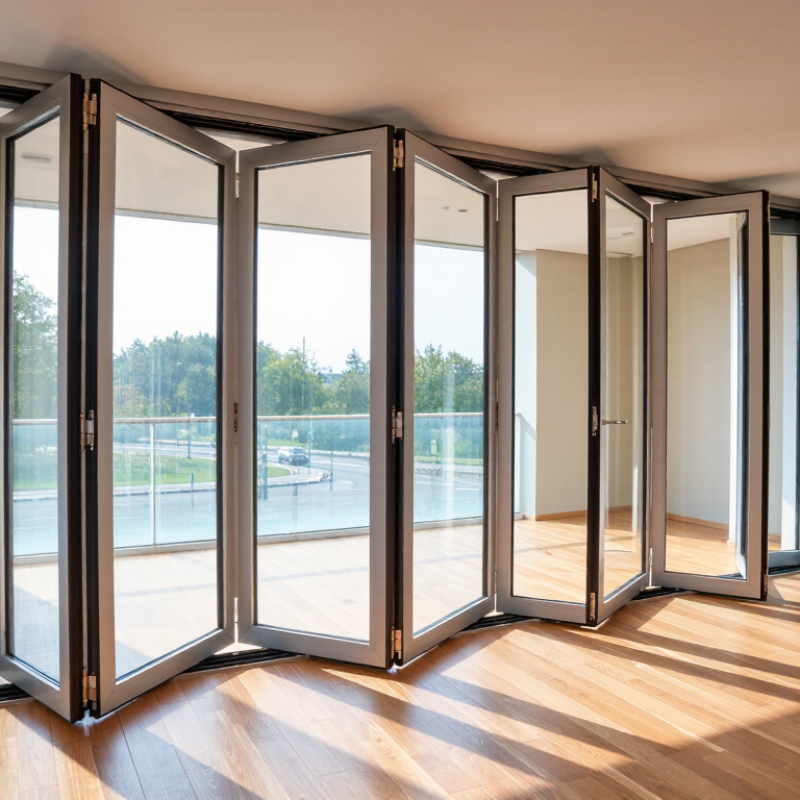
What Makes an Aluminum Folding Door Soundproof?
Soundproof performance comes from the complete folding door system, not aluminum alone. Aluminum frames are strong, but they can transmit vibration without the right design. Look for acoustic laminated glass, multiple compression seals, insulated panels, and a thermally broken frame. These parts add mass and reduce air paths. A tested Sound Transmission Class (STC) rating between 35 and 45 can suit many homes, offices, and meeting rooms. However, ratings apply to the tested assembly, not every installation.
The World Health Organization’s Environmental Noise Guidelines for the European Region (2018) recommend keeping indoor bedroom noise below 30 dB(A) at night for good sleep. This target shows why small gaps matter. A continuous seal can be more valuable than a thicker frame with poor installation. Ask for laboratory results based on ASTM E90 and ASTM E413, or ISO 10140 and ISO 717. These standards measure airborne sound insulation. They do not promise silence. Site conditions, wall construction, floor tracks, and installation quality can change the result. A little uncomfortable truth: a high laboratory rating may perform poorly beside an unsealed corner.
Tips: Check the full door’s tested STC value, not the glass alone. Inspect corner joints and meeting stiles closely. Choose low-profile tracks only after confirming their acoustic seals. Request field testing when the room has strict noise requirements. WHO data is useful, but real comfort depends on the actual room.
Which Door Materials and Glass Types Reduce Noise Best?
Choosing soundproof aluminum folding doors starts with the glass, not the frame. Aluminum is strong and stable, but its thin sections can transmit vibration. The weak points are usually panel joints, rollers, and worn seals. ASTM E90 testing measures laboratory sound transmission, while ISO 10140 evaluates building elements under controlled conditions. These ratings help, but installation still matters.
Laminated glass usually performs better than ordinary monolithic glass. Its flexible interlayer absorbs part of the vibration, especially from traffic and voices. Acoustic glazing with different pane thicknesses can reduce resonance more effectively. A practical configuration may use laminated glass outside, an air cavity, and a thicker inner pane. The gap should remain sealed. Bigger is not always better.
The National Research Council notes that glass performance follows mass-law principles; doubling surface mass can improve transmission loss by roughly 6 decibels in suitable frequency ranges. This is not a guaranteed door rating. Test the complete folding-door assembly, including seals and hardware. An insulated aluminum frame may improve comfort, but it does not automatically deliver high acoustic performance. Look for laboratory reports listing STC or Rw values, test frequency ranges, and installation conditions. One overlooked detail: a small seal gap can undermine expensive glass. That deserves inspection.
How to Compare Seals, Frames, and Folding Door Construction
How to Choose Soundproof Aluminum Folding Doors?
A folding door is only as quiet as its weakest joint. Compare the seals, frame, and panels as one acoustic system. In field inspections, worn compression gaskets often create a thin, audible whistle. Multi-point seals should compress evenly around every leaf. Brush seals help with dust, but they usually provide weaker acoustic control. Ask for laboratory results tested under ISO 10140, not only marketing claims. The reported rating should identify the complete door assembly.
Frame design matters. Thermally broken aluminum profiles can reduce vibration transfer, but the frame still needs rigid corner connections. Look for reinforced hinges, stable meeting stiles, and limited panel movement. Large glass areas may reduce performance unless laminated acoustic glass is specified. ASTM E90 and ASTM E413 provide useful methods for measuring and rating transmission loss. However, laboratory figures are not room results. Installation gaps, uneven floors, and poor wall connections can reduce performance noticeably.
Tips: Compare the door’s tested STC or Rw value with your room target. WHO’s 2018 Environmental Noise Guidelines recommend keeping indoor night noise below 30 dB(A) for good sleep. That target is demanding. A high laboratory rating does not guarantee it. Check seal compression with a thin paper strip after installation. If the paper slides freely, the seal may need adjustment. I would also inspect the bottom track carefully; small gaps there are easy to overlook.
How to Choose Soundproof Aluminum Folding Doors
Comparing seals, frames, and folding-door construction
The chart uses an indicative 1–5 design-performance scale, where a higher score represents better acoustic potential. Double compression seals, continuous interlocking stiles, rigid aluminum frames, and controlled thresholds generally improve airtightness and reduce sound leakage. Actual acoustic performance depends on the complete door assembly and should be confirmed through certified laboratory ratings such as STC or Rw.