Contact Kelly McNamara for information on products, services or locations.
China remains a major source of reliable Air Conditioner Parts for residential, commercial, and industrial cooling systems. Its manufacturing clusters support compressors, fan motors, heat exchangers, control boards, filters, copper fittings, and installation accessories. However, supplier quality varies widely. A polished website does not always indicate dependable production.
This guide examines leading Chinese manufacturers through practical purchasing criteria. These include product consistency, engineering capability, factory experience, testing procedures, customization support, and export performance. We also consider certifications, material traceability, packaging quality, and after-sales communication. For example, a serious supplier should explain copper tube thickness, motor insulation class, operating temperature, and inspection methods clearly. Samples should match mass-production units, not merely look impressive during evaluation.
Details matter.
Real buying experience shows that delivery promises can change when raw material prices rise or peak-season capacity becomes limited. Some manufacturers offer excellent pricing but provide weak technical documents. Others communicate well yet lack flexible production lines. This article therefore avoids naming companies only by reputation. It encourages readers to compare verified records, factory capabilities, test reports, and customer references before making decisions. Independent audits and pre-shipment inspections remain valuable, especially for large orders.
The strongest manufacturers are not necessarily the largest. They are the ones that consistently meet specifications, respond honestly, and improve after problems appear. Even this approach has limits. Company data can become outdated, and one successful project cannot guarantee every future order. Careful verification is still essential when selecting China’s top Air Conditioner Parts manufacturers.
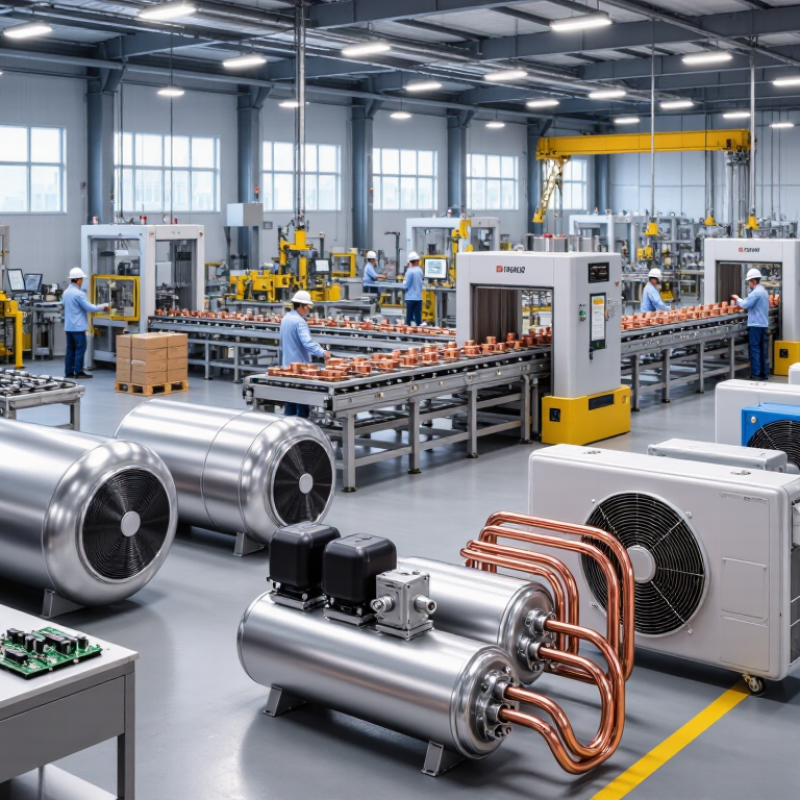
What defines a leading air conditioner parts manufacturer in China?
It is not production volume alone. A serious supplier combines engineering experience, stable materials, and repeatable quality control. In daily sourcing, small details matter: a clean copper tube, a calibrated valve, and a connector that survives vibration. These details prevent costly field failures.
The International Energy Agency reports that space cooling could become the world’s largest electricity-use source by 2050 without efficiency improvements.
This pressure raises the value of high-quality compressors, heat exchangers, motors, sensors, and control components. A capable Chinese manufacturer should provide test records, batch traceability, dimensional data, and evidence of compliance with relevant IEC and ISO requirements. It should also explain failure rates honestly. Perfect claims deserve caution.
Tips:
Ask for sample testing before bulk orders. Review material certificates and inspection procedures. Visit the factory if possible. Check whether production data is recorded, not merely promised.
Strong manufacturers also invest in tooling, automated inspection, and technician training. The China Refrigeration and Air-Conditioning Industry Association regularly emphasizes efficiency, safety, and industry standardization in sector development. Yet certification alone does not prove practical reliability.
A component can pass a laboratory test and still perform poorly after careless assembly. Supplier evaluation should include technical communication, response speed, packaging quality, and after-sales investigation.
The best partner is not always the cheapest. Sometimes, the cheaper part becomes the expensive mistake.

China Top Air Conditioner Parts Manufacturers
Major categories of air conditioner parts made in China include compressors, heat exchangers, motors, valves, controls, and installation materials. Compressors drive the refrigeration cycle, while condenser and evaporator coils transfer heat through copper or aluminum tubes. Expansion valves regulate refrigerant flow. Small differences in valve response can affect cooling stability.
Fan motors, blades, air filters, thermostats, sensors, and control boards support airflow and temperature management. Manufacturers also produce copper tubing, insulation, drainage pumps, brackets, capacitors, contactors, and replacement housings. In a factory inspection, buyers should check wire terminals, casting surfaces, insulation thickness, and connector fit. These details often reveal production consistency.
Quality verification should match the part category. Coil suppliers may perform pressure and leak tests. Motor suppliers should record voltage, current, noise, and operating temperature. Control components need functional testing under realistic load conditions. From practical sourcing experience, samples can look excellent while bulk production varies. This is where traceable records, clear drawings, material certificates, and independent inspections matter. No supplier is perfect. Even a careful process needs revision when field feedback exposes a weak seal, noisy bearing, or undersized connector.
Chinese air conditioner parts manufacturers cover a broad industrial network, with specialties divided by component and production capability. Coastal factories often focus on compressors, copper tubing, valves, and heat exchangers. Inland suppliers may provide motors, plastic housings, control boards, and stamped metal parts. This regional concentration supports flexible sourcing and shorter production cycles.
Component expertise varies sharply. A compressor manufacturer may emphasize low-noise operation, vibration control, and endurance testing. Heat exchanger specialists usually optimize fin spacing, tube expansion, and corrosion resistance. Motor producers commonly offer inverter-compatible designs, while control-board factories focus on sensor accuracy, firmware stability, and electrical safety. Some suppliers operate their own tooling departments. That can reduce mold delays.
Quality evidence matters more than catalog language. Buyers should review material certificates, sample inspection records, factory capacity, and process-control documents. A serious supplier should explain failure rates and corrective actions clearly. It should also provide traceability from raw copper or aluminum to finished parts. Independent testing remains useful, especially for pressure-bearing components.
No manufacturer is perfect. A polished showroom can hide weak after-sales support. Product samples may outperform mass production. This is easy to miss. Regular inspections, pilot orders, and clear acceptance standards reduce that risk. Buyers should also check whether a supplier can adapt dimensions, refrigerant requirements, and regional compliance needs without sacrificing consistency.
| Supplier Type | Main Chinese Production Clusters | Primary Product Specialties | Typical Materials or Technologies | Common Applications | Typical Compliance Requirements |
|---|---|---|---|---|---|
| Rotary Compressor Manufacturers | Guangdong, Jiangsu, Anhui | Rotary compressors for residential and light-commercial air conditioners | Precision steel parts, copper tubing, inverter-compatible motor systems, refrigerant-lubricant matching | Split air conditioners, heat pumps, multi-split systems | CCC, CE, RoHS, ISO 9001, and refrigerant-specific safety requirements |
| Scroll Compressor Manufacturers | Jiangsu, Zhejiang, Guangdong | Fixed-speed and variable-speed scroll compressors | Orbiting scroll mechanisms, high-efficiency electric motors, vibration-control components | Commercial air conditioners, rooftop units, chillers, heat pumps | CE, RoHS, ISO 9001, pressure-equipment safety controls, and applicable regional energy standards |
| Heat Exchanger and Coil Manufacturers | Guangdong, Zhejiang, Jiangsu | Indoor evaporator coils, outdoor condenser coils, microchannel heat exchangers | Copper tubes, aluminum fins, brazed joints, hydrophilic and anti-corrosion coatings | Room air conditioners, chillers, heat pumps, refrigerated equipment | Leak testing, pressure testing, RoHS, CE, ISO 9001, and material traceability |
| Fan Motor and Blower Manufacturers | Guangdong, Zhejiang, Jiangsu | Indoor cross-flow fans, outdoor axial fans, centrifugal blowers, EC motors | Copper-wound motors, permanent-magnet motors, plastic or aluminum impellers, electronic speed control | Wall-mounted units, cassette units, ducted systems, air handlers | CE, CCC, RoHS, electromagnetic-compatibility testing, and insulation safety tests |
| Expansion Valve and Refrigeration Valve Manufacturers | Zhejiang, Jiangsu, Guangdong | Electronic expansion valves, thermostatic expansion valves, four-way reversing valves, solenoid valves | Brass or stainless-steel bodies, stepper motors, precision orifices, sealed refrigerant passages | Inverter air conditioners, heat pumps, refrigeration systems | Pressure-resistance testing, leak testing, CE, RoHS, and refrigerant compatibility verification |
| Control Board and Sensor Manufacturers | Guangdong, Jiangsu, Zhejiang | Main control boards, inverter control modules, temperature sensors, pressure sensors, communication modules | Surface-mount electronics, microcontrollers, thermistors, current sensors, wired and wireless interfaces | Smart residential units, VRF systems, heat pumps, commercial HVAC equipment | CE, FCC or equivalent EMC requirements, RoHS, electrical safety testing, and ISO 9001 |
| Sheet-Metal and Plastic Housing Manufacturers | Guangdong, Zhejiang, Jiangsu, Anhui | Indoor and outdoor cabinets, fan guards, mounting plates, air guides, and decorative panels | Galvanized steel, aluminum, ABS, polypropylene, injection molding, stamping, and powder coating | Residential split units, packaged units, fan coils, air-handling equipment | RoHS, REACH where applicable, corrosion testing, dimensional inspection, and ISO 9001 |
| Copper Tube and Fitting Manufacturers | Zhejiang, Jiangsu, Guangdong | Straight copper tubes, insulated refrigerant lines, elbows, tees, distributors, and brazed fittings | Deoxidized copper, internally grooved tubing, annealing, drawing, brazing, and surface treatment | Refrigerant circuits, heat exchangers, installation kits, and service parts | Dimensional standards, pressure and leak testing, RoHS, CE where applicable, and material certification |
Note: The information summarizes common Chinese HVAC manufacturing clusters, component categories, technologies, and compliance requirements. Actual capabilities, certifications, and product specifications should be verified directly with each supplier.
China Top Air Conditioner Parts Manufacturers: Quality Standards and Production Capabilities to Compare
Choosing an air conditioner parts manufacturer requires more than checking product photos. Examine material certificates, dimensional inspection records, and failure-test data. Reliable factories usually follow documented quality systems, such as ISO-based procedures. However, certification alone proves little. Ask how often inspections occur and who approves rejected parts. Check whether testing covers pressure, corrosion, vibration, temperature changes, and electrical safety. Small details matter, especially for valves, motors, sensors, and heat-exchanger components.
Production capability deserves equal attention. Review monthly capacity, equipment condition, tooling control, and production-line flexibility. A capable supplier should explain its machining tolerances clearly. It should also maintain traceability from incoming materials to final packaging. During an audit, inspect calibration labels and sample records. A clean workshop helps, but it does not guarantee consistent output. I would compare recent batch data instead of trusting a perfect factory tour. That approach feels less impressive, but it is more useful.
Tips: Request samples from different production batches. Compare dimensions, surface finish, noise, and packaging protection. Ask for corrective-action reports after defects. Also confirm lead times during peak seasons. A supplier may promise fast delivery, yet lack spare capacity when demand rises. Review communication speed, engineering support, and change-control procedures. One overlooked issue remains: packaging damage can ruin compliant parts before installation. That risk deserves a separate check.
This procurement benchmark uses a 100-point evaluation model covering internationally recognized quality, safety, environmental, material-compliance, testing, automation, and production-capacity criteria. It is a standards-based comparison framework and does not represent any specific company or brand.
Reference framework: ISO 9001 quality management, ISO 14001 environmental management, IEC 60335-2-40 safety requirements for electrical heat pumps and air conditioners, RoHS/REACH material compliance, automated leak testing, end-of-line electrical testing, and scalable production capacity.
Selecting a Chinese air conditioner parts supplier requires more than comparing prices. Start with technical compatibility, including voltage, refrigerant type, pressure range, dimensions, and connection sizes. Ask for material certificates and recent inspection records. A serious supplier should explain tolerances clearly, not hide behind general product descriptions. Request samples before placing a large order. Check the finish, wiring, labels, and mounting holes under normal workshop lighting.
Experience matters during communication. I have found that reliable suppliers answer detailed questions quickly and provide drawings without repeated excuses. Ask how they control incoming materials, assembly, and final testing. For compressors, valves, sensors, and motors, request test conditions and acceptance limits. Photos help, but live video inspections reveal more. Visit the factory when possible, or appoint an independent inspector. No audit is perfect. Small gaps in documentation may still deserve attention.
Also examine production capacity and after-sales support. Confirm minimum order quantities, lead times, packaging methods, and spare-part availability in writing. A supplier should describe how it handles damaged cartons or inconsistent batches. Test one shipment before expanding the relationship. Track failure rates, delivery accuracy, and response times in a simple spreadsheet. Cheap parts can become expensive after installation delays. Communication can fail. A clear technical file, agreed sample, and documented change-control process reduce that risk. Suppliers should notify you before changing materials, tooling, or electrical specifications.