What Are the Top Engine Control System Parts in 2026?
Engine Control System Parts are becoming more intelligent, smaller, and harder to evaluate. Modern engines depend on coordinated sensors, actuators, electronic control units, fuel injectors, ignition coils, throttle modules, and exhaust after-treatment components. Each part must respond quickly, even when temperatures exceed 1,000°C near the exhaust system.
The International Energy Agency’s Global EV Outlook 2025 reported that electric car sales exceeded 17 million worldwide in 2024. That shift pressures suppliers to improve combustion technology while preparing for a mixed powertrain market. S&P Global Mobility has also highlighted the growing importance of vehicle software, diagnostics, and electronic architecture. These trends make component compatibility as important as individual part quality. A perfect sensor cannot correct poor calibration.
Dr. Giorgio Rizzoni, an automotive controls researcher at Ohio State University, has often stressed a practical engineering principle: “Control systems are only as good as the information they receive.” That idea remains highly relevant in 2026. A contaminated mass-airflow sensor can create unstable idling, higher emissions, and confusing fault codes. Meanwhile, a weak ignition coil may imitate an injector failure. The distinction is not always obvious.
This guide examines the top Engine Control System Parts shaping reliability, efficiency, and service decisions in 2026. It considers technical performance, failure patterns, diagnostic evidence, and supplier credibility. Some rankings remain debatable. Real-world testing still matters more than impressive specifications.
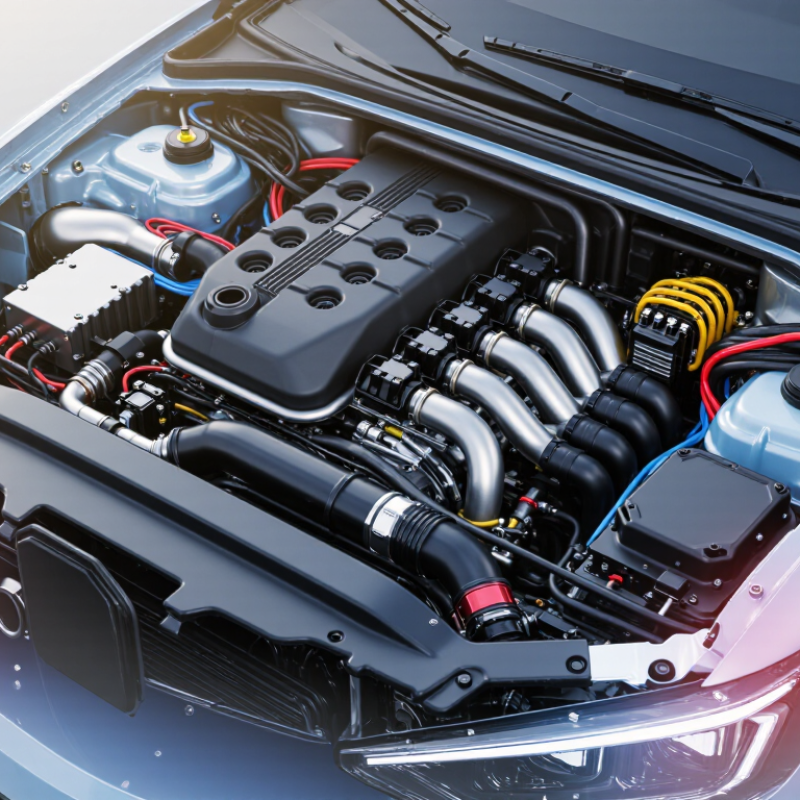
Engine Control Units: 32-Bit Processors and CAN Networks Up to 1 Mbps
In 2026, the engine control unit remains the control center for fuel delivery, ignition, emissions, and torque management. A 32-bit processor gives the ECU enough headroom for faster sensor sampling, diagnostic routines, and closed-loop control. It also supports precise timing between crankshaft sensors, injectors, throttle actuators, and ignition drivers. This matters during cold starts and sudden acceleration. Small delays become noticeable.
Classic high-speed CAN networks typically support communication rates up to 1 Mbps under short-bus conditions, according to technical guidance from CAN in Automation. That bandwidth can link the ECU with transmission, braking, and body-control modules. The wiring is simpler than separate point-to-point connections. However, network loading, electromagnetic noise, and poor termination can still create intermittent faults. Engineers should verify bus resistance near 60 ohms with power removed.
McKinsey’s 2024 automotive software and electronics analysis projects the sector could approach 462 billion dollars by 2030. Meanwhile, the International Energy Agency reported nearly 14 million electric-car sales in 2023, increasing pressure on suppliers to support mixed powertrain platforms. The practical parts remain familiar: a microcontroller, CAN transceiver, watchdog circuit, voltage regulator, memory, and protected power stages. More processing power is not automatically better. In field testing, calibration quality and connector reliability often matter more than headline specifications. That is an uncomfortable lesson.
Airflow and Pressure Sensors: MAP, MAF, and 0.1% Measurement Accuracy
What Are the Top Engine Control System Parts in 2026?
Airflow and pressure sensors remain central to accurate engine control. A MAP sensor reads intake-manifold pressure, while a MAF sensor measures incoming air mass. The control unit compares both signals with engine speed, temperature, and throttle position. This comparison supports fuel delivery, ignition timing, boost control, and emissions management.
Precision matters.
A 0.1% measurement-accuracy target sounds impressive, but it is not a universal production result. Sensor temperature, connector resistance, vibration, and condensation can shift readings. In calibration work, a sensor may pass a bench test yet behave differently near a hot intake manifold. That gap deserves more attention.
The U.S. Environmental Protection Agency’s 2024 Automotive Trends Report recorded average new-vehicle fuel economy at about 26.4 miles per gallon for model year 2022. It also reported approximately 347 grams of CO2 per mile. These figures show why small airflow errors can influence larger efficiency outcomes. SAE measurement practices and ISO 26262-oriented development also encourage traceable validation, fault detection, and defined accuracy limits. Engineers should verify the full signal chain, not only the sensor element. A claimed 0.1% accuracy may apply under controlled laboratory conditions. Real-world performance can be less perfect. That is the uncomfortable part.
Fuel Injectors and Pumps: High-Pressure Systems Reaching 350 bar
Fuel injectors and high-pressure pumps are central engine control parts in 2026. Gasoline direct-injection systems can reach 350 bar. That pressure creates a fine fuel spray inside the combustion chamber. It also exposes weak seals, sensors, and wiring very quickly. SAE International technical papers commonly examine 200–350 bar injection systems. These studies link higher pressure with improved atomization and more precise combustion control.
The pump builds pressure. The injector shapes each pulse. The engine control unit then adjusts timing, duration, and rail pressure within milliseconds. A pressure sensor must remain accurate near hot engine surfaces. Small deviations can cause hard starting, unstable idle, or increased particulate output. The U.S. Environmental Protection Agency’s 2024 Automotive Trends Report recorded average new-vehicle carbon dioxide emissions at about 337 grams per mile for model year 2022. Better fuel metering remains important.
Pressure is not everything. It is only one variable. Field service data often shows contamination as a bigger problem than maximum pressure. Water, degraded fuel, and microscopic deposits can distort the spray pattern. That detail deserves more attention. Routine filter replacement, electrical testing, and leak checks can protect expensive control hardware. The U.S. Department of Energy’s Vehicle Technologies Office continues to identify injection precision and combustion efficiency as major development areas. Yet 350 bar systems still demand careful calibration, because higher pressure can increase noise, component stress, and repair complexity.
Ignition Coils and Spark Plugs: Managing Voltages Above 30 kV
In 2026, ignition coils and spark plugs remain critical engine control system parts. They manage electrical energy above 30 kV inside a hot, vibrating environment. The coil raises battery voltage through electromagnetic induction. The spark plug then releases that energy across its gap. This creates the spark that starts combustion.
Voltage demand is not fixed. Cylinder pressure, plug gap, temperature, and electrode wear all influence it. A wider gap may improve ignition performance, but it also increases insulation stress. The engine control unit adjusts coil dwell time and ignition timing using crankshaft, camshaft, knock, and temperature data. Excessive dwell can overheat the coil. Poor timing can cause misfires or abnormal combustion.
In workshop testing, a scope pattern often reveals more than a fault code. A weak firing line may suggest worn insulation, a damaged coil, or excessive plug resistance. Inspecting the plug tip also matters. Light deposits can be normal, while heavy carbon may indicate incomplete combustion. High voltage is dangerous.
Use proper probes.
I have seen technicians replace coils before checking the plug gap. That approach sometimes fixes the symptom, not the cause. A more reliable inspection checks connectors, grounds, boot condition, and battery voltage together. Still, diagnosis is rarely perfect on the first attempt. Heat-related faults may disappear when the engine cools, which makes an ordinary road test misleading.