Best Steel Frame Building Manufacturers in China?

Choosing among the best steel frame building manufacturers in China takes more than comparing prices or browsing polished project photos. A dependable supplier should explain how its engineers turn drawings into fabrication plans, control welding quality, protect steel from corrosion, and prepare components for transport. These details affect installation time, maintenance needs, and the building’s long-term performance.

Look for evidence, not broad promises. Ask for relevant project references, factory inspection options, quality-control records, and clear details about design scope, materials, coatings, and delivery. A capable manufacturer should answer technical questions directly and identify what it cannot provide. That matters. Factory capacity alone does not prove that a supplier can handle your building type, site conditions, or schedule.

This guide examines manufacturers through practical criteria, including engineering support, fabrication capability, communication, and documented project experience. It also considers the limits of online comparisons: company profiles can be useful, but independent checks and project-specific discussions remain important. One uncomfortable point deserves attention. The lowest quote may omit items that later appear essential, such as connection details, surface treatment, or installation support. Ask for an itemized scope before judging value. The right choice is not automatically the largest or cheapest factory. It is the manufacturer whose documented capabilities match your requirements—and whose answers remain clear when the questions get specific.
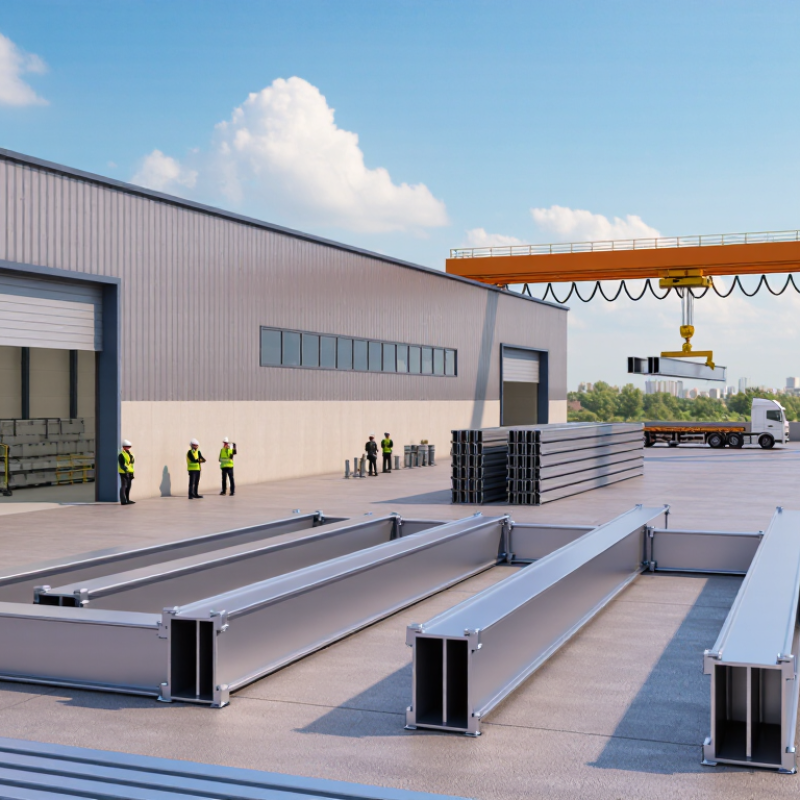
Best Steel Frame Building Manufacturers in China?

Steel Frame Buildings in China: Types, Uses, and Steel’s 7,850 kg/m³ Density

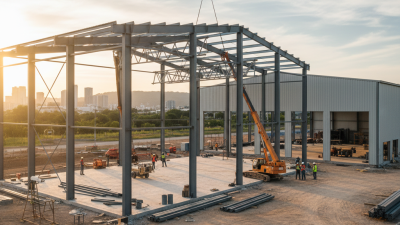
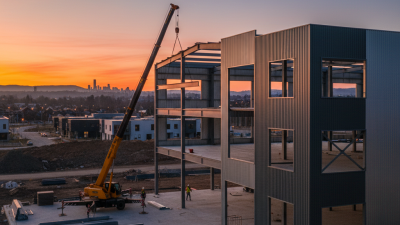
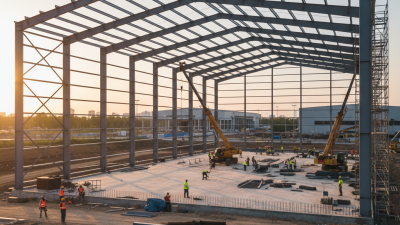
Steel-frame buildings in China range from clear-span portal frames for warehouses to trussed roofs for factories and sports halls. Multi-storey frames can serve offices, while modular systems may suit projects needing faster assembly. Each type responds to different spans, loads, and site conditions.

Steel’s commonly cited density is about 7,850 kg/m³. Treat this as a typical reference value, not a guarantee for every alloy or product. It is approximate.

Density multiplied by volume gives a basic estimate of steel mass, but a finished frame’s weight depends on its sections, connections, bracing, and design. A beam’s open profile uses less material than a solid bar of similar outer dimensions. That distinction matters when estimating transport, lifting, and foundation loads. Steel frames are also used in workshops and agricultural buildings, where clear interior space can help with equipment layout. Design still needs to account for wind, seismic conditions, corrosion, and fire protection.

Tips: Ask for section schedules and material specifications, not just a total weight. Check how the estimate treats bolts, bracing, and protective coatings. One rough calculation can help, but it should not replace a project-specific structural review.

Design Standards: GB 50017-2017 and Q355 Steel’s 355 MPa Yield Strength

GB 50017-2017, China’s code for steel structures, requires more than a basic strength check. Designers must assess member stability, connections, and load paths. For Q355, 355 MPa is the minimum yield strength for steel up to 16 mm thick. GB/T 1591-2018 lists 345 MPa for thicknesses above 16 mm and up to 40 mm. Thicker plate has lower specified yield values. Numbers need context. A calculation based on 355 MPa across every plate thickness can misrepresent capacity.

The World Steel Association’s World Steel in Figures 2024 reports that China produced 1,019.1 million tonnes of crude steel in 2023. That scale is useful context, not a quality guarantee. For a building project, check mill certificates against the ordered grade and thickness, then review weld procedures and inspection records. A neat drawing can still hide an unclear load path. I have seen comparisons focus on steel grade while overlooking connection details; that is an easy gap to miss. Verify design assumptions against the actual material documents and project conditions.

Manufacturing Processes: CNC Fabrication, Welding, and ISO 3834 Quality Control

Choosing a steel frame building manufacturer requires more than comparing price and delivery dates. The production floor reveals how reliably drawings become structural components. CNC plasma or laser cutting can produce repeatable plate shapes, while automated drilling helps align bolt holes. Yet machine accuracy depends on sound drawings, calibrated equipment, and routine checks. Small errors matter. A hole shifted by a few millimeters can complicate site assembly.

Welding quality deserves equal attention. Ask how the manufacturer controls joint preparation, welder qualifications, approved procedures, and consumable storage. Clean edges and consistent fit-up reduce defects before an arc is struck. Under ISO 3834, welding quality controls are organized around documented processes and defined responsibilities; the applicable requirements depend on project scope. Good records should link material certificates, weld maps, inspection results, and repairs to specific components. Visual inspection is common, while ultrasonic or other testing may be specified for critical joints. More testing is not automatically better. It should match the design and acceptance criteria. Even a well-documented system can miss a practical issue, such as distortion after welding, so dimensional checks before coating and dispatch remain important. Ask to review sample inspection records and clarify who resolves nonconformities.

Best Steel Frame Building Manufacturers in China? — Manufacturing Processes: CNC Fabrication, Welding, and ISO 3834 Quality Control

Evaluation Area Capability or Requirement Records to Request What It Helps Verify
CNC cutting and drilling Computer-controlled cutting, drilling, or punching of plates and sections; finished dimensions should follow approved drawings and project specifications. Machine list, sample part inspection records, and drawing-to-part traceability documents. Whether fabrication operations are controlled and dimensional requirements are checked against the project documents.
Fit-up and assembly Prepared members and connection components are assembled to the specified geometry before welding. Fit-up inspection checklists, dimensional inspection reports, and approved fabrication drawings. Whether alignment, joint preparation, and assembly dimensions are inspected before welds are made.
Welding procedures Welding is performed using documented procedures appropriate to the material, joint, process, and applicable construction requirements. Welding Procedure Specifications (WPS) and supporting procedure qualification records, where required. Whether the welding method and its essential parameters are defined and supported by the required qualification evidence.
Welder qualification Welders are qualified for the applicable welding process and scope of work. Current welder qualification records and a register linking welders to production welds. Whether personnel qualification can be matched to the work performed. ISO 9606-1 covers qualification testing of welders for fusion welding of steels.
ISO 3834 welding quality ISO 3834 sets quality requirements for fusion welding of metallic materials. Part 2 specifies comprehensive requirements, Part 3 standard requirements, and Part 4 elementary requirements. Certificate scope, issuing certification body, validity status, and the applicable ISO 3834 part. Whether the welding quality system is assessed against a stated level of ISO 3834 requirements. The appropriate part depends on the product and project requirements.
Welding coordination Welding activities are coordinated by personnel with responsibilities and competence appropriate to the work. Named role descriptions, competence records, and welding coordination procedures. Whether responsibility for welding planning, supervision, and technical control is clearly assigned. ISO 14731 addresses welding coordination tasks and responsibilities.
Weld inspection and NDT Visual inspection and any specified non-destructive testing are carried out to the project’s acceptance criteria and inspection plan. Inspection and test plan, inspection reports, NDT procedures, and personnel qualification records where applicable. Whether inspection methods and acceptance requirements are defined. Relevant standards include ISO 17637 for visual testing and ISO 17640 for ultrasonic testing of welds.
Material identification and traceability Materials and fabricated components can be identified and linked to the required inspection and production records. Material test certificates, receiving inspection records, identification logs, and component traceability records. Whether material grade and inspection documentation can be followed through fabrication, as required by the project.
Final inspection and documentation Completed steelwork is checked against approved drawings, specifications, and the agreed inspection plan before dispatch. Final inspection reports, nonconformance records and close-out evidence, packing lists, and dispatch documentation. Whether inspection results and outstanding issues are documented before delivery.

Note: This is a manufacturer evaluation checklist, not a ranking of specific companies. Applicable standards, inspection methods, tolerances, and acceptance criteria should be confirmed against the project contract and governing design code.

How to Evaluate Chinese Manufacturers: Capacity, Certifications, and Quality Checks

Choosing a steel-frame supplier in China starts with evidence, not a polished brochure. Ask for monthly output, active projects, and the number of fabrication lines. Compare those figures with your schedule and the plant’s current backlog. A large workshop can still miss deadlines. Check whether cutting, drilling, welding, and coating happen in-house or through subcontractors. Request a recent production plan, sample inspection records, and a live video walk-through. Capacity is more than floor space. Certifications need careful reading. Confirm the issuing body, validity dates, facility address, and exact scope of each certificate. A certificate for one site may not cover another.

Ask how steel is traced from delivery to each finished member. Review mill certificates, heat numbers, welding procedure records, and non-destructive testing reports. For a sample batch, check dimensions, weld appearance, bolt-hole alignment, and coating thickness against approved drawings. Ask who records defects and how corrections are verified. Do not rely on selected photos. A third-party inspector can witness agreed hold points before shipment, especially on an initial order. Small paperwork gaps matter. I would treat any assessment as provisional; one visit cannot reveal every shift or subcontractor. That caution is useful.

Leading Steel Frame Building Manufacturers in China: Products and Market Reach

China’s steel frame building manufacturers supply structures for warehouses, workshops, factories, and agricultural facilities. Common products include portal frames, roof trusses, mezzanines, and prefabricated building kits. Many manufacturers offer engineering coordination and fabrication drawings alongside steel components. The level of support varies.

Their market reach extends across domestic projects and export markets, though shipping distance alone says little about project suitability. Buyers should check whether a supplier can meet required dimensions, steel specifications, coating needs, and delivery schedules. Ask for clear inspection records and packing details. Small gaps matter.

A useful comparison looks beyond catalog photos. Review connection details, welding procedures, corrosion protection, and how components are labeled for assembly. Some suppliers also provide installation guidance, but on-site expertise may still be needed. A tidy quotation can hide assumptions about foundations, local weather, or erection work. That is easy to miss. Requesting a project-specific drawing set can reveal those gaps before production begins.