Contact Kelly McNamara for information on products, services or locations.
Finding a reliable carbon steel pipe for sale in China requires more than comparing online prices. Buyers must examine steel grade, outside diameter, wall thickness, manufacturing method, and intended service. A pipe for water transmission is not automatically suitable for steam, oil, or structural use. That difference matters.
“Price begins the conversation, but traceability finishes the purchase,” says Li Wei, a senior Chinese steel procurement consultant with more than fifteen years of mill-audit experience. His point is practical. A dependable supplier should provide heat numbers, mill test certificates, dimensional reports, and clear production records. Buyers should also confirm whether the pipe is seamless, ERW, or LSAW. Each option has different strengths, costs, and limitations.
China offers a broad supplier base. It includes large integrated mills, specialized manufacturers, and trading companies. That variety creates opportunity, but also confusion. Some listings show attractive prices without explaining tolerances or testing. That is a warning sign. A low quotation may exclude inspection, packaging, coating, or inland transport.
Look closely at the details. Ask for recent factory photos, sample certificates, production capacity, and references from similar projects. Verify compliance with the required ASTM, API, EN, or other project standard. Independent inspection can add cost, but it may prevent expensive disputes later.
This guide explores where to buy carbon steel pipe for sale in China, how to compare suppliers, and which questions deserve written answers. The process is not flawless. Even experienced buyers can overlook one small specification. That small detail can become a serious failure.
Where to Buy Carbon Steel Pipe for Sale in China?
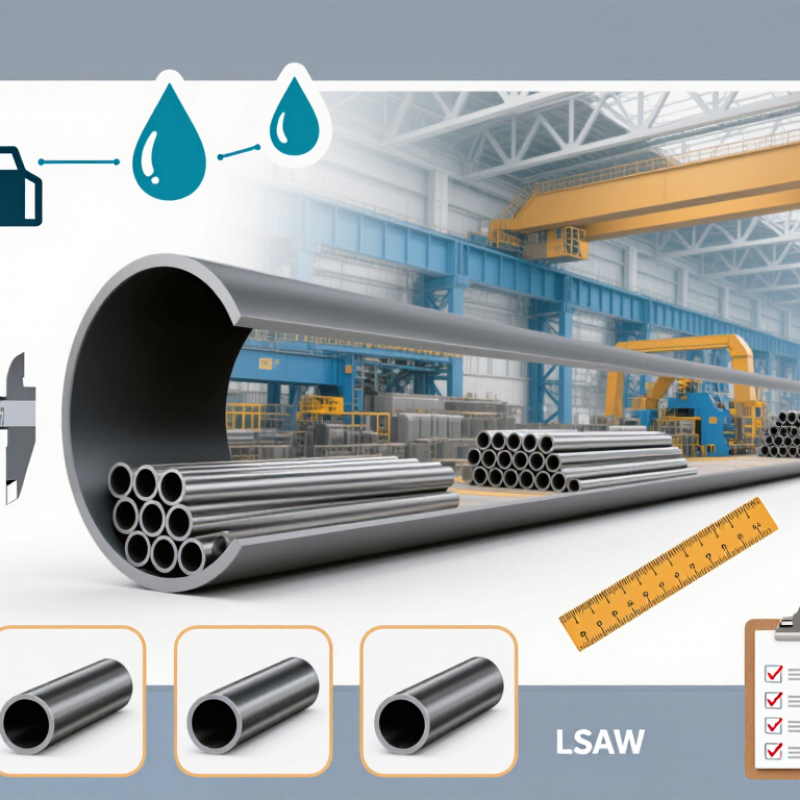
Understanding pipe types is more important than comparing prices. Seamless carbon steel pipe suits high-pressure service, such as boilers, hydraulic systems, and oil lines. Electric-resistance-welded pipe offers efficient production for water, structural, and lower-pressure applications. Spiral-welded pipe can handle large diameters for piling, drainage, and long-distance water transmission. Fit matters.
The World Steel Association reported about 1.89 billion tonnes of crude steel production worldwide in 2023. China produced approximately 1.02 billion tonnes, creating a deep supply base for carbon steel pipe. Buyers should still verify chemistry, wall thickness, heat numbers, and dimensional tolerances. A mill test certificate is useful, but independent inspection adds stronger evidence. The paperwork can be imperfect.
Industry demand also shapes pipe selection. The International Energy Agency reported global natural gas consumption above 4 trillion cubic metres in 2023. This supports continuing demand for transmission and processing infrastructure. For energy projects, buyers should check pressure ratings, weld inspection, impact testing, and coating requirements. For construction, load capacity, length tolerance, and surface condition often matter more. Ask Chinese suppliers for production records, applicable standards, sample certificates, and recent inspection results. A low quotation may hide extra costs for coating, testing, cutting, or inland transport.

Minimum specified yield strength of selected carbon steel pipe grades commonly sourced in China
ASTM A53 Grade B is widely used for water, air, and general mechanical services. ASTM A106 Grade B is designed for seamless high-temperature piping. API 5L Grade B is commonly selected for oil and gas transmission lines, while ASTM A333 Grade 6 is intended for low-temperature service. ASTM A500 Grade B is frequently used for structural hollow sections. The values shown are minimum specified yield strengths in MPa; buyers should confirm the applicable standard, pipe dimensions, manufacturing process, test certificates, and end-use requirements before purchasing.
Reliable carbon steel pipe suppliers in China should be assessed through evidence, not attractive prices alone. China produced approximately 1,005.1 million tonnes of crude steel in 2024, according to World Steel Association data. This large capacity creates choice, but also makes supplier screening essential. Ask for the producing mill’s name, manufacturing location, applicable standard, and recent mill test certificates.
A serious supplier should provide heat-number traceability from billet to finished pipe. Check chemical composition, yield strength, tensile strength, wall thickness, ovality, and hydrostatic test results. For line pipe, verify the relevant API or ISO requirements. Independent inspection can witness sampling, dimensional checks, and non-destructive testing before shipment. ISO’s 2023 Survey recorded more than 1.2 million ISO 9001 certificates worldwide, yet certification alone does not prove consistent pipe quality. That point is easy to overlook.
Request production photos, packing details, and a small trial order when practical. Compare certificates against random samples, rather than accepting scanned documents without questions. The supplier should explain rejected material, corrective actions, and replacement terms clearly. Shipping performance also matters; confirm port options, export documents, tolerances, and Incoterms in writing. No checklist is perfect. I would still keep one weakness in mind: a clean sample may not represent every production batch. Regular third-party inspection and retained samples reduce that risk, especially for large orders or demanding construction projects.
Use the following sourcing dimensions to compare carbon steel pipe suppliers in China. Regional information identifies established manufacturing clusters, while standards and verification documents help buyers assess suitability, traceability, and export readiness.
| Sourcing Dimension | Relevant Chinese Production Area | Commonly Available Products | Typical Standards or Specifications | Documents and Quality Evidence to Request | Best Fit for Buyers |
|---|---|---|---|---|---|
| Large-volume line pipe sourcing | Hebei Province One of China’s major steel and pipe manufacturing regions, with extensive industrial infrastructure and access to northern ports. | Seamless pipe ERW pipe LSAW pipe Spiral welded pipe | API 5L for line pipe applications; ASTM A53 for general mechanical and pressure-service applications; ASTM A106 for seamless carbon steel pipe used at elevated temperatures. | Mill test certificate; heat number traceability; chemical composition; tensile and yield results; hydrostatic or nondestructive test records; dimensional inspection report. | Infrastructure, water transmission, oil and gas pipelines, piling, and large project orders. |
| Precision and seamless pipe sourcing | Jiangsu Province A well-developed manufacturing base for seamless, precision, and specialized steel tubes. | Hot-finished seamless pipe Cold-drawn tube Precision tube Boiler tube | ASTM A106; ASTM A179 for seamless cold-drawn low-carbon steel heat-exchanger tubes; ASTM A192 for high-pressure boiler tubes; EN 10216-1 where specified by the project. | Manufacturing process statement; heat-treatment record; eddy-current or ultrasonic test report where applicable; surface-finish and tolerance report; sample approval record. | Heat exchangers, boilers, machinery, hydraulic systems, and applications requiring tighter dimensional control. |
| Welded structural and fluid pipe sourcing | Tianjin Municipality A prominent northern Chinese steel-pipe manufacturing and export location with established logistics connections. | ERW pipe Hot-dip galvanized pipe Square tube Rectangular tube | ASTM A53; ASTM A500 for structural tubing; EN 10219 for cold-formed welded structural hollow sections; relevant Chinese GB/T specifications when required. | Welding-process details; zinc-coating thickness report for galvanized pipe; weld inspection results; dimensional tolerances; packing photographs; certificate of origin when required. | Construction, scaffolding, structural frames, water systems, fencing, and general engineering projects. |
| Coastal export and fabricated pipe sourcing | Zhejiang Province Important eastern manufacturing and export region with access to major seaports. | Seamless pipe Welded pipe Cut-to-length pipe Fabricated pipe sections | ASTM A53; ASTM A106; API 5L; EN 10217 for welded steel tubes for pressure purposes, subject to the purchase specification. | Product data sheet; inspection and test plan; third-party inspection acceptance; end-preparation details; coating or preservation records; export packing list. | Buyers requiring customized lengths, prepared ends, mixed containers, and efficient ocean freight connections. |
| High-volume welded pipe and project supply | Shandong Province A major industrial and steel-processing region with production capacity for welded and seamless pipe products. | Spiral welded pipe LSAW pipe ERW pipe Coated line pipe | API 5L; ASTM A252 for steel pipe piles; ASTM A53; ISO 3183 for petroleum and natural gas pipeline transportation systems. | Plate or coil origin; weld procedure qualification; radiographic or ultrasonic testing records; hydrostatic test certificate; coating inspection report; production photographs. | Water projects, piling, oil and gas infrastructure, municipal construction, and large-diameter pipeline applications. |
| Supplier qualification and export readiness | Applicable to all regions Regional location should be treated as a starting point rather than proof of supplier reliability. | Stock material Made-to-order pipe Project packages | Confirm the exact edition and scope of the requested standard, grade, outside diameter, wall thickness, length, end finish, coating, and testing requirements before purchase. | Business registration details; production-site address; recent mill test certificates; independent inspection option; sample or video inspection; contract, packing, and shipping documents. | All buyers comparing quotations, especially importers, contractors, distributors, and engineering procurement teams. |
| Commercial and logistics comparison | Port-connected manufacturing locations Freight cost and delivery time depend on the factory, port, order volume, and destination. | FOB shipment CFR shipment CIF shipment Container or bulk cargo | Compare quotations using the same specification, quantity, tolerance, testing level, packing method, and Incoterm. Do not compare price alone. | Pro forma invoice; commercial invoice; packing list; bill of lading; certificate of origin; insurance certificate for CIF shipments; fumigation document when wooden packing is used. | International buyers seeking a transparent landed-cost comparison and predictable delivery schedule. |
When buying carbon steel pipe in China, compare the standard before comparing the price. Common project requirements may reference ASTM, API, EN, or GB standards. Each standard defines chemistry, mechanical strength, dimensions, and testing rules. A pipe marked “carbon steel” is not enough. It may be seamless, electric-resistance welded, or longitudinally welded. The production route affects pressure performance and cost. Ask for the exact standard edition. Editions can change acceptance limits.
Specifications should match the service, not only the drawing. Check nominal diameter, outside diameter, wall thickness, length, and end finish. For example, a DN100 pipe may have different wall thicknesses under different schedules. A six-meter length can reduce field joints, while twelve meters may complicate transport. Available sizes often range from small instrument lines to large transmission pipes. Stock varies by mill and production process. Check availability early.
For dependable purchasing, request a material test certificate, heat-number traceability, dimensional reports, and applicable testing records. Confirm tolerances, coating needs, packing, and loading protection in writing. Samples can reveal ovality, rough weld beads, or damaged threads. Buyers sometimes focus on outer diameter and miss low-temperature impact requirements. That mistake is expensive. Measurement systems are easy to overlook. Verify every dimension before placing the order.
When buying carbon steel pipe in China, certificate quality matters more than a polished sales page. The World Steel Association reported that China produced about 1.005 billion tonnes of crude steel in 2024. This scale creates choice, but it also makes supplier screening essential. Request ISO 9001 records, material test certificates, and EN 10204 3.1 documentation. For pipeline applications, verify whether API 5L certification is genuinely required. Check the certificate scope, expiry date, issuing body, and matching heat number.
Price needs a landed-cost comparison. Include steel grade, wall thickness, pipe length, coating, inspection, packing, freight, and import charges. The OECD Steel Outlook 2024 warned that global excess steel capacity could reach about 721 million tonnes by 2027. This pressure may produce attractive offers, but unusually low prices deserve questions. Ask for a written quotation with tolerances and testing included. A cheap quote can become expensive.
Production capacity should be measured, not claimed. Request monthly output, available diameters, forming methods, heat-treatment limits, and non-destructive testing records. An independent inspection can verify dimensions, weld quality, chemical composition, and traceability before shipment. I once treated a large factory figure as proof of reliability; that comparison was too simple. A supplier may have high total capacity but limited capacity for your exact specification. Short sample runs help reveal packing quality and document accuracy. Small details matter.
When buying carbon steel pipe in China, shipping terms deserve careful attention. FOB may suit experienced buyers with their own forwarder. CIF can simplify ocean transport, but confirm the destination port and insurance coverage. DAP offers more convenience, yet local duties and unloading costs may remain your responsibility. Ask for a complete quotation with pipe weight, packing method, delivery schedule, and document fees. A small omission can create a large bill.
Inspection should happen before shipment, not only after arrival. Request checks for outside diameter, wall thickness, length, surface condition, and pipe markings. For pressure-service applications, review hydrostatic test records and material certificates. An independent inspector can witness sampling and compare results with the purchase specification. Keep photographs of bundles, heat numbers, and loading conditions. Paperwork is useful, but it is not proof of everything.
After-sales support must be written into the contract. Define the claim period, evidence requirements, response time, and remedy for shortages or nonconforming pipes. Replacement, credit, or refund terms should be clear before payment. During one review, a buyer may discover that “prompt support” has no measurable meaning. That wording is weak. Use practical deadlines instead. No vague promises. Even careful inspections can miss a problem, especially when handling damage occurs at the port. A reliable supplier should still communicate clearly, investigate the cause, and preserve traceability from production to delivery.