Contact Kelly McNamara for information on products, services or locations.
Choosing the best smart steel supplier in China requires more than comparing price lists. It requires evidence.
“Smart steel” usually combines advanced production, digital monitoring, traceability, energy efficiency, and lower-carbon manufacturing. The term is not perfectly standardized. That creates confusion for buyers. A modern factory may advertise automation, yet provide limited data about emissions, quality consistency, or delivery performance.
The World Steel Association reported global crude steel production of about 1.89 billion tonnes in 2023. The International Energy Agency also identifies steel as responsible for roughly 7% to 9% of global carbon dioxide emissions. These figures make supplier selection a commercial and environmental decision. Buyers should examine mill certificates, testing procedures, recycled-content records, energy sources, and shipment history. Factory visits can reveal details that brochures hide, such as coil labeling, furnace controls, and warehouse discipline.
Edwin Basson, Director General of the World Steel Association, has stated, “There is no single solution to decarbonise steel.” That observation matters. The strongest Chinese supplier may not be the one with the newest slogan. It may be the producer that combines verified quality, responsive engineering, stable capacity, and transparent environmental reporting.
Look for proof.
A practical evaluation should compare product standards, defect rates, digital traceability, carbon data, and after-sales support. Certifications help, but they are not a complete answer. Even reputable suppliers can have reporting gaps or inconsistent project execution. That weakness deserves attention, not denial. The following comparison examines which Chinese smart steel suppliers offer the most credible balance of technology, reliability, sustainability, and long-term value.
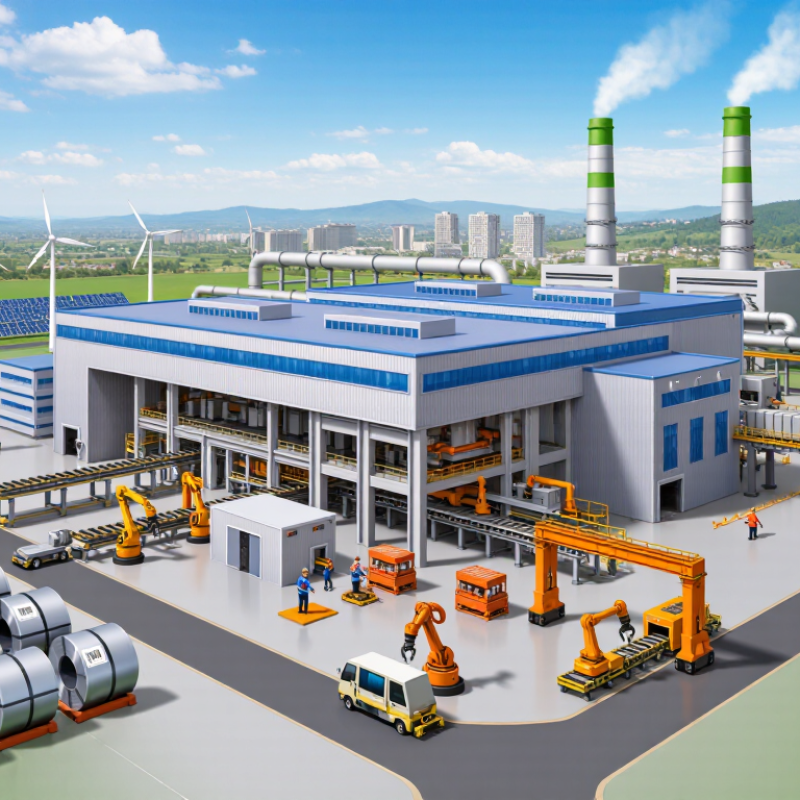
A smart steel supplier in China is more than a low-price mill. It connects metallurgy, data, logistics, and customer risk control. China produced about 1.005 billion tonnes of crude steel in 2024, according to World Steel Association data. At this scale, reliable systems matter more than attractive promises.
A capable supplier should identify every coil by heat number, grade, thickness, and inspection status. Buyers should receive mill test certificates, dimensional records, and clear production photographs. A digital portal can show order progress, but traceability must reach the physical warehouse.
Sampling should include chemical analysis, tensile testing, and surface inspection before shipment. These practices support ISO 9001-style quality management, but certification alone proves little.
Low-carbon capability is also becoming practical, not decorative.
The International Energy Agency reports that steelmaking creates roughly 7% of global energy-related emissions. A smart supplier should disclose electricity sources, scrap ratios, production routes, and product-level emissions where possible. Data must be verifiable. A polished dashboard is not proof.
In practice, some suppliers still report incomplete carbon figures or delay difficult quality records. That weakness deserves an honest review, not a sales slogan. Buyers should test response speed with a real specification, a short delivery window, and one unexpected technical question. The answer often reveals more than a catalogue.
What Is the Best Smart Steel Supplier in China?
China’s smart steel supply chain starts with traceable raw materials, not a polished website. The World Steel Association reported China produced about 1.005 billion tonnes of crude steel in 2024. At this scale, manual coordination creates costly blind spots. Connected sensors monitor furnace temperature, slab thickness, and cooling speed. Manufacturing execution systems then link these readings with production orders and quality records. Buyers should request heat numbers, inspection certificates, and live delivery milestones. Small details matter.
Digital logistics adds another layer. Steel coils move through mills, warehouses, ports, and construction sites. A reliable supplier connects inventory data with transport scheduling and customs documentation. This reduces idle trucks and prevents duplicate stock records. The system must also protect data access. Strong traceability is professional practice, not decoration.
The environmental test is harder. The International Energy Agency estimates iron and steel account for roughly 7% of global energy-related emissions. Smart systems can reduce rework, energy waste, and unnecessary transport, but they cannot erase emissions. The model is imperfect. Sensor failures happen. Data can also be incomplete. Experienced procurement teams therefore audit digital records against physical coils, weighbridge tickets, and laboratory results. The best supplier is not simply the most automated. It is the one that can explain a discrepancy quickly, document corrective action, and improve its process afterward.
| Supply Chain Dimension | How the Chinese Smart Steel Supply Chain Operates | Key Data or Industry Fact | What Buyers Should Verify | Assessment Priority |
|---|---|---|---|---|
| Raw Material Sourcing | Steelmakers combine imported iron ore, domestic concentrates, recycled scrap, coking coal, and alloying materials according to the production route and product grade. | Blast-furnace production mainly uses iron ore, sinter or pellets, and coke; electric-arc-furnace production mainly uses steel scrap and electricity. | Material origin, raw-material testing records, supply continuity, and traceability from incoming material to finished coil or bar. | Very High |
| Production Route | Large integrated plants commonly use the blast furnace–basic oxygen furnace route, while electric-arc furnaces are used where scrap availability and electricity supply support lower-carbon production. | Both BOF and EAF routes are established industrial processes; their energy use, emissions profile, and suitable product mix are different. | Production route, annual capacity range, furnace configuration, maintenance planning, and ability to switch between grades. | Very High |
| Smart Manufacturing | Digital systems connect process-control equipment, laboratory data, warehouse operations, maintenance records, and order information across the mill. | Common technologies include industrial sensors, programmable logic controllers, manufacturing-execution systems, enterprise-resource-planning systems, and supervisory control systems. | Real-time production visibility, system integration, data-retention policy, cybersecurity controls, and availability of digital batch records. | Very High |
| Process Automation | Automated control is used in furnace operation, continuous casting, rolling, cooling, cutting, weighing, marking, and packaging. | Automation helps stabilize temperature, chemical composition, dimensions, surface condition, and production speed. | Automation coverage, calibration records, alarm management, operator intervention procedures, and process capability results. | High |
| Product Quality Control | Quality control normally includes chemical analysis, dimensional inspection, mechanical testing, surface inspection, and non-destructive testing when required by the order. | Typical mechanical tests include yield strength, tensile strength, elongation, impact toughness, hardness, and bend testing, depending on the product standard. | Test method, laboratory accreditation, equipment calibration, inspection frequency, nonconformance handling, and original mill certificates. | Very High |
| Applicable Standards | Products may be manufactured to Chinese GB or GB/T standards, international standards, or customer specifications, subject to the contract. | Common reference frameworks include GB/T, ASTM, EN, JIS, and ISO-related quality-management requirements. | Exact standard edition, grade designation, tolerance class, supplementary testing, and whether third-party inspection is contractually required. | Very High |
| Traceability | Heat numbers, coil numbers, bundle numbers, bar marks, and shipping labels link finished products to the production and inspection records. | A robust traceability system should connect the product identity with the heat, chemical analysis, process route, test results, and shipment documentation. | Sample traceability exercise, label consistency, certificate matching, barcode or RFID use, and record-retention period. | Very High |
| Inventory and Warehousing | Digital warehouses track production status, storage location, product dimensions, stock quantity, quality status, and dispatch priority. | Effective inventory control reduces mixed-grade shipments, duplicate allocations, storage damage, and dispatch errors. | Stock accuracy, covered storage, corrosion protection, lifting equipment, product segregation, and loading inspection procedures. | High |
| Logistics Coordination | Orders are coordinated through road, rail, inland waterways, and ocean freight according to plant location, delivery terms, cargo weight, and destination. | Steel logistics requires careful control of weight, loading sequence, packaging, moisture exposure, and documentation. | Incoterms, loading plan, export documentation, container or vessel suitability, insurance responsibilities, and shipment tracking. | High |
| Energy Management | Smart plants monitor electricity, fuel gas, oxygen, steam, compressed air, and process-gas consumption by production unit. | Energy intensity varies significantly by product type, furnace route, raw-material quality, equipment condition, and operating practice. | Energy-monitoring system, specific-energy data, recovery of waste heat or process gas, and documented improvement targets. | High |
| Environmental Performance | Environmental controls cover particulate matter, sulfur oxides, nitrogen oxides, wastewater, solid residues, slag, dust, and greenhouse-gas emissions. | Environmental performance depends on the production route, fuel mix, emission-control equipment, operating conditions, and reporting boundary. | Valid permits, emissions-monitoring records, waste-disposal documentation, environmental audits, and product carbon-accounting method. | High |
| Customization Capability | Suppliers may produce different grades, thicknesses, widths, lengths, surface finishes, edge conditions, and packaging formats when equipment and minimum order quantities allow. | Customization usually affects production scheduling, yield, tooling, testing requirements, and delivery time. | Minimum order quantity, dimensional capability, trial-order policy, sample approval process, and surcharge rules. | High |
| Delivery Reliability | Delivery performance depends on raw-material availability, production scheduling, quality release, port capacity, customs procedures, and transport conditions. | A reliable supplier should provide a defined order-confirmation process and shipment milestones rather than relying only on an estimated dispatch date. | Historical on-time delivery rate, lead-time definition, delay-notification procedure, production-slot reservation, and contingency planning. | Very High |
| Commercial Transparency | Steel quotations commonly separate product price from processing, testing, packaging, inland transport, export handling, duties, and freight where applicable. | Final cost is influenced by grade, size, quantity, trade term, payment method, inspection scope, and market-linked raw-material costs. | Detailed quotation, validity period, price-adjustment clause, payment protection, inspection fees, and responsibility for claims. | High |
| Supplier Qualification | Buyer qualification combines document review, technical evaluation, factory audit, sample testing, trial orders, and performance monitoring. | Certificates alone do not prove production capability; independent verification should confirm that the certified site and actual production process match the order. | Operating license, quality certificates, audit results, production records, customer references without confidential information, and corrective-action history. | Very High |
The most suitable supplier is determined by product compliance, traceability, process capability, delivery reliability, environmental controls, and total landed cost—not by price alone.
Choosing the best smart steel supplier in China requires more than comparing tonnage or quoted price. Leading suppliers combine metallurgical knowledge with connected production systems. In practice, I would inspect coil records, furnace controls, and inspection reports before signing a contract. Their engineers should explain grade selection, forming limits, weldability, and corrosion performance in plain language. Clear answers matter.
A strong supplier uses sensors across melting, rolling, heat treatment, and finishing. Digital batch records should link each coil to chemical analysis, mechanical tests, surface inspection, and operator checks. This traceability helps buyers investigate a rejected part without guessing. Automated gauges can monitor thickness and flatness, while laboratories verify tensile strength and impact results. Yet smart equipment alone proves little. Calibration records and independent test samples reveal whether data is trustworthy.
Capability also appears in customization and service. Leading teams can adjust dimensions, tolerances, packaging, and delivery schedules without losing process control. They should provide trial coils, technical datasheets, and a realistic corrective-action plan. Export experience matters too, especially for documentation, packaging, and destination requirements. I would still challenge every promise with a small pilot order. No supplier is perfect. A batch may pass the mill test and behave differently during stamping. That gap deserves honest discussion, not polished sales language.
A reliable smart steel supplier must prove quality beyond a polished website. World Steel Association data shows global crude steel production reached about 1.89 billion tonnes in 2023. That scale makes process discipline essential. Request mill certificates, heat numbers, chemical analysis, tensile results, and traceability records. Then compare them with your required ASTM, EN, or GB standards. A practical audit should follow one coil from raw material receipt to loading. Check barcode scans, furnace records, calibration dates, and nonconformance handling. Small gaps matter.
Technology should improve control, not merely decorate a factory tour. Ask whether sensors monitor furnace temperature, rolling speed, coating thickness, and surface defects in real time. Review calibration evidence and data-retention rules. IEA reports that iron and steel production creates roughly 7% of global energy-related emissions, so energy data deserves attention. Verify electricity use, fuel consumption, scrap ratios, and emissions calculations. Digital dashboards can mislead. Independent records are stronger.
Compliance includes product safety, labor practices, environmental controls, and responsible sourcing. Use ISO 9001 as a framework, not as proof of perfect performance. An accredited certificate should show scope, validity, and audit body. OECD due-diligence guidance also supports checking supply-chain risks and corrective actions. Ask for recent audit findings, not only clean certificates. I would leave room for doubt: a supplier with no reported problems may simply report poorly. Test samples independently, define acceptance limits, and review performance after delivery.
Selecting the best smart steel supplier requires more than comparing prices. A reliable supplier should understand your project’s load, environment, fabrication method, and delivery schedule. Ask for clear technical data, including steel grade, thickness tolerance, yield strength, and corrosion performance. The supplier should also provide traceable mill test reports for every batch. Small gaps in documentation can create large problems during inspection.
Digital capability matters when steel orders are complex. Look for suppliers using barcode tracking, production updates, quality records, and shipment notifications. These tools help your team follow material from raw coil to finished component. Request a sample production record before signing a contract. It should show inspection points, responsible personnel, and corrective actions. If the information feels vague, pause.
Supplier experience must match your application. A company skilled in structural frames may not understand precision parts or harsh coastal conditions. Review similar projects, factory capacity, equipment maintenance, and export experience. A factory visit can reveal more than a polished presentation. Check storage areas, cutting accuracy, welding discipline, and packaging quality. Do not rely on certificates alone; confirm their scope and validity. No supplier is perfect. I have seen strong technical teams lose trust through late updates. Set measurable terms for lead time, tolerances, testing, packaging, and response time. A written inspection plan protects both sides.