Contact Kelly McNamara for information on products, services or locations.
Sourcing across global steel industries is no longer a simple price comparison. Buyers must evaluate origin, production methods, logistics, quality systems, and supplier resilience. The World Steel Association reported approximately 1.89 billion tonnes of crude steel production worldwide in 2023. That scale creates opportunity, but it also creates uneven standards, volatile lead times, and difficult verification.
Carbon performance now matters alongside chemistry and tensile strength. The International Energy Agency estimates that iron and steel production generates about 7% to 9% of global energy-related carbon dioxide emissions. This figure makes emissions data commercially relevant, especially when customers request low-carbon materials or traceable supply chains. A mill’s certificate may look complete, yet the real questions involve testing frequency, recycled content, furnace technology, and the accuracy of reported data. Small details matter.
This guide, “10 Tips for Sourcing from Global Steel Industries,” focuses on practical decisions made before a purchase order is issued. It considers supplier audits, material standards, payment controls, shipping risks, and documentation. The OECD’s steel market analyses repeatedly highlight persistent overcapacity and changing trade conditions, which can affect prices and supplier behavior. A low quotation is not always a strong quotation. Sometimes, it hides future costs.
No checklist is flawless. Experienced procurement teams still encounter delayed certificates, inconsistent dimensions, or misunderstood Incoterms. The sensible response is not suspicion without evidence. It is disciplined verification, clear communication, and documented review. These ten tips offer a reliable starting point for sourcing steel with greater technical confidence, commercial awareness, and responsible judgment.
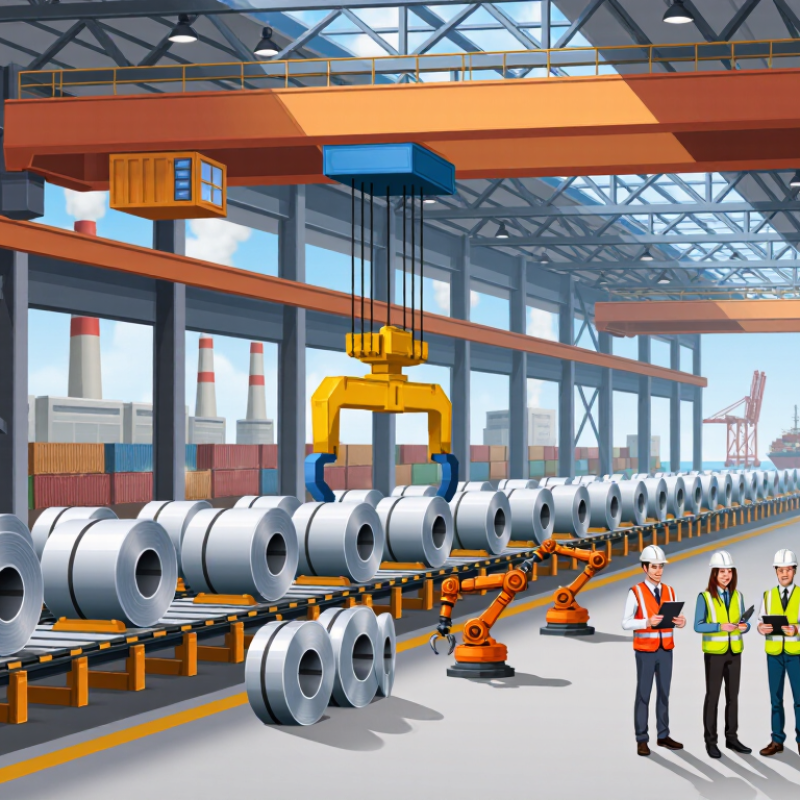
Global steel sourcing begins with understanding the market, not chasing the lowest quotation. Demand changes with construction cycles, energy costs, and regional capacity. Track benchmark prices, billet costs, freight rates, and currency movements before requesting offers. A cheap price can hide long lead times or unstable quality.
Define the required grade, dimensions, tolerances, surface finish, and testing standard in writing. Ask suppliers for production capacity, recent inspection records, mill certificates, and sample reports. Verify whether their stated capacity matches the requested monthly volume. Visit the facility when practical. Photos are useful, but they are not proof. I once relied too heavily on a polished report and missed a packaging weakness.
Review loading ports, transit time, customs documents, and applicable import rules. Confirm Incoterms, insurance responsibility, payment stages, and delivery penalties before signing. Use independent inspection for chemical composition, tensile strength, weight, and surface condition. Keep a documented approval process. It protects both sides. Also assess weather exposure during storage, especially for coils and galvanized products. Build a second-source option, but do not approve it without the same technical review. Market forecasts can fail, so leave room for revised volumes and changing freight costs. Supplier communication should be measured, specific, and recorded after each call.
Regional steel production is highly concentrated in Asia and Oceania, making regional diversification, supplier qualification, logistics planning, and price-risk management important parts of a global sourcing strategy.
Data: 2023 regional crude steel production, rounded in million tonnes. Source: World Steel Association, World Steel in Figures 2024.
A capable steel supplier should provide evidence, not polished promises. The World Steel Association reported approximately 1.89 billion tonnes of global crude steel production in 2023. This scale creates choice, but also hides uneven quality, delivery, and traceability. Request recent mill test certificates, heat numbers, chemical results, and mechanical data for the exact grade you need. Verify whether an accredited body issued the ISO 9001 certificate, and check its scope and expiry date. ISO 14001 may indicate environmental controls, but it does not prove product consistency.
Capacity needs closer inspection. The OECD reported global steelmaking capacity above 2.4 billion tonnes in recent assessments, while utilization differs significantly by region and facility. Ask for monthly output, furnace or electric-arc capacity, rolling-line limits, maintenance schedules, and current order commitments. A supplier may claim one million tonnes annually, yet only have limited capacity for your thickness, width, or surface finish. Ask for a production plan linked to your purchase order. Details matter.
I have learned to question impressive spreadsheets. A factory tour can reveal idle equipment, crowded yards, or weak labeling systems. Some judgment calls remain. Request two years of on-time delivery records, independent inspection options, and corrective-action reports. Confirm whether subcontracted processing affects traceability. Certifications support confidence; they do not replace technical audits, sample testing, or direct conversations with production managers. A small trial order often exposes problems that documents conceal.
Sourcing steel globally is not a price exercise; it is a specification-control exercise. The World Steel Association reported 1,892.2 million tonnes of crude steel production in 2023, showing the scale behind international supply.
Define the exact grade and governing standard. State thickness, width, length, tolerances, and delivery condition. List chemical limits, including carbon equivalent when welding matters.
Specify yield strength, tensile strength, elongation, and impact temperature. Identify test methods, such as ISO 6892-1 for tensile testing and ISO 148-1 for Charpy impact testing.
Keep units consistent. A missed unit can distort acceptance.
Describe surface condition clearly: pickled, blasted, coated, or mill finish. Require heat-number traceability from plate to test certificate. Request an EN 10204 3.1 inspection document, but do not treat paperwork as proof by itself.
Define sampling frequency, specimen location, retest rules, and acceptance limits. Agree on dimensional checks before production. Add ultrasonic testing when internal discontinuities could affect service.
Use pre-shipment inspection with calibrated gauges and recorded photographs. Set hold points for witness or review inspections.
OECD reporting projects global steelmaking overcapacity could reach 561 million tonnes by 2026, increasing the need to verify capacity claims and consistency.
In practice, I have seen clear documents hide terms such as “commercial quality.” That wording is weak. Replace it with measurable criteria.
Even a perfect checklist cannot correct an unsuitable grade, rushed sampling, or poor communication between engineering and inspection teams.
Sourcing steel globally is not a simple hunt for the lowest quoted price.
In my procurement work, I compare the same grade, thickness, tolerance, and inspection standard before reviewing suppliers.
A quote of $620 per metric ton can look attractive, yet freight, insurance, port charges, and inland delivery may add $85.
Currency movement can change the result before the purchase order is signed. Keep the comparison on one delivered-cost basis. Otherwise, the cheapest offer is often only the cheapest headline.
Contracts deserve the same attention as prices.
I specify chemical limits, mechanical properties, dimensions, packaging, inspection rights, delivery windows, and remedies for shortages.
Payment terms also affect risk. A 30% deposit may reduce the seller’s exposure, but it increases the buyer’s cash burden. A letter of credit, milestone payment, or payment after inspection can shift risk differently. Each option has bank fees and documentation requirements.
I once accepted a flexible delivery clause to secure a lower price. That estimate was too optimistic. A delayed shipment disrupted production and erased the saving.
Calculate total sourcing cost before approval.
Include sampling, testing, financing, customs, storage, quality claims, and possible scrap.
Ask for recent mill records, traceability documents, and independent inspection access. Verify that the contract follows applicable trade, safety, and import rules.
A spreadsheet can still lie when assumptions are hidden.
Use three scenarios: expected, delayed, and adverse. Review the figures with finance, quality, and logistics teams before committing. Mark every assumption.
Sourcing steel across borders requires more than comparing mill prices. Freight routes, port congestion, packaging, and inland delivery can change the real cost quickly. Request weight tolerances, loading photos, and shipment milestones before signing. A clear logistics plan prevents expensive surprises.
Tip 1: Build a customs file early. Include commercial invoices, packing lists, certificates of origin, material grades, and accurate tariff classifications. Check import rules with qualified customs professionals in the destination country. One missing detail can delay a container for days. Do not rely on copied documents. Verify every field.
Risk control should cover quality, currency, transport, and supplier continuity. Define inspection points before production, especially for thickness, surface condition, and chemical composition. Use independent testing when the order is technically sensitive. Insurance also deserves attention; basic coverage may not protect against every loss. Sometimes, cheaper freight creates greater exposure.
Tip 2: Keep a practical backup plan. Qualify an alternative supplier, reserve flexible delivery windows, and monitor political or weather disruptions. This is not excessive caution. It is ordinary procurement discipline.
Long-term partnerships grow through measurable habits. Share rolling forecasts, pay according to agreed terms, and record corrective actions after each shipment. Visit facilities when practical, but do not treat one successful visit as permanent proof. Conditions change. A strong relationship still needs audits, transparent communication, and written expectations. That part is easy to underestimate.
| No. | Sourcing Dimension | Recommended Practice | Key Data or Benchmark | Risk-Control Measure | Performance Indicator |
|---|---|---|---|---|---|
| 1 | Supplier Qualification | Evaluate production capacity, quality systems, export experience, financial stability, and traceability before issuing a purchase order. | Review at least 2–3 years of relevant operating and quality records where available. | Use an approved-supplier checklist, document verification, reference checks, and an on-site or remote audit. | Audit score; nonconformance rate; on-time delivery history. |
| 2 | Steel Specification | Define grade, dimensions, tolerances, surface condition, heat treatment, testing requirements, packing, and marking in the purchase specification. | Specify applicable standards such as ASTM, EN, ISO, or JIS according to the destination market and product type. | Require mill test certificates, heat numbers, dimensional inspection, and independent pre-shipment inspection for critical orders. | Rejection rate; certificate completeness; dimensional compliance. |
| 3 | Total Landed Cost | Compare the full delivered cost rather than the quoted steel price alone. | Include product price, inland transport, ocean freight, insurance, duties, taxes, port fees, inspection, financing, and storage. | Build a landed-cost model using the same quantity, currency, Incoterm, delivery point, and validity period for every quotation. | Variance between quoted and actual landed cost. |
| 4 | Incoterms and Insurance | Select the Incoterm that clearly allocates freight, insurance, customs, delivery, and risk-transfer responsibilities. | Incoterms® 2020 distinguishes obligations for transport, insurance, export clearance, import clearance, and risk transfer. | State the named place or port precisely and confirm cargo insurance coverage, exclusions, and claim procedures in writing. | Claims resolution time; uninsured-loss exposure; responsibility disputes. |
| 5 | Lead-Time Planning | Plan production, inspection, inland movement, port handling, ocean transit, customs clearance, and final delivery as separate stages. | Maintain a realistic schedule with buffer for port congestion, weather, inspections, and document corrections. | Use milestone tracking, weekly status updates, and an agreed escalation process for delays. | On-time-in-full delivery; schedule variance in days. |
| 6 | Customs Compliance | Confirm the correct tariff classification, customs value, country of origin, duty treatment, and import licensing requirements before shipment. | Commercial invoice, packing list, bill of lading, origin documentation, certificates, and any required permits must be consistent. | Obtain a binding or advance classification decision where available and have a qualified customs broker review documents before loading. | Customs holds; duty adjustments; documentation error rate. |
| 7 | Trade Remedies and Regulations | Check whether the product is subject to anti-dumping, countervailing, safeguard, quota, sanctions, or sustainability-related requirements. | Trade measures can vary by product classification, origin, exporter status, and entry date. | Verify current government notices and maintain origin, production, and transaction records supporting the declared treatment. | Unexpected duty exposure; regulatory findings; audit readiness. |
| 8 | Logistics and Cargo Handling | Match packaging, loading, securing, and moisture protection to the steel product, transport mode, and storage environment. | Coils, plates, bars, and fabricated parts require different lifting, blocking, bracing, and corrosion-protection methods. | Approve a packing plan, photograph loading condition, record weights, and inspect for rust, deformation, and water damage on arrival. | Damage rate; moisture claims; loading-plan compliance. |
| 9 | Price and Supply Risk | Assess exposure to steel-price movements, currency fluctuations, freight changes, energy costs, sanctions, and regional disruptions. | Use a defined price basis, currency, quotation validity, adjustment formula, and delivery window. | Qualify alternative sources, split critical volumes, maintain safety stock where justified, and include force-majeure and change-control clauses. | Supplier concentration; price variance; days of supply coverage. |
| 10 | Long-Term Partnership | Use quarterly business reviews, shared forecasts, corrective-action plans, and transparent communication to improve performance over time. | Evaluate quality, delivery, responsiveness, cost competitiveness, compliance, and improvement activity using agreed metrics. | Set service-level expectations, escalation contacts, confidentiality terms, warranty conditions, and a documented dispute-resolution process. | Supplier scorecard; corrective-action closure time; annual cost and quality improvement. |