Contact Kelly McNamara for information on products, services or locations.
Steel begins with iron, but its final performance depends on more than one ingredient. The raw materials behind steelmaking include iron ore, recycled scrap, coal or coke, limestone, and several alloying elements. Each has a distinct role. Iron ore supplies iron; coke can provide heat and help remove oxygen; limestone helps capture impurities. Small additions of manganese, chromium, or nickel can change strength, hardness, or corrosion resistance. The right mix depends on the product and the production route.
Metallurgist John D. Verhoeven, author of Steel Metallurgy for the Non-Metallurgist, emphasizes the relationship between steel’s composition and its properties. Put simply, “steel’s behavior depends on what it contains and how it is processed.” This is a paraphrase of his metallurgical perspective, not a verbatim quotation. That distinction matters when explaining technical claims.
This guide examines the top 10 material for steel inputs, including what each contributes and where its limits appear. A handful of pale limestone chips can help bind unwanted material in a furnace. Scrap steel, by contrast, arrives as a mix of shapes and grades, so sorting matters. Not every input is used in every steelmaking route. Some details vary by plant, ore quality, and finished specification. That variation can make a neat top-ten list seem more certain than real operations are. Keep that in mind as you compare the materials.
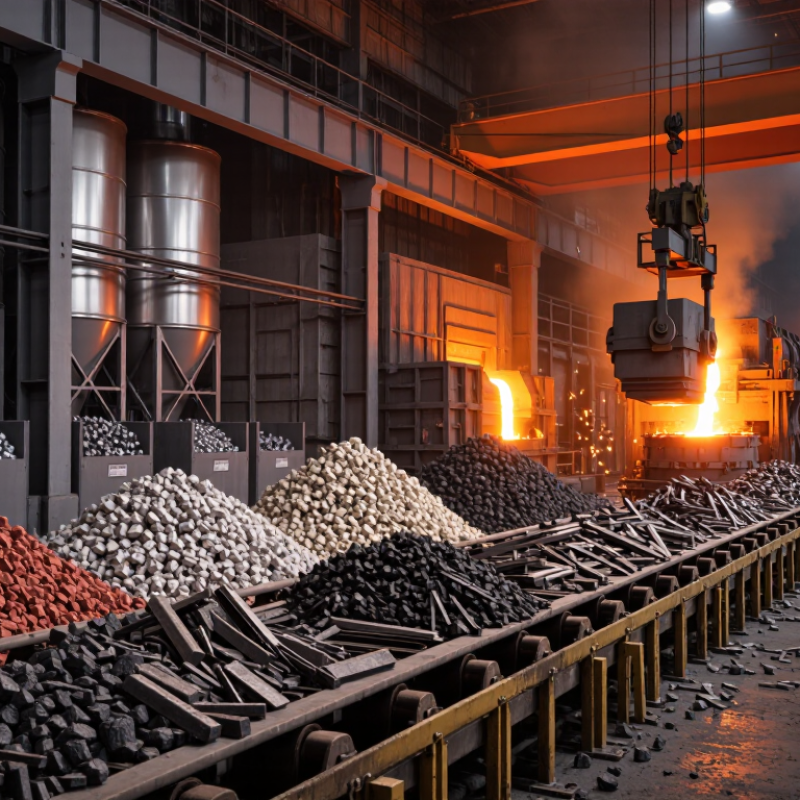
Iron ore supplies much of the iron used in steelmaking. It is mined, crushed, and often upgraded to improve its iron content. In a blast furnace, iron ore reacts with carbon-rich fuel, producing molten iron. The ore’s size and chemistry affect furnace performance, so producers test batches before use.
That matters.
Scrap steel brings already-processed iron back into production. Shredded vehicle panels or heavy steel offcuts may enter an electric arc furnace, where electricity melts the charge. Scrap can reduce demand for newly mined ore, but its composition varies. Coatings, copper, and other residual elements can affect the final steel, so sorting and testing are important.
Direct-reduced iron, or DRI, is made by removing oxygen from iron ore with gas or other reducing agents, without melting the material. It is often used with scrap to help control the furnace charge’s chemistry. DRI is porous and can reoxidize if stored or handled poorly.
It is tempting to describe these three materials as interchangeable sources of iron, but that misses their different processing needs and impurities. The best blend depends on the furnace, the target steel, and what each batch actually contains.
Carbon plays several distinct roles in steelmaking. Coking coal is heated without oxygen to produce coke, a porous fuel and reducing agent used in blast furnaces. Coke also supports the burden of iron ore, allowing hot gases to move through the furnace. The International Energy Agency’s Iron and Steel Technology Roadmap (2020) reports that the blast furnace–basic oxygen furnace route makes about 70% of global steel. That scale explains why coke quality and consistent carbon content matter. Small details matter.
Graphite serves a different purpose. In electric arc furnaces, graphite electrodes conduct electricity and create the intense heat that melts scrap or direct-reduced iron. Some operations also add carbon to adjust melt chemistry or support foamy slag, but graphite is not simply a substitute for coke. World Steel Association data show global crude steel production reached about 1.89 billion tonnes in 2023, underscoring the importance of reliable carbon inputs across production routes. A practical caveat: carbon requirements vary with furnace design, feedstock, and target steel grade, so one fixed recipe will not fit every mill.
Tips: Check coal ash, sulfur, and coking properties before purchasing; these can affect coke strength and furnace stability. For graphite electrodes, track consumption per tonne and inspect wear patterns. Compare results with plant data, not just supplier specifications.
Fluxes help turn unwanted minerals and oxidized impurities into slag, a molten layer that can be separated from steel. Limestone is a common source of lime. In the furnace, its calcium carbonate decomposes into calcium oxide and carbon dioxide. The lime then combines with silica and other components in the slag. Small additions matter. Too little lime may leave the slag unable to capture impurities effectively; too much can make it difficult to manage.
Dolomite supplies both calcium oxide and magnesium oxide after heating. Magnesium oxide can help keep slag chemistry compatible with magnesia-based furnace linings, though the useful amount depends on the process. Silica, often added as sand or contained in the ore, is an acidic slag former. Operators balance it against basic materials such as lime. That balance affects slag fluidity and its capacity to absorb impurities. There is no single recipe for every furnace.
On a working line, these materials arrive as crushed stone and are weighed before charging. A slag sample can reveal whether adjustments are needed. The tricky part is that a small change in feed composition can shift the balance. Textbook ratios help, but actual raw materials vary. That variability deserves attention, not guesswork.
Typical compositions and uses are indicative, not purchasing specifications. Actual chemistry and practice vary by ore, furnace, slag target, and local operating conditions.
| # | Raw Material | Typical Main Composition | Primary Role in Steelmaking | Common Use or Process Stage | Important Consideration |
|---|---|---|---|---|---|
| 1 | Limestone | Calcium carbonate (CaCO3); commonly about 85–98% in suitable flux-grade material | Provides calcium oxide after calcination, helping form a basic slag that captures acidic impurities. | Blast-furnace burden, sinter production, and some steelmaking operations | Calcination releases carbon dioxide; particle size and impurity levels affect furnace performance. |
| 2 | Dolomite | Calcium magnesium carbonate (CaMg(CO3)2); ideal mineral contains roughly equal molar amounts of CaCO3 and MgCO3 | Supplies both calcium and magnesium oxides for slag formation and magnesium balance. | Ironmaking, sinter blends, and preparation of dolomitic lime | Its carbonate content releases carbon dioxide when heated; chemistry varies with natural impurities. |
| 3 | Quicklime | Calcium oxide (CaO); high-grade material often contains approximately 90–96% CaO | Raises slag basicity and helps remove phosphorus and sulfur under suitable refining conditions. | Basic oxygen furnaces (BOF) and electric arc furnaces (EAF) | Reactivity, available CaO, and particle size influence dissolution; moisture exposure can cause hydration. |
| 4 | Dolomitic Lime | Calcined dolomite containing CaO and MgO; proportions depend on the feed and calcination process | Provides basic oxides while adding MgO to the slag. | BOF and EAF slag practices; also used in some ironmaking applications | MgO targets are managed with the slag and refractory system in mind; excess MgO may remain undissolved. |
| 5 | Silica Sand or Quartzite | Silicon dioxide (SiO2); selected quartzite commonly has a high silica content, often above 90% | Acts as an acidic slag former and adjusts slag silica content where the process requires it. | Some electric-furnace practices, foundry-related steel operations, and specific ironmaking applications | Silica is not generally added as a flux in basic steelmaking; its use depends on the intended slag chemistry. |
| 6 | Olivine | Magnesium-iron silicate, commonly represented as (Mg,Fe)2SiO4 | Can provide MgO and silica and help adjust the chemistry of ironmaking materials or slag. | Primarily used in some sinter and blast-furnace practices | Natural iron-to-magnesium ratios vary; suitability depends on the required MgO and silica balance. |
| 7 | Magnesite | Magnesium carbonate (MgCO3); natural and processed grades vary in purity | Source of MgO after calcination, used to adjust magnesium levels in slag-related materials. | Calcined products may be used in ironmaking blends and other metallurgical applications | Heating drives off carbon dioxide; the required form and reactivity depend on the process. |
| 8 | Fluorspar | Calcium fluoride (CaF2); commercial mineral grades vary in fluoride content | Can lower slag viscosity and improve slag fluidity in certain practices. | Historically used in some steelmaking slags; use is now limited or controlled in many operations | Fluoride emissions, environmental controls, and refractory wear are important constraints. |
| 9 | Bauxite | Aluminium-oxide-rich ore; Al2O3 content varies widely with grade | Can increase alumina in slag or in ironmaking burden materials. | Selected ironmaking and slag-adjustment applications | Silica, iron oxides, and other impurities can affect slag properties and must be considered. |
| 10 | Serpentine | Hydrated magnesium silicate; a representative formula is Mg3Si2O5(OH)4 | Provides magnesium and silica-bearing components after heating and can contribute to slag or sinter chemistry. | Used in some sinter blends and ironmaking applications | Heating releases water; mineral composition and loss on ignition influence the effective addition. |
Manganese, chromium, and nickel do more than adjust a steel recipe: they shape how it performs in service. Manganese helps bind sulfur and improves strength and hardenability. Chromium supports wear resistance and, at sufficient levels, corrosion resistance. Nickel can improve toughness, including at low temperatures. Small changes matter. World Steel Association’s World Steel in Figures 2024 reports 1,892.2 million tonnes of crude steel production in 2023, a scale that makes consistent alloy dosing essential. Yet the same addition can behave differently across furnace conditions and steel grades.
Ferroalloys deliver these elements in practical, controlled forms, including ferromanganese, silicomanganese, ferrochrome, and ferronickel. The USGS Mineral Commodity Summaries 2024 estimated 2023 global manganese mine production at about 20 million tonnes of contained manganese. That figure signals a large supply chain, not a guarantee of uniform chemistry. Stainless steel offers a clearer view of alloy demand: the International Stainless Steel Forum reported 58.4 million tonnes of global stainless crude steel production in 2023. Nickel and chromium are central to many stainless grades, but they are not interchangeable. Here is the tricky part: alloy targets look precise on paper, while melt recovery, scrap chemistry, and sampling leave room for error. A useful specification still needs shop-floor verification.
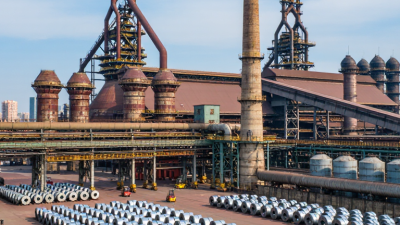
Steelmaking begins with sorting and preparing materials. Iron ore may be crushed, blended, and formed into pellets or sinter. Coal can be heated into coke, which supplies heat and helps remove oxygen from the ore. Limestone is added as a flux. The route matters. In a blast furnace, ore, coke, and flux descend as hot air rises. Molten iron collects below, while unwanted minerals join the flux to form slag. Operators tap the iron and send it onward.
In a basic oxygen furnace, hot iron is combined with scrap steel, then refined with oxygen. Scrap helps control the temperature and adds recyclable metal to the mix. Electric arc furnaces often melt scrap, sometimes with direct-reduced iron. Small additions of alloys can adjust strength or other properties. The steel is sampled, its chemistry checked, and corrections made before casting into slabs or billets. Real plants are less tidy than diagrams. Moisture, ore quality, and scrap composition vary, so the mix needs ongoing attention.
Tips: Keep materials dry and well sorted where practical. Consistent feed makes furnace control easier, but testing matters more than assumptions. Don’t treat every plant’s route as identical.