Contact Kelly McNamara for information on products, services or locations.
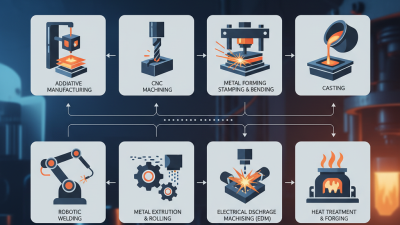
Metal manufacturing is no longer a single factory activity. It includes casting, forging, machining, stamping, welding, extrusion, rolling, fabrication, additive manufacturing, and finishing. Each method leaves a different fingerprint on cost, strength, speed, and sustainability.
Dr. David A. Dornfeld, a respected manufacturing systems scholar, defined the goal clearly: “Sustainable manufacturing is the creation of manufactured products through economically-sound processes that minimize negative environmental impacts while conserving energy and natural resources.” His view gives global buyers a practical standard. A low quotation means little if a machined part arrives with burrs, a weld contains hidden porosity, or a coating fails after salt-spray testing.
Details matter.
This guide examines ten major types of metal manufacturing for international procurement teams. It considers suitable materials, typical tolerances, production volumes, tooling needs, surface finishes, inspection methods, and shipping risks. A forged steel component may withstand repeated impact better than a cast part. A laser-cut sheet may reduce tooling costs, but its edge condition still requires inspection. Powder-bed additive manufacturing can create complex channels, although post-processing may be expensive and slow.
No process wins every order. That is an uncomfortable truth. Buyers can also overvalue price and underestimate documentation, sampling, or supplier communication. Factory audits, material certificates, dimensional reports, and traceability records help reduce those mistakes. Yet paperwork alone cannot replace technical judgment. The strongest sourcing decision connects product function with process capability, supplier experience, and measurable quality evidence.
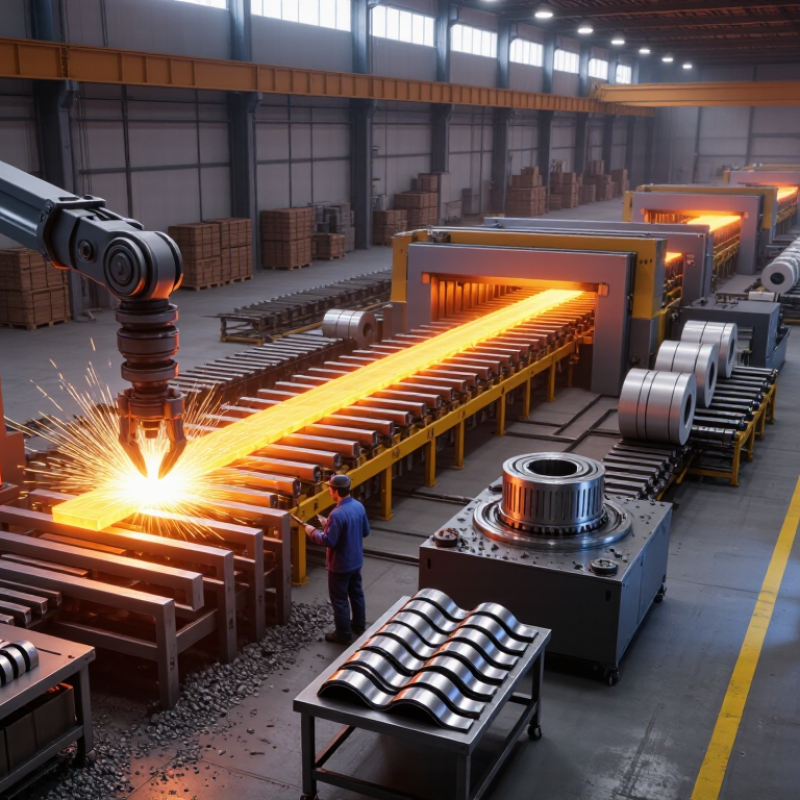
Metal manufacturing is best defined by process and output, not by product labels. The ten major types are casting, forging, rolling, extrusion, stamping, machining, welding, powder metallurgy, additive manufacturing, and sheet-metal fabrication. Casting pours molten metal into molds, producing complex housings and engine components. Forging compresses heated billets, creating dense shafts, fasteners, and structural parts. Rolling reduces thickness through controlled pressure, while extrusion pushes metal through a shaped die for profiles and tubes.
Stamping uses dies to form repeatable panels and brackets. Machining removes material with cutting tools, delivering tight tolerances and smooth surfaces. Welding joins separate pieces into frames, vessels, and pipelines. Powder metallurgy compacts and sinters metal powders, often reducing waste in small precision parts. Additive manufacturing builds components layer by layer, supporting internal channels and low-volume customization. Sheet-metal fabrication combines cutting, bending, punching, and joining.
Scale remains decisive. The World Steel Association reported approximately 1.89 billion tonnes of crude steel production in 2023. The International Aluminium Institute recorded about 70.6 million tonnes of primary aluminium production in the same year. These figures explain why rolling, casting, extrusion, and forging dominate high-volume supply chains. Smaller outputs often favor machining, additive manufacturing, and powder metallurgy. The boundary is not always clean. A forged blank may require machining, and a welded assembly may begin as rolled sheet. Buyers should verify material grade, dimensional tolerance, surface finish, production capacity, and inspection records before comparing quotations. Mistakes here are common, even among experienced teams.
The global steel system handled about 1.89 billion tonnes in 2023, according to World Steel Association’s World Steel in Figures 2024. That volume does not represent one manufacturing route. It moves through casting, forging, rolling, extrusion, stamping, drawing, machining, welding, powder metallurgy, and additive manufacturing. For global buyers, process choice affects strength, tolerances, waste, tooling, and delivery risk.
Casting remains practical for complex shapes and large components. Molten steel fills a mould, but defects can hide beneath a smooth surface. Forging compresses heated metal, improving grain flow and fatigue resistance. It suits shafts, rings, and safety-critical parts. Rolling dominates high-volume sheet, plate, rail, and coil production. It offers efficient thickness control, although edge trimming creates measurable scrap. Extrusion pushes heated metal through a die. It works well for long profiles, but steel extrusion needs higher force than aluminium.
The comparison is not perfectly clean. Industry reports track crude-steel output more reliably than downstream process shares. OECD’s steel-sector analysis also shows that capacity, energy costs, and trade conditions influence purchasing decisions. Buyers should request heat numbers, mechanical-test results, dimensional records, and non-destructive inspection data. A low quoted price may hide extra machining or rejected batches. I have seen specifications overemphasize tensile strength while ignoring fatigue, weldability, and delivery consistency. That is a costly gap.
| No. | Manufacturing Type | Primary Output | Common Materials | Typical Product Size | Typical Dimensional Capability | Approx. Material Utilization | Main Buyer Advantages | Typical Applications |
|---|---|---|---|---|---|---|---|---|
| 1 | Hot Rolling | Plate, sheet, strip, sections, rails, bars and structural shapes produced above the steel recrystallization temperature. | Carbon steelLow-alloy steelStainless steel | Thin strip through heavy plate and large structural sections; plate commonly ranges from roughly 3 mm to more than 200 mm. | Typically around ±0.2 to ±2.0 mm, depending on product thickness, width and applicable standard. | Approximately 90–98%; edge trimming, scale and crop losses affect the final yield. | Lowest cost route for high-volume steel products; efficient for large dimensions and long lengths. | Buildings, bridges, pressure equipment, ship structures, heavy machinery and transport infrastructure. |
| 2 | Cold Rolling | Cold-reduced sheet, strip and precision steel products with improved surface finish and tighter gauge control. | Low-carbon steelElectrical steelStainless steel | Usually thin sheet and strip, commonly below 3 mm and often below 1 mm for precision products. | Typically around ±0.02 to ±0.15 mm for gauge, subject to thickness, width and standard. | Approximately 95–99%; trimming and start/end coil crops are the principal losses. | Excellent surface quality, flatness, gauge precision and suitability for forming or coating. | Automotive panels, appliances, battery components, precision enclosures and electrical equipment. |
| 3 | Continuous Casting | Slabs, billets and blooms cast directly from liquid steel for subsequent rolling or forging. | Carbon steelAlloy steelStainless steel | Billets and blooms commonly range from about 100–400 mm; slabs are commonly several hundred to more than 2,000 mm wide. | Typically around 95–99% from liquid steel to cast semi-finished product, depending on crop and defect removal. | High throughput, lower reheating requirements than ingot routes and consistent semi-finished dimensions. | Long products, flat products, rails, wire rod, seamless-tube feedstock and forged products. | |
| 4 | Sand Casting | Near-net-shape castings made in expendable sand molds, including complex internal cavities. | Cast ironCarbon steelAluminum alloysBronze | Small components to castings exceeding several tonnes; practical size is mainly limited by molding and handling capacity. | Typically around 60–85%; runners, risers and machining allowance can be substantial. | Low tooling cost, broad alloy flexibility and economical production of large or complex shapes. | Engine housings, pump bodies, valve bodies, machine bases, agricultural equipment and custom industrial parts. | |
| 5 | Investment Casting | Detailed near-net-shape castings made from ceramic molds formed around expendable patterns. | Stainless steelNickel alloysAluminum alloysTitanium alloys | Commonly gram-scale to approximately 25 kg per part, with larger parts possible in specialized facilities. | Typically around 70–90%; it reduces machining but still requires gating and finishing allowances. | Fine detail, thin walls, complex passages and reduced need for multi-axis machining. | Industrial valves, turbine components, medical instruments, aerospace hardware and precision mechanical parts. | |
| 6 | High-Pressure Die Casting | High-volume non-ferrous castings formed by injecting molten metal into reusable steel dies. | Aluminum alloysZinc alloysMagnesium alloys | Small to medium parts, commonly from a few grams to approximately 30 kg, depending on machine capacity and alloy. | Typically around 75–95%; runners and overflows may be recycled, while machining allowance is low. | Very high production rates, thin walls, repeatable dimensions and good surface finish after tooling investment. | Vehicle housings, electronic enclosures, appliance components, lighting parts and consumer hardware. | |
| 7 | Open-Die Forging | Large forgings shaped between flat or simple dies with repeated compressive strokes. | Carbon steelAlloy steelStainless steelTitanium alloys | From tens of kilograms to hundreds of tonnes; suitable for shafts, rings, blocks and other large sections. | Typically around 70–90%; flash is limited, but scale, crop ends and machining allowance remain. | Strong directional grain flow, high structural integrity and suitability for large critical components. | Power-generation shafts, pressure vessels, industrial rolls, heavy equipment and energy infrastructure. | |
| 8 | Closed-Die Forging | Forged parts formed inside shaped dies, usually with controlled grain flow and repeatable geometry. | Carbon steelAlloy steelAluminum alloysTitanium alloys | Usually small to medium parts, from several grams to more than 100 kg depending on press capacity and geometry. | Typically around 75–95%; near-net designs can significantly reduce subsequent machining. | High strength-to-weight ratio, reliable fatigue performance and repeatability for medium-to-high volumes. | Automotive steering and suspension parts, connecting rods, aircraft fittings, gears and hand tools. | |
| 9 | Metal Extrusion | Continuous profiles, tubes, channels, rods and custom sections produced by forcing a billet through a die. | Aluminum alloysCopper alloysBrassSteel | Typical profile widths range from a few millimetres to several hundred millimetres; lengths are cut from continuous output. | Typically around 80–95%; billet discard and end cropping are the main losses. | Efficient for constant cross-sections, lightweight profiles and custom geometries with moderate tooling cost. | Heat sinks, window frames, rails, electrical conductors, automotive profiles and structural components. | |
| 10 | Tube and Pipe Forming | Welded or seamless tubes and pipes made by forming strip, plate or billets into circular or special sections. | Carbon steelStainless steelAlloy steelCopper alloys | Outside diameters range from miniature tubing to large-diameter pipe; wall thickness varies widely by process and grade. | Typically around 90–98% for welded tube; seamless routes may have lower yield because of piercing and crop losses. | Scalable production, broad dimensional range and availability of welded or seamless construction for different duties. | Oil and gas lines, water systems, heat exchangers, boilers, structural frames and mechanical tubing. |
Global buyers often compare ten metal manufacturing types: CNC machining, turning, milling, stamping, deep drawing, laser cutting, welding, forging, casting, and additive manufacturing. Each process needs different evidence. Machined parts should show drawing revisions, material certificates, and dimensional reports. A coordinate measuring machine can verify a 0.02 mm feature, but only when the measurement method is documented.
Stamping and deep drawing require controlled tooling, press settings, and springback checks. Inspect edge cracks and surface marks under consistent lighting. Welding needs qualified procedures, trained operators, traceability, and visual inspection records. For critical joints, radiographic or ultrasonic testing may be appropriate. ISO 3834 provides a useful quality framework, while local acceptance requirements still need review.
Additive manufacturing deserves extra caution. Powder condition, layer parameters, build orientation, heat treatment, and porosity can change performance. ISO/ASTM 52900 terminology improves communication, but terminology alone does not prove part quality. Ask for tensile data, density results, and build records from representative batches.
Forging and casting also need grain-flow or porosity controls, not just final dimensions. ISO 9001 supports a reliable quality system, yet certification cannot replace process knowledge.
That is an uncomfortable point. A polished report may hide weak sampling or poor calibration.
Buyers should audit a real production lot, examine rejected parts, and compare inspection results with the drawing. Standards guide decisions; practical evidence makes them believable.
Global buyers often choose among ten metal manufacturing routes: casting, forging, rolling, extrusion, stamping, machining, welding, laser cutting, powder metallurgy, and additive manufacturing. The correct route depends on chemistry, geometry, strength, tolerances, and production volume. World Steel Association data reports about 1.89 billion tonnes of crude steel production in 2023. That scale hides major differences between grades, heat treatments, and inspection practices.
ASTM specifications usually define material chemistry, mechanical performance, testing, and acceptance criteria. ISO standards often support quality systems, testing methods, and process control. EN specifications may add European requirements for grades, dimensions, and conformity assessment. These systems should not be treated as interchangeable. A buyer requesting “equivalent steel” without naming the standard creates avoidable risk. The same nominal grade can behave differently after forging, welding, or heat treatment.
Industry data also shows why supplier controls matter. The 2023 ISO Survey recorded more than 1.26 million ISO 9001 certificates worldwide. Certification supports process discipline, but it does not prove every batch meets the purchase order. I have seen procurement teams check certificates carefully, yet overlook test temperature or impact direction. That is a practical weakness worth revisiting. For aluminum, the U.S. Geological Survey reported approximately 70 million tonnes of global primary production in 2023. Buyers should request mill certificates, traceability records, dimensional reports, and independent testing when risk is high. Small wording differences in ASTM, ISO, or EN clauses can change the final cost and delivery schedule.
Global buyers now compare more than unit price when choosing metal manufacturing suppliers. The International Aluminium Institute reported 70.6 million tonnes of primary aluminium production in 2023. That figure is often called demand, but production and demand are not identical. This distinction matters when planning capacity, material availability, and price risk.
Tolerance should match the part’s function. For a machined housing, request a drawing-based tolerance table, inspection records, and capability data such as Cpk. Do not accept “high precision” without numbers. A ±0.05 mm requirement may increase machining time, inspection costs, and scrap. It may be unnecessary for a non-critical bracket.
MOQ and lead time need equal attention. Ask suppliers to separate tooling, sampling, production, and shipping times. A low MOQ can hide higher setup costs. A short lead time can hide weak process control. The World Bank Commodity Markets Outlook has repeatedly identified industrial metals as sensitive to energy costs and global economic cycles. Therefore, confirm material certificates, recycled content, and price-adjustment terms before signing. Request a pilot order with ten to twenty pieces, when practical. Small tests reveal surprises. A spreadsheet cannot reveal every production weakness.
Selecting suppliers by typical tolerance, minimum order quantity, lead time, and the 70.6-million-ton global aluminum demand reference.
| Manufacturing Type | Typical Tolerance | Typical MOQ | Common Material Fit |
|---|---|---|---|
| CNC Machining | ±0.05 mm | 1–10 units | Aluminum, steel, brass, titanium |
| Sheet Metal Fabrication | ±0.10 mm | 10–100 units | Steel, stainless steel, aluminum |
| Laser Cutting | ±0.10 mm | 10–100 units | Steel, stainless steel, aluminum |
| Metal Stamping | ±0.05 mm | 1,000+ units | Steel, copper, aluminum |
| Die Casting | ±0.10 mm | 500+ units | Aluminum, zinc, magnesium |
| Sand Casting | ±0.50 mm | 50–100 units | Iron, steel, aluminum |
| Investment Casting | ±0.10 mm | 50–200 units | Stainless steel, steel, aluminum |
| Aluminum Extrusion | ±0.10 mm | 100–500 kg | Aluminum alloys |
| Metal Forging | ±0.20 mm | 100–500 units | Steel, aluminum, titanium |
| Metal 3D Printing | ±0.10 mm | 1–10 units | Stainless steel, titanium, aluminum |
Buyer note: Lead times shown are typical production ranges in working days and may vary with tooling, material availability, finishing, inspection, and shipping. Lower-MOQ processes generally cost more per unit, while stamping, die casting, extrusion, and forging become more economical at higher volumes. The 70.6-million-ton figure is presented as a global aluminum demand reference; demand estimates vary by year and methodology.