Contact Kelly McNamara for information on products, services or locations.
Steel metal is everywhere, though it rarely gets noticed. It holds up bridges, frames warehouses, reinforces concrete, and carries water through pipes beneath city streets. Its appeal is practical: steel can be shaped, joined, and engineered for different loads and environments. A small steel bolt and a massive bridge girder serve different purposes, yet both rely on carefully controlled properties. “Steel is the most recycled material in the world,” says Kevin Dempsey, president and CEO of the American Iron and Steel Institute. That point helps explain its continuing value in construction and manufacturing. It is also a reminder that material choices have consequences.
Steel is not one uniform product. Its composition, processing, and finish affect strength, toughness, corrosion resistance, and cost. Engineers choose grades to suit a job, then consider fabrication, inspection, maintenance, and expected service life. Details matter. A coastal railing may need more corrosion protection than a protected indoor frame. A machine part may need hardness that a general structural beam does not. Steel can also be reused or recycled, but those benefits depend on collection, processing, energy, and design. I should be careful not to call it automatically sustainable. Producing new steel can require substantial energy, and poor material selection can create avoidable waste. The useful question is not simply why steel metal is popular, but where its performance justifies its footprint. The answer changes with the application. Understanding those trade-offs gives a clearer picture of why steel remains central to modern life—and where other materials may work better.

Steel is an iron-based alloy, usually containing less than 2% carbon by weight. Small changes in carbon and other elements can alter its strength, hardness, and formability. The material is not one fixed recipe. It is adjusted for the job.
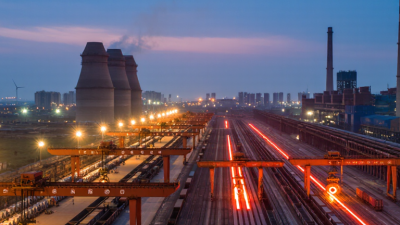
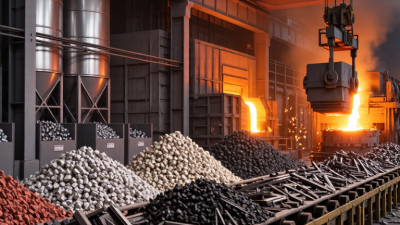
Most steel begins with iron ore, recycled scrap, or both. In a blast furnace, coke helps remove oxygen from ore, producing molten iron. Limestone helps collect impurities as slag. The iron then enters a basic oxygen furnace, where oxygen reduces its carbon content. Another major route melts scrap in an electric arc furnace. World Steel Association figures for 2023 show that roughly 70% of steel was made by the basic oxygen route and about 29% by electric arc. The split varies by region and available materials.
The molten steel is refined, then cast into slabs, billets, or blooms. These solid forms are reheated and rolled into sheets, bars, and beams. Picture a glowing slab passing between heavy rollers, becoming thinner with each pass. That matters. This account is tidy, perhaps too tidy: real mills must control temperature, chemistry, and defects at every stage. World Steel Association’s World Steel in Figures 2024 reports global crude steel production of about 1.89 billion tonnes in 2023, a scale that makes process consistency essential.
Global crude steel production by manufacturing route, 2022
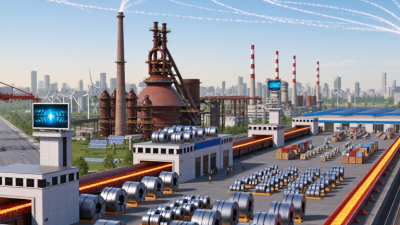
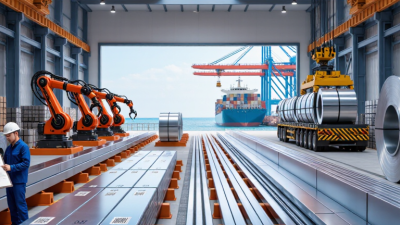
Steel can be made through different production routes, helping manufacturers use iron ore, recycled scrap, or both. Its combination of strength, durability, formability, and recyclability makes it useful in buildings, transport, machinery, and everyday products.
Source: World Steel Association; production-route shares are rounded.Why Is Steel Metal So Widely Used?
Which Properties Make Steel Useful
Steel combines high strength with practical formability. A beam can carry heavy loads without requiring the bulk of many alternatives. Eurocode 3, the European structural design standard, assigns structural steel an elastic modulus of about 210 gigapascals and a density of 7,850 kilograms per cubic metre. These values help engineers predict how members bend and calculate their weight. Steel can also be cut, welded, and shaped into precise parts. That matters on a busy construction site.
It can deform before fracture, depending on its grade, design, and loading. This ductility helps structures absorb some sudden forces. But steel is not magic. It can rust, and slender parts may buckle if poorly designed. Engineers account for these limits with detailing, protective coatings, and testing. Small choices matter.
Steel’s recyclability adds another practical advantage. The U.S. Geological Survey’s Mineral Commodity Summaries 2024 estimated that about 59 million metric tons of steel scrap were consumed in the United States in 2023. The World Steel Association’s World Steel in Figures 2024 reported roughly 1.89 billion tonnes of crude steel production worldwide in 2023, reflecting its enormous industrial role. High production does not make every application sustainable, though; energy use and material choices still deserve scrutiny.
| Property | Typical Data | Why It Makes Steel Useful | Important Context |
|---|---|---|---|
| Strength | Common structural steels often have yield strengths of about 250–460 MPa; higher-strength grades are available. | Steel can support substantial loads, making it useful in buildings, bridges, vehicles, and machinery. | Strength depends on the alloy, manufacturing process, heat treatment, and product form. |
| Stiffness | Young’s modulus is approximately 200 GPa for most steels. | High stiffness helps components resist bending and deformation under load. | The elastic modulus varies relatively little among common steel grades compared with their strength. |
| Ductility and formability | Elongation at break is commonly around 10–30% for many structural and engineering steels. | Many steels can be rolled, bent, drawn, or formed into useful shapes. Ductility can also allow visible deformation before failure. | Actual ductility varies widely by grade, thickness, temperature, and processing. |
| Density | Approximately 7,850 kg/m³ (7.85 g/cm³). | Its combination of strength and predictable behavior makes steel effective for compact, load-bearing structures and components. | Steel is relatively dense, so it is not always the best choice when minimizing weight is the main priority. |
| Corrosion resistance | Carbon steel can rust when exposed to moisture and oxygen. Stainless steels contain at least 10.5% chromium. | Protective coatings can extend the service life of carbon steel; chromium helps stainless steel form a corrosion-resistant surface film. | Corrosion resistance depends on the steel grade and environment. Stainless steel is not immune to every form of corrosion. |
| Temperature performance | Steel generally retains useful strength at ordinary service temperatures; its properties change at elevated and very low temperatures. | It can be used in applications ranging from everyday structures to many industrial systems with controlled operating conditions. | High heat can reduce strength, and some steels can become less tough at low temperatures. Grade selection and design matter. |
| Manufacturing versatility | Steel can be produced as sheet, plate, bar, wire, tube, and structural sections, among other forms. | It can be cut, welded, machined, cast, rolled, and heat-treated to suit a wide range of products. | Not every grade is equally suited to every process; welding and forming requirements should guide selection. |
| Recyclability | Steel can be recycled repeatedly, and recycled steel is widely used in steelmaking. | Recycling helps recover valuable material and can reduce the need for virgin raw materials. | Actual recycling rates and environmental impacts depend on collection, processing, energy sources, and production routes. |
| Availability and cost practicality | Steel is produced in many standard grades and product forms around the world. | Established production and supply chains make it practical for projects ranging from household products to major infrastructure. | Prices vary with grade, dimensions, processing, energy costs, and market conditions. |
Note: Values are representative ranges, not specifications for every steel. Always use the properties published for the specific grade and product being considered.
Steel supports major industries because it combines strength, formability, and dependable performance. In construction, beams carry floor loads while reinforcing bars help concrete resist tension. A bridge girder or warehouse frame can be fabricated in sections, then assembled with predictable dimensions. That consistency matters when crews coordinate lifting equipment, fasteners, and tight schedules. Small differences matter.
Manufacturing depends on steel for machine frames, gears, tools, and production lines. Its toughness helps components withstand repeated force, while different grades suit different temperatures and wear conditions. In transportation, steel forms vehicle structures, rail tracks, and ship sections. Energy facilities also use it in pipelines, towers, pressure vessels, and support frames. Engineers select grades and protective coatings according to loads, corrosion exposure, and operating conditions—not simply by choosing the strongest option.
Steel is useful, but it is not maintenance-free. Moisture and salts can cause corrosion, so coatings, drainage, inspections, and timely repairs matter. Heavier sections may also increase transport and installation demands. Steel production uses substantial energy, a trade-off that deserves honest attention. In practice, good design can reduce excess material and extend service life, though no single solution fits every project. A modest detail, such as preventing water from collecting at a joint, can make a real difference over decades.
Steel is economical because its cost is spread across a long working life. A beam can support heavy loads without taking up excessive space, while common shapes are widely available. That can simplify design and installation. For builders, fewer custom parts may mean less fabrication time and fewer delays. The exact savings depend on local prices, transport, labor, and the project’s conditions.
Steel is also highly recyclable. Scrap from demolished structures or manufacturing can be sorted, melted, and made into new steel products. Using scrap generally requires less energy than making steel entirely from iron ore, though the impact depends on the production route and available scrap. Steel’s magnetic properties can help separate it from mixed waste. A useful detail: recycling works best when materials are collected and sorted carefully. Contamination and transport still have costs.
Durability adds to the economic picture. Properly protected steel can serve for decades, but coatings need inspection, especially near moisture or salt. That maintenance is easy to underestimate. Steel is not automatically the cheapest choice for every job, and recycling does not erase the energy used in production. Still, its combination of strength, long service, and recovery at the end of use makes it a practical material across many industries.
Steel’s future is being shaped by more than its strength. Grid expansion, rail upgrades, and renewable-energy projects need durable sections, plates, and wires. The World Steel Association’s World Steel in Figures 2024 reports 1,892.2 million tonnes of crude steel produced worldwide in 2023. That scale reflects steel’s role in infrastructure, but it does not guarantee growth in every market.
Emissions will influence which steelmaking methods gain ground. The IEA’s 2020 Iron and Steel Technology Roadmap estimates 2.6 gigatonnes of direct CO2 emissions from steelmaking. It places this near 7% of global energy-system emissions. Electric-arc furnaces can use recycled scrap, while hydrogen-based ironmaking may reduce reliance on coal. Both depend on affordable clean electricity. Cost matters.
Scrap quality and supply also shape future uses. Recycled steel suits many products, but some demanding applications need tighter control of impurities. That can limit how much scrap replaces newly reduced iron. Not an easy trade-off. Producers and designers may also cut demand through lighter components, longer service life, or reuse. These choices are practical, but they require careful engineering; using less steel is not automatically better if a structure becomes less durable.